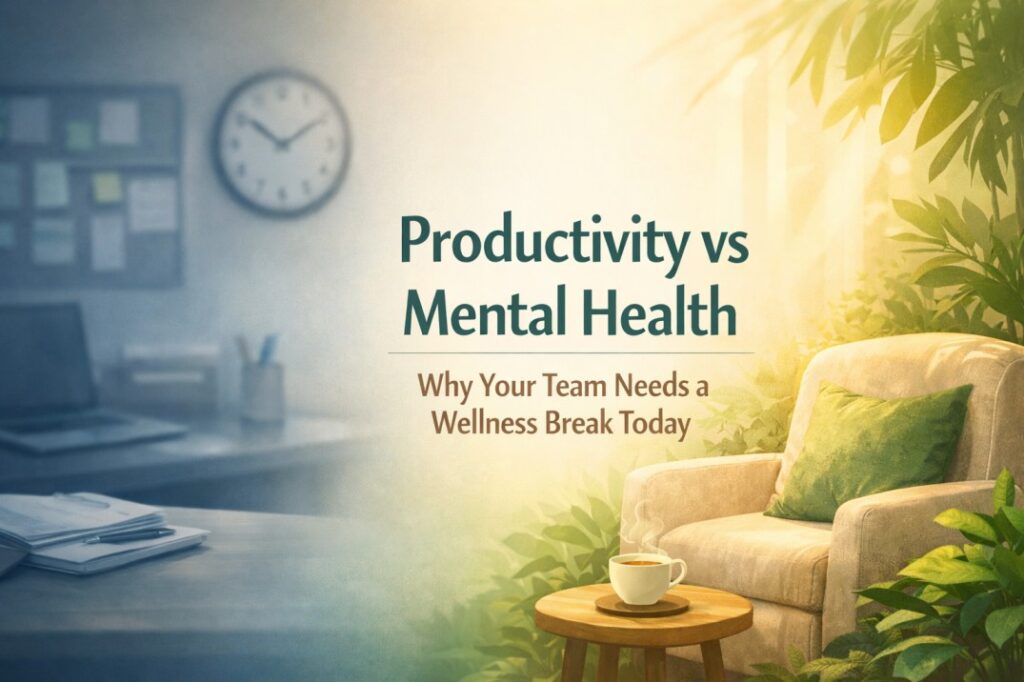
Productivity vs. mental health has become a daily, unspoken struggle inside modern workplaces. Teams deliver results, yet emotional fatigue quietly builds beneath deadlines, meetings, and constant notifications.
Many professionals hesitate to pause because they fear falling behind. At the same time, leaders worry that rest may reduce output or discipline. This tension creates confusion, guilt, and silent burnout. People stay busy but feel disconnected, exhausted, and mentally drained.
Understanding this conflict clearly is the first step toward restoring balance, trust, and sustainable performance without sacrificing ambition.
Why Constant Productivity Pressure Breaks Teams
Relentless performance pressure does not motivate forever. Over time, it drains emotional energy and weakens focus, even among high performers. Teams begin operating in survival mode. Creativity fades, communication becomes transactional, and mistakes increase despite effort and experience.
When output matters more than well-being, people stop sharing struggles. This silence slowly fractures trust and engagement.
The Silent Cost of Always Being Available
Always being available feels responsible, yet it quietly exhausts the mind. Notifications interrupt thinking, reduce depth, and prevent recovery. Employees respond quickly but think shallowly. Over time, mental fatigue replaces clarity. Availability becomes mistaken for commitment, while true effectiveness continues to decline.
How Stress Reshapes Focus and Decision Making
Stress narrows attention and shortens patience. Under pressure, the brain prioritizes speed over accuracy. Decisions feel rushed. Small problems feel overwhelming. Emotional reactions replace thoughtful responses. Without relief, even experienced professionals struggle to access their best thinking.
Understanding Burnout Beyond Tiredness
Burnout is not simple exhaustion. It is emotional depletion combined with mental overload and reduced motivation. People may sleep yet still feel drained. They complete tasks but feel detached from purpose. Recognizing burnout early helps teams recover before disengagement becomes permanent.
Burnout Signs Leaders Often Ignore
Subtle changes signal burnout early. Reduced participation, hesitation in decisions, and withdrawal from collaboration often appear first. High performers may hide symptoms longer. They meet goals while quietly struggling. Leaders who notice these signals early protect both people and performance.
Productivity vs. Mental Health Is a False Choice
Productivity vs. mental health appears like a tradeoff, yet this belief misleads organizations. Mental well-being supports sustained performance. When minds recover, output improves naturally. The strongest teams build systems that respect human limits while maintaining high standards.
Why Rested Minds Perform Better
Rest restores attention, creativity, and emotional regulation. Clear minds solve problems faster and communicate more effectively. Recovery strengthens focus rather than weakening discipline. Teams return with renewed energy and clarity. Performance improves because people feel safe, valued, and mentally present.
What a Wellness Break Really Means at Work
A wellness break is not avoidance or laziness. It is a structured pause designed to restore mental balance. It creates space for emotional regulation, reflection, and nervous system calm. Effective breaks focus on quality, not duration.
Mental Rest Versus Physical Time Off
Physical time off removes tasks, but mental stress often remains active. True mental rest involves calming internal pressure, not just leaving the office. Without emotional release, vacations end with anxiety returning quickly.
Structure Over Randomness in Wellness Breaks
Random breaks feel optional and guilt-driven. Structured breaks feel safe and normalized. Consistency builds trust. Teams relax knowing recovery is supported, not judged. Structure turns wellness into a performance strategy, not a personal indulgence.
How Dr. Kaveri Bhatt Helps Restore Productivity Through Emotional Balance
Dr. Kaveri Bhatt helps organizations resolve the “productivity vs. mental health” conflict by addressing the root causes of emotional overload. Her work integrates techno-spiritual healing with practical workplace realities.
She focuses on subconscious release methods that help individuals let go of stored stress and emotional patterns affecting performance. Trauma-informed approaches ensure safety, sensitivity, and long-term stability.
Her sessions combine emotional awareness tools, nervous system regulation, and mindset realignment. Teams learn how to reset internally without suppressing pressure. By restoring mental clarity and emotional resilience, productivity improves naturally.
Success Story: When Rest Became Performance
A mid-sized consulting firm noticed rising errors despite long working hours. Team morale felt low, yet output targets continued increasing. Leadership introduced structured wellness breaks focused on emotional regulation and reflection.
Within weeks, communication improved. Decision-making slowed thoughtfully. Errors reduced significantly. Employees reported feeling mentally lighter and more focused. Productivity stabilized, proving that recovery enhanced results rather than reducing them.
User Reviews
Rohit Mehra, Gurgaon
“Our team struggled with constant stress and disengagement. Structured wellness support helped us regain clarity, communication, and emotional balance without compromising performance.”Ananya Kapoor, Bengaluru
“I felt exhausted despite delivering results. Emotional regulation tools helped me focus better and stop carrying work stress home every day.”Vikram Shah, Mumbai
“Leadership support for wellness changed our culture. Productivity improved because people felt trusted, calm, and mentally present again.”
Forum Discussions
Forum Question: Do wellness breaks reduce discipline at work?
No. When structured properly, wellness breaks increase accountability. Employees return focused and clear, reducing mistakes and emotional reactions that disrupt discipline.Forum Question: Can small teams afford wellness initiatives?
Yes. Simple, consistent emotional recovery practices cost little and prevent burnout-related attrition, errors, and disengagement over time.
Frequently Asked Questions
How does productivity vs. mental health affect long term performance?
Ignoring mental health creates short bursts of output followed by decline. Balanced approaches sustain focus, reduce errors, and protect long-term productivity.
What makes a wellness break effective in a busy workplace?
Effectiveness depends on structure, consistency, and emotional regulation. Random breaks lack safety, while planned pauses create recovery without guilt.
Can wellness breaks work in high-pressure industries?
Yes. High-pressure environments benefit most because emotional regulation improves decision-making, communication, and stress tolerance.
Is mental recovery different from relaxation activities?
Yes. Mental recovery involves calming internal stress patterns, not just external relaxation. Emotional tools create deeper, lasting clarity.
Conclusion: Choosing Sustainable Productivity
Productivity vs. mental health does not require choosing sides. Sustainable performance depends on emotional clarity, mental balance, and intentional recovery. When organizations normalize wellness breaks, teams regain focus, trust, and confidence.
Choosing wellness protects both results and relationships. Sustainable productivity begins when mental health becomes a strength, not a sacrifice.