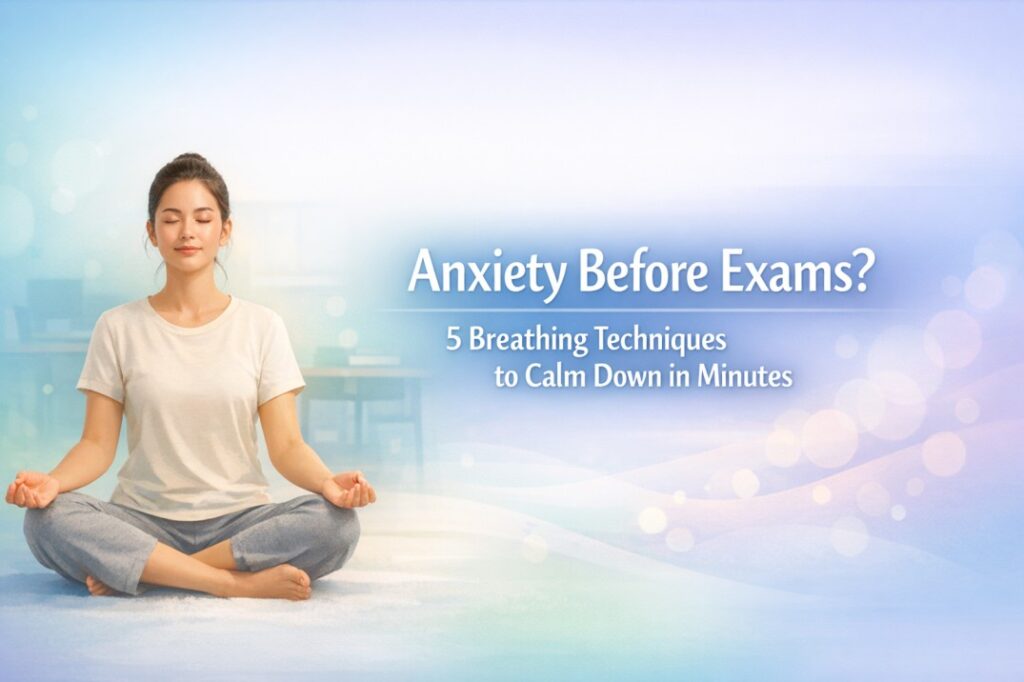
Your chest feels tight, your thoughts scatter, and time suddenly feels faster. Exam anxiety breathing techniques exist for this exact moment, not for theory, but for relief now. When panic hits before exams, your body reacts before your mind understands. Most students try to think their way out, but calm begins through breath, not force.
This guide shows you five breathing techniques that work within minutes. These are simple, safe, and practical tools you can use anywhere, even inside the exam hall. You do not need perfect focus, silence, or experience. You only need a few intentional breaths.
In this Guide:
Understanding Anxiety Before Exams
Anxiety before exams is not weakness. It is your nervous system trying to protect you from perceived threat. The problem is timing. Your body reacts as if danger is present, even when preparation exists. When stress hormones rise, memory access drops. Breathing becomes shallow. Thoughts race. Your body shifts into survival mode, not performance mode.
Why Exam Anxiety Feels So Overwhelming
Exam pressure combines fear of failure, expectations, and uncertainty. Your brain interprets this as risk. As a result, heart rate increases and muscles tense. Blood flow shifts away from thinking areas. Because this response is physical, logic alone rarely helps. Telling yourself to relax often increases frustration. The solution lies in calming the body first.
How Breathing Controls Your Stress Response
Breathing directly influences your nervous system. Slow, intentional breathing sends safety signals to the brain. This reduces stress hormones and restores balance. When breathing slows, your heart rate follows. Muscles soften. Thoughts become organized again. This is why breathing exercises for students work faster than mental reassurance.
5 Breathing Techniques to Calm Down in Minutes
These techniques are designed for immediate relief. Choose the one that feels most natural to you.
Technique 1: The Grounded Count Breath
Sit upright with feet on the floor. Inhale gently through your nose for four counts. Hold softly for two counts. Exhale slowly through the mouth for six counts. Repeat this cycle six times. Feel your body weight grounding downward. This breathing technique helps interrupt panic loops and restore physical stability.
Technique 2: Slow Nose Reset Breathing
Close your mouth and breathe only through the nose. Inhale slowly for five counts. Exhale for five counts. Keep the breath smooth, not forced. Nose breathing activates calming nerve pathways. This technique works well when your heart races or hands feel shaky.
Technique 3: Hand on Chest Safety Breath
Place one hand on your chest and one on your belly. Inhale slowly, feeling both hands rise. Exhale fully, letting shoulders drop. This technique builds emotional safety. It reassures the body that you are present and in control. It works well moments before entering the exam hall.
Technique 4: Extended Exhale Focus Breath
Inhale through the nose for four counts. Exhale through the mouth for eight counts. Focus only on the exhale length. Longer exhales signal relaxation to the nervous system. This method reduces mental noise and improves focus recovery.
Technique 5: Micro Pause Recovery Breath
Take a normal inhale. Pause gently for one second. Exhale slowly. Pause again before the next inhale. These micro pauses slow your internal pace. This technique helps during exams when anxiety spikes suddenly.
When to Use These Techniques for Maximum Effect
Use these techniques ten minutes before exams. Use them while waiting outside the hall and during reading time if panic appears. Short sessions work best. One to two minutes can reset your state. Do not wait for anxiety to peak. Early use improves exam stress relief significantly.
Common Mistakes Students Make While Trying to Calm Down
Many students breathe too fast or force deep breaths. This increases dizziness. Others judge themselves for feeling anxious, which adds pressure. Calm grows through gentleness, not control. Let the breath be slow, soft, and natural.
Read more on Healthify Happiness:
- Chakra Balancing for Beginners: How to Unblock Your Energy Centers
- The Superwoman Myth: Why Doing It All is Hurting Your Health
- Beat the Burnout: How to Study Smarter, Not Harder
- Raise Your Vibration: 5 Daily Habits to Attract Positivity and Abundance
- The Art of Letting Go: How to Release Past Pain and Find Inner Peace
Success Story: From Panic to Presence Before Exams
Riya, a class twelve student from Jaipur, struggled with intense test anxiety. Despite preparation, her mind blanked before exams. She practiced two breathing techniques daily for one week. On exam day, she used the extended exhale breath outside the hall. Her panic reduced within minutes. She completed her paper calmly and remembered answers clearly. Breathing gave her back control.
User Reviews
Aman, Delhi
“These breathing exercises helped me stop shaking before my maths exam. I felt steady and focused within minutes.”Neha, Pune
“I used the chest breathing technique during my entrance test. My thoughts slowed and I felt present again.”Rohit, Indore
“Simple techniques, no theory overload. I finally managed exam anxiety without feeling helpless.”
Forum Style Q and A
Question from Sneha, Kota:
Can breathing really help during the exam, not just before?
Answer:
Yes. Slow breathing regulates stress in real time. Even three slow exhales can reduce panic and restore clarity.
Question from Arjun, Noida:
What if I forget the technique during anxiety?
Answer:
Choose one simple method and practice daily. Familiarity makes recall automatic during stress.
How Dr. Kaveri Bhatt Helps Students Regulate Exam Anxiety Naturally
Dr. Kaveri Bhatt works with students using a techno-spiritual approach that blends nervous system regulation with subconscious release.
She helps students identify emotional triggers linked to fear, pressure, and past academic experiences. Through trauma-informed techniques, she releases stored stress patterns from the body. Her work combines practical breathing tools, emotional grounding, and subconscious calming methods. Students learn how to self-regulate rather than suppress anxiety. This approach builds long-term resilience, not just short-term relief.
Frequently Asked Questions
Can breathing techniques stop exam panic completely?
Breathing reduces panic intensity quickly. With regular practice, anxiety becomes manageable and no longer overwhelming.
How long do these techniques take to work?
Most students feel calmer within one to three minutes when breathing slowly and consistently.
Should I practice daily or only before exams?
Daily practice improves effectiveness. Familiar breathing patterns activate faster during stress.
Are these techniques safe for everyone?
Yes. These techniques are gentle and natural. Avoid forcing breath or holding too long.
Can breathing improve memory recall during exams?
Yes. Calm breathing restores blood flow to thinking areas, improving recall and focus.
Conclusion: Finding Your Calm
Exam anxiety does not mean lack of ability. It signals a stressed nervous system that needs support, not pressure. Exam anxiety breathing techniques give you immediate control when emotions rise. With consistent practice, calm becomes accessible. Focus returns. Confidence grows. Your breath becomes a steady anchor during exams and beyond.