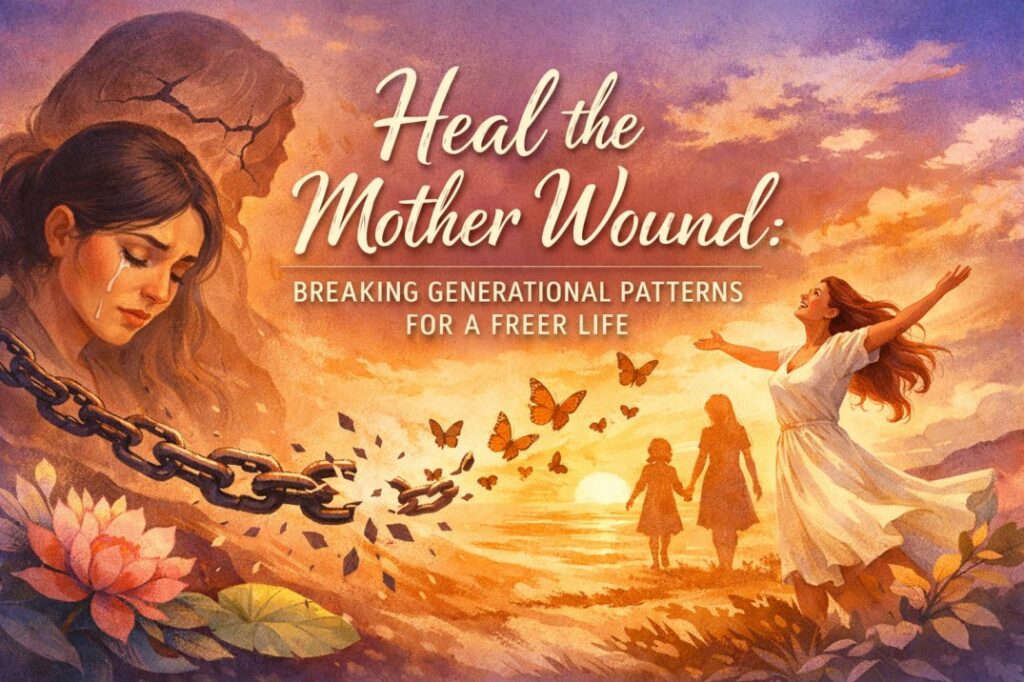
Many people feel an invisible emotional weight they cannot explain, even when life looks stable from the outside. The desire to heal the mother wound often begins with repeated emotional reactions, relationship struggles, or self doubt that logic alone cannot resolve.
This experience rarely points to dramatic memories. Instead, it reflects subtle emotional patterns shaped early in life. These patterns influence how safety, love, and approval feel today.
Curiosity about this topic usually brings mixed emotions. People want clarity, yet fear blame or emotional disruption. However, healing does not require accusation. It requires awareness, honesty, and emotional responsibility.
This guide explores the mother wound with compassion and grounded insight. The goal is not to rewrite the past. The goal is to release inherited emotional patterns and move toward a freer, more stable inner life.
In this Guide:
What Does the Mother Wound Really Mean
The mother wound describes emotional patterns formed through early interactions with the primary maternal figure. It reflects how nurturing, safety, presence, or emotional attunement was experienced, not whether a mother was good or bad.
Every caregiver acts through their own conditioning. Emotional gaps often pass unconsciously, especially across generations shaped by survival, suppression, or unmet needs.
The mother wound does not imply intention or fault. Instead, it highlights how unmet emotional needs quietly shape beliefs about worth, safety, and belonging.
Understanding this concept brings relief. It explains why certain emotions feel automatic. It also explains why self improvement efforts sometimes fail despite strong intention.
Healing begins when people see patterns clearly, without minimizing pain or assigning blame.
How Early Maternal Dynamics Shape Emotional Identity
Early childhood forms the blueprint for emotional regulation. During these years, children learn whether emotions feel safe, welcomed, or ignored.
Consistent emotional attunement teaches a child to trust inner experiences. Inconsistent or emotionally unavailable responses teach self suppression or hyper vigilance.
These lessons become internal rules. They influence how adults ask for support, set boundaries, or tolerate discomfort.
Because these patterns form before language, they feel instinctive. Adults often mistake them for personality traits rather than learned responses.
Recognizing this connection allows people to respond with curiosity instead of judgment.
Why the Mother Wound Often Goes Unnoticed
Many people normalize emotional discomfort because it feels familiar. Loyalty, gratitude, and cultural expectations further silence emotional truth.
Society often equates acknowledgment with blame. As a result, people dismiss their experiences or invalidate their own feelings.
Love and pain can coexist. Recognizing emotional impact does not erase love or respect.
The mother wound stays hidden because it feels disloyal to question foundational relationships. Awareness gently dissolves this fear.
Signs You May Be Carrying a Mother Wound
The mother wound often reveals itself through patterns rather than memories. Emotional reactions feel intense, repetitive, or disproportionate.
People may struggle with self worth, approval seeking, or emotional dependency. Others feel emotionally guarded, detached, or overly responsible for others.
These patterns persist despite therapy, insight, or effort. They surface in relationships, work environments, and moments of vulnerability.
Recognizing these signs invites reflection, not self diagnosis.
Emotional Patterns That Repeat Without Explanation
Certain situations trigger familiar emotional responses, regardless of context. Logic fails to interrupt these reactions.
People may feel unseen, abandoned, criticized, or overwhelmed without clear cause. The body reacts before the mind understands.
These reactions stem from early emotional conditioning stored in the nervous system.
Healing requires addressing emotional memory, not just mental understanding.
Relationship Triggers Linked to Maternal Conditioning
Adult relationships often activate unmet childhood needs. Partners, authority figures, or friends unconsciously mirror maternal dynamics.
Reassurance may never feel enough. Boundaries may trigger guilt or fear of rejection.
Recognizing these triggers restores choice. People can respond consciously instead of repeating old emotional scripts.
How Generational Patterns Get Passed Down
Emotional patterns pass through behavior, silence, and coping strategies. Trauma does not require dramatic events to transfer.
Unexpressed grief, fear, or resentment shapes emotional availability. Children absorb these patterns through observation and nervous system attunement.
Awareness interrupts unconscious repetition. It allows people to respond differently.
Emotional Inheritance Versus Conscious Choice
Inherited patterns feel automatic. Conscious choice requires presence and emotional regulation.
People cannot change what they do not recognize. Once recognized, responsibility replaces helplessness.
Healing honors both compassion for the past and commitment to the present.
Why Awareness Alone Does Not Break the Cycle
Insight explains patterns, but emotional memory sustains them. Without release, the body continues reacting.
Healing requires safety, repetition, and nervous system support.
Tools that address subconscious responses create lasting change.
The Emotional Cost of Ignoring the Mother Wound
Unaddressed patterns drain emotional energy. People experience chronic stress, confusion, or emotional fatigue.
Suppression leads to burnout, resentment, or emotional numbness. Relationships suffer quietly.
Healing restores emotional capacity and clarity.
Impact on Self Worth and Inner Safety
The mother wound often disrupts self trust. Confidence feels conditional.
People seek external validation or avoid visibility. Inner safety feels unstable.
Healing rebuilds self worth from within.
How Suppressed Emotions Shape Adult Decisions
Career choices, relationships, and boundaries reflect emotional conditioning.
People may over give, under earn, or tolerate misalignment.
Emotional release restores agency and direction.
Healing the Mother Wound Without Blame
Healing does not require confrontation or rejection. It requires emotional responsibility.
People can acknowledge impact without denying love.
Compassion creates space for truth.
Separating Responsibility From Guilt
Guilt binds people to the past. Responsibility empowers change.
Healing honors emotions without assigning fault.
This distinction restores inner freedom.
Creating Emotional Boundaries With Compassion
Boundaries protect emotional energy. They do not punish others.
Internal boundaries regulate reactions. External boundaries follow naturally.
Safety supports healing.
Tools That Support Mother Wound Healing
Effective healing respects emotional pacing. It combines awareness with regulation.
Grounded practices support nervous system safety and emotional release.
Consistency matters more than intensity.
Inner Child Healing Practices
Inner child work reconnects adults with unmet emotional needs.
Gentle visualization, journaling, and self attunement rebuild trust.
These practices foster emotional integration.
Subconscious Release Techniques
Subconscious healing addresses emotional memory stored in the body.
Breath work, somatic awareness, and guided release soften patterns.
Repetition builds stability.
Success Story: The Silent Inheritance
Neha, a thirty eight year old professional from Pune, struggled with constant self doubt despite professional success. Relationships triggered fear of abandonment.
Through guided emotional awareness, she recognized maternal patterns rooted in emotional unpredictability. Healing focused on regulation, not blame.
Over time, Neha reported calmer reactions, stronger boundaries, and improved self trust. Relationships felt safer.
Her healing journey restored emotional agency without disrupting family connection.
User Reviews
Ananya Sharma, Delhi
Understanding the mother wound explained patterns I carried for years. The process felt safe, compassionate, and grounded. I now respond instead of reacting.
Ritu Mehta, Ahmedabad
This approach helped me release guilt while honoring my relationship with my mother. Emotional clarity replaced confusion.
Sneha Kulkarni, Bengaluru
The tools were practical and gentle. Healing felt gradual yet real. My confidence improved without forcing change.
Forum Style Q and A
Question from Rohit, Mumbai
Can functional adults still carry a mother wound?
Answer
Yes. Functionality does not equal emotional resolution. Many successful adults operate through coping strategies. Healing addresses emotional roots, not surface behavior.
Question from Kavita, Jaipur
Does healing require confronting my mother?
Answer
No. Healing focuses on internal regulation. External conversations may or may not occur. Emotional safety always comes first.
How Dr. Kaveri Bhatt Helps Heal the Mother Wound for Lasting Emotional Freedom
Dr. Kaveri Bhatt supports individuals seeking to heal the mother wound through a trauma informed, techno spiritual approach. Her work integrates subconscious release, emotional regulation, and practical inner awareness tools.
She understands that emotional patterns live beyond conscious memory. Her methods focus on safety, pacing, and nervous system stability rather than emotional excavation.
Through guided subconscious work, clients release stored emotional responses gently. This process allows insight to translate into embodied change.
Her approach avoids overwhelm. Healing unfolds through structured awareness, self attunement, and grounded practices.
Clients experience clarity, emotional stability, and renewed self trust. Healing becomes sustainable, not exhausting.
Frequently Asked Questions
How long does mother wound healing take?
Healing varies by individual. Progress depends on awareness, consistency, and emotional safety. Many notice shifts within weeks, while deeper integration unfolds gradually.
Is forgiveness required for healing?
Forgiveness is not mandatory. Healing focuses on emotional release and self responsibility. Forgiveness may arise naturally, but it cannot be forced.
Can healing happen without reliving childhood pain?
Yes. Trauma informed approaches prioritize regulation over reliving experiences. Healing occurs through safety and present moment awareness.
Does healing change family relationships?
Healing often improves boundaries and communication. Relationships may shift, but emotional clarity supports healthier connection.
How do I know healing is working?
Signs include calmer reactions, stronger boundaries, improved self trust, and reduced emotional fatigue over time.
Conclusion
To heal the mother wound is to reclaim emotional agency without rewriting history. Healing honors lived experience while releasing inherited emotional patterns.
This journey replaces confusion with clarity. It transforms reaction into choice.
With compassionate awareness and grounded tools, emotional freedom becomes possible. Healing restores connection to self, not separation from others.
True freedom begins within.
Need personalized guidance?