
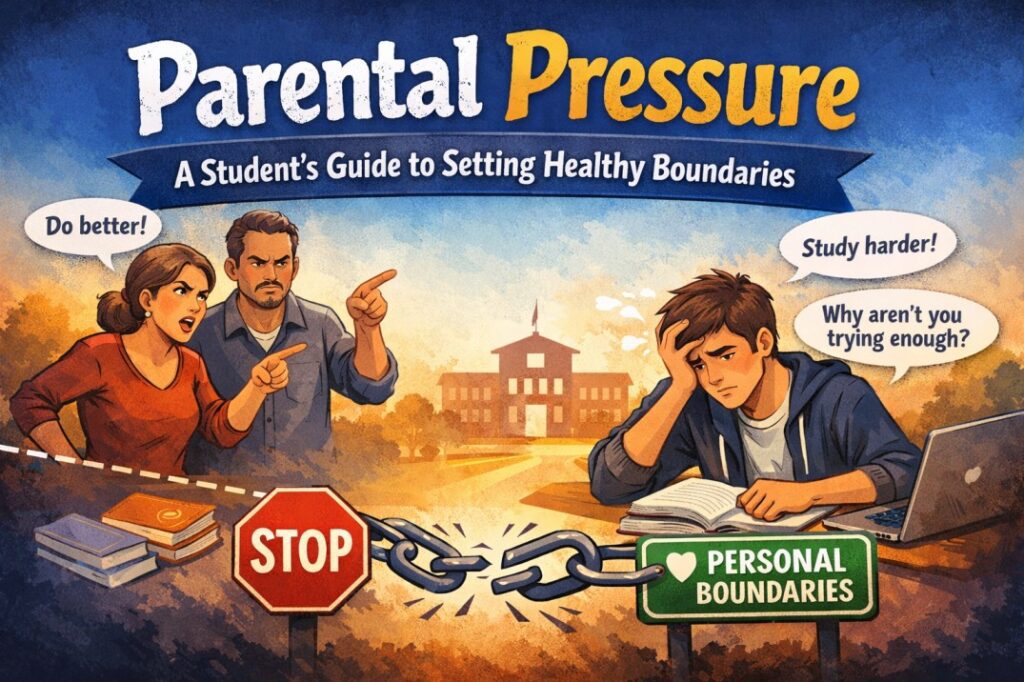
Parental pressure often sits quietly behind everyday student decisions, shaping choices, confidence, and emotions without direct confrontation. Many students feel torn between respect and self direction. As a result, confusion grows. Moreover, guilt builds. Therefore, this guide speaks to that silent struggle. It helps you understand parental pressure clearly, while showing how healthy boundaries protect relationships and mental balance.
You are not alone if expectations feel heavy. However, you can learn to respond with clarity. This journey moves from awareness to confidence, without anger or distance.
In this Guide:
Understanding Parental Pressure in Student Life
Parental pressure shows up in subtle ways during student life. Often, it hides behind concern and advice. However, its impact still feels intense. Students may sense constant evaluation. As a result, choices start feeling restricted.
This pressure does not always involve harsh words. Instead, it appears through expectations about careers, grades, or behavior. Therefore, recognizing it helps you regain emotional clarity.
Why Parents Push Without Realizing the Impact
Parents often push because they fear uncertainty. They want security for their children. Moreover, many parents follow patterns they learned earlier. As a result, pressure becomes their language of care.
They may believe guidance requires control. However, students experience it differently. Understanding this gap reduces anger. Therefore, conversations become calmer.
Common Forms of Pressure Students Experience
Students experience pressure through constant comparison, academic demands, and career expectations. Sometimes, parents dismiss creative goals. Moreover, emotional needs remain unheard.
This pattern creates inner conflict. As a result, students doubt themselves. Recognizing these forms helps you name the issue clearly.
How Parental Pressure Affects Student Mental Health
Parental pressure directly affects emotional balance. Over time, stress becomes normal. However, this normal state drains energy. Students may feel anxious, restless, or emotionally tired.
Moreover, internal conflict grows. Therefore, mental health suffers quietly. Awareness helps interrupt this cycle.
Emotional Stress and Constant Self Doubt
Students under pressure often question every decision. Even small choices feel risky. As a result, confidence weakens.
This self doubt creates emotional fatigue. However, awareness allows healing. Therefore, clarity slowly returns.
Fear of Disappointing Family Expectations
Fear of disappointment controls many student actions. Approval becomes tied to self worth. Consequently, guilt appears even after success.
This fear keeps students silent. However, learning to separate love from approval changes everything.
The Difference Between Care and Control
Care feels supportive and flexible. Control feels heavy and rigid. However, the line between them often blurs. Students feel confused.
Understanding this difference restores emotional clarity. Therefore, boundaries feel reasonable, not rebellious.
Healthy Guidance Versus Emotional Pressure
Healthy guidance invites discussion. It respects individuality. Emotional pressure demands obedience.
When guidance turns into insistence, discomfort grows. Recognizing this shift protects mental balance.
Recognizing When Support Turns Harmful
Support becomes harmful when fear replaces trust. When conversations feel draining, something feels off. Moreover, emotional safety decreases.
Noticing these signs early helps you respond calmly.
Read more on Healthify Happiness:
- The Power of Stillness: How Meditation Can Transform Your Life in 30 Days
- Anxiety SOS: Instant Techniques to Calm Your Nervous System
- Executive Burnout: 5 Warning Signs Every Leader Should Ignore at Their Own Risk
- Setting Boundaries: How to Say ‘No’ Without Guilt (And Why You Must)
- Social Media vs. Grades: How to Reclaim Your Focus in a Distracted World
Why Setting Boundaries Is Not Disrespect
Many students believe boundaries equal disobedience. However, boundaries express self respect. They support honest relationships.
Respect grows through clarity. Therefore, boundaries strengthen connection, not distance.
Cultural Guilt and Silent Obedience
Cultural conditioning teaches silence. Students learn to comply quietly. However, silence builds resentment.
Breaking this pattern feels scary. Yet, honest expression creates relief.
Boundaries as a Form of Emotional Maturity
Emotional maturity includes speaking truth calmly. Boundaries show responsibility. They protect mental health.
Choosing boundaries reflects growth, not rebellion.
How to Start Setting Healthy Boundaries With Parents
Boundary setting begins internally. First, you clarify your values. Then, you prepare emotionally. Therefore, conversations feel grounded.
This process reduces fear. As a result, confidence increases.
Getting Clear About Your Own Needs First
You must understand your needs clearly. Otherwise, communication feels weak. Reflection builds inner strength.
When needs feel valid, guilt reduces naturally.
Choosing the Right Time and Words
Timing shapes outcomes. Calm moments work best. Moreover, gentle language reduces resistance.
Words matter. Therefore, speak with respect and clarity.
Communicating Boundaries Without Conflict
Calm communication prevents escalation. Instead of defending, you explain. As a result, discussions feel safer.
This approach maintains dignity for everyone involved.
Calm Conversations That Reduce Resistance
Calm voices invite listening. Emotional control builds trust. Therefore, parents respond better.
Staying steady changes the entire tone.
Handling Emotional Reactions From Parents
Parents may react emotionally. This response feels uncomfortable. However, patience matters.
Do not retreat. Instead, stay consistent and calm.
Maintaining Boundaries Over Time
Boundaries face tests repeatedly. Consistency builds respect. Over time, resistance fades.
This phase requires emotional strength. However, progress feels rewarding.
Staying Consistent Without Becoming Defensive
You do not need to justify yourself repeatedly. Calm repetition works better. Therefore, arguments reduce.
Consistency teaches others how to treat you.
Managing Guilt and Second Guessing
Guilt often appears after growth. This reaction feels normal. However, guilt does not mean wrongdoing.
Processing emotions mindfully supports long term balance.
Success Story
Riya, a college student from Pune, felt trapped by constant academic expectations. She loved design but pursued engineering to please her parents. Over time, stress affected her health.
After learning to communicate calmly, she set clear boundaries. She explained her interests respectfully. Gradually, her parents listened. Today, she studies design confidently. Her relationship with her family feels healthier and more honest.
How Dr. Kaveri Bhatt Helps Students Set Healthy Boundaries With Confidence
Dr. Kaveri Bhatt supports students facing parental pressure through a gentle techno spiritual approach. She helps identify subconscious emotional patterns formed during childhood. These patterns often drive guilt, fear, and people pleasing behaviors.
Her work focuses on emotional release and trauma informed awareness. Students learn practical tools to regulate emotions during difficult conversations. As a result, boundaries feel safer to express.
She blends modern emotional techniques with inner healing practices. This approach builds clarity without blame. Students regain confidence while maintaining respectful family connections. Her guidance supports emotional independence and long term mental balance.
What Students Say
Ankit, Delhi: “I finally understood parental pressure without blaming my parents. Setting boundaries helped me feel confident during career discussions.”
Meera, Bengaluru: “Calm conversations reduced daily stress. My parents now respect her study choices.”
Rohit, Jaipur: “Understanding emotional patterns helped me manage guilt and speak clearly.”
Student Forum Discussions
Student Question from Neha, Mumbai
I feel selfish when I say no to my parents. How do I handle this guilt?
Response
Feeling selfish often reflects conditioning, not reality. Parental pressure creates emotional habits. Calm reflection helps separate guilt from truth.
Student Question from Arjun, Chandigarh
My parents react emotionally when I set limits. Should I stop trying?
Response
Emotional reactions feel difficult. However, consistency builds understanding. Calm persistence changes patterns over time.
Frequently Asked Questions
How do I recognize parental pressure early in student life?
Parental pressure often appears as constant comparison, fear based advice, or emotional withdrawal. Recognizing emotional discomfort helps identify it early.
Can setting boundaries damage family relationships?
Healthy boundaries protect relationships. They reduce resentment and increase honesty when communicated calmly and consistently.
Why does guilt appear after setting boundaries?
Guilt reflects old emotional patterns. It does not signal wrongdoing. Processing guilt helps strengthen emotional independence.
How often should I repeat my boundaries?
Repeat boundaries calmly whenever needed. Consistency teaches respect and reduces confusion over time.
Is parental pressure always intentional?
Most parents act from concern, not control. Understanding intention helps maintain compassion while protecting your mental health.
Conclusion
Parental pressure shapes many student experiences quietly. However, understanding it creates freedom. Healthy boundaries protect mental health and relationships.
You deserve clarity and confidence. With calm communication and emotional awareness, you can honor your parents while honoring yourself. Growth does not require conflict. It requires honesty, patience, and self respect.
Need personalized guidance?