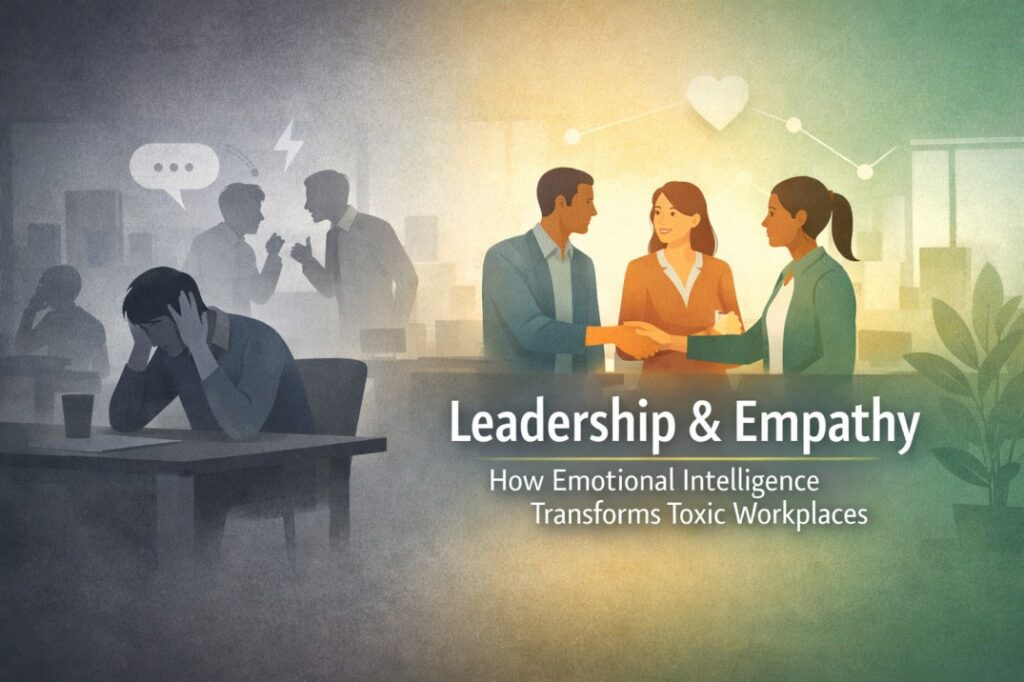
Leadership and empathy decide whether a workplace feels safe or suffocating. Many leaders notice falling energy, silent meetings, and emotional distance, yet struggle to understand the real cause.
Leadership and empathy matter because people no longer disconnect only from tasks. They disconnect emotionally when fear replaces trust and control replaces understanding.
Most toxic workplaces do not start with bad intentions. They grow when leaders overlook emotional signals while focusing only on outcomes and authority.
This blog explores how leadership and empathy transform toxic environments into emotionally safe, accountable, and high performing workplaces through emotional intelligence and conscious leadership.
In this Guide:
Understanding Toxic Workplaces Beyond Surface Problems
Why Toxicity Often Feels Invisible to Leadership
Toxicity rarely announces itself loudly. Instead, it hides behind politeness, compliance, and surface level productivity.
Leaders often see completed tasks and assume things work fine. However, emotionally, teams may already feel exhausted, guarded, or disconnected.
When employees stop sharing concerns, leaders lose visibility. Silence replaces feedback, and fear replaces trust.
This invisibility creates a dangerous gap. Leaders believe stability exists, while teams quietly experience stress and emotional withdrawal.
Emotional Signals Teams Stop Expressing
In toxic workplace culture, emotional signals disappear first. People stop asking questions, challenging ideas, or sharing honest opinions.
Employees may appear calm, yet emotionally disengaged. Meetings feel shorter, conversations feel formal, and creativity slowly fades.
These signs reflect emotional self protection. Teams choose safety through silence instead of growth through dialogue.
Leadership and empathy help leaders notice these subtle shifts before damage deepens.
What Leadership and Empathy Truly Mean in Practice
Empathy Without Weakness
Many leaders fear empathy will dilute authority. In reality, empathy strengthens leadership clarity and respect.
Empathy means understanding emotions without absorbing them. Leaders stay firm while acknowledging how situations affect people.
When leaders respond with empathy, teams feel seen, not indulged. Accountability remains strong because emotional safety supports honest performance conversations.
Leadership and empathy together create calm authority instead of fear driven control.
Accountability With Emotional Awareness
Emotionally intelligent leaders correct behavior without attacking identity. They address actions while respecting human dignity.
This approach reduces defensiveness. Employees listen instead of shutting down emotionally.
When accountability includes emotional awareness, ownership increases naturally. People correct mistakes because they feel trusted, not threatened.
Emotional intelligence at work transforms accountability into growth rather than punishment.
The Role of Emotional Intelligence at Work
Self Awareness as a Leadership Anchor
Every workplace mirrors leadership emotions. Stress, impatience, or unresolved frustration easily spread across teams.
Self aware leaders notice their emotional triggers. They pause before reacting and choose responses consciously.
This awareness stabilizes teams. Employees sense predictability and emotional safety in leadership behavior.
Leadership and empathy begin internally before influencing others.
Emotional Regulation During Conflict
Conflict exposes emotional maturity. Leaders who regulate emotions prevent escalation and build trust during difficult moments.
Instead of reacting defensively, emotionally intelligent leaders listen fully. They clarify concerns without raising emotional intensity.
Calm leadership during conflict signals safety. Teams feel confident addressing issues openly rather than avoiding them.
Emotional regulation protects workplace emotional safety long term.
How Empathetic Leadership Skills Shift Team Behavior
Rebuilding Employee Trust and Morale
Trust erodes quickly in toxic environments. Restoring it requires consistent empathetic behavior, not grand gestures.
Leaders rebuild trust by listening, acknowledging emotions, and following through on commitments.
Over time, morale improves because employees feel valued beyond output. Engagement rises as emotional safety returns.
Leadership and empathy directly influence employee trust and morale.
Creating Workplace Emotional Safety
Workplace emotional safety allows people to speak without fear. It supports learning, collaboration, and healthy risk taking.
Empathetic leadership skills encourage openness. Leaders invite feedback and accept discomfort without defensiveness.
Teams perform better when they feel emotionally safe. Innovation and accountability thrive together in such cultures.
People centric leadership sustains performance through trust, not pressure.
Read more on Healthify Happiness:
- Post-Partum Wellness: prioritizing Your Mental Health After Motherhood
- Overwhelmed by Syllabus? How to Break Down Tasks and Stay Motivated
- Techno-Spirituality: Balancing Modern Life with Ancient Wisdom
- Beyond Talk Therapy: Why Somatic Healing is the Key to Emotional Freedom
- The ROI of Happiness: How Corporate Healing Boosts Company Profits
Success Story: From Fear Driven Control to Human Centered Leadership
A mid sized technology firm struggled with high turnover and silent teams. The founder believed strict control ensured performance.
After learning emotional intelligence principles, the leadership style shifted gradually. Leaders began listening instead of interrupting.
They acknowledged stress openly and addressed emotional strain without blame. Team conversations became honest and collaborative.
Within months, attrition reduced and engagement increased. Leadership and empathy transformed fear into shared responsibility and confidence.
How Dr. Kaveri Bhatt Helps
Dr. Kaveri Bhatt supports leaders through a techno spiritual healing approach rooted in emotional intelligence and subconscious release.
She helps leaders identify unresolved emotional patterns that influence control, fear, or emotional withdrawal at work.
Through trauma informed practices and practical emotional tools, leaders learn to regulate emotions and lead with clarity.
Her work aligns leadership and empathy by healing inner emotional blocks while strengthening conscious leadership behavior.
The Cost of Ignoring Emotional Intelligence in Leadership
Silent Attrition and Disengagement
Employees rarely leave suddenly. They disengage emotionally long before resigning.
Toxic environments push talented people into quiet withdrawal. Productivity continues briefly, but commitment fades.
Organizations lose creativity, loyalty, and trust without immediate visibility. Silent attrition damages long term stability.
Ignoring emotional intelligence carries hidden costs that surface too late.
Long Term Cultural Damage
Culture outlives leaders. Toxic patterns repeat when emotional wounds remain unaddressed.
New hires adapt to fear based norms quickly. Healthy behaviors disappear under pressure.
Without leadership and empathy, organizations normalize emotional neglect. Recovery becomes harder with time.
Emotionally intelligent leadership protects culture across generations.
Practical Daily Shifts Leaders Can Start Today
Listening Without Defending
True listening requires emotional restraint. Leaders must resist the urge to explain or justify immediately.
Listening fully communicates respect. Employees feel valued when leaders hear concerns without interruption.
This practice builds trust faster than any policy. People share honestly when they feel safe.
Leadership and empathy start with how leaders listen daily.
Responding Instead of Reacting
Reaction is emotional impulse. Response is conscious choice.
Leaders who pause before speaking regulate emotional energy. They choose words carefully during tense moments.
This shift prevents emotional escalation. Teams feel stability even during conflict.
Responding strengthens respect and authority simultaneously.
User Reviews
Review from a Startup Founder
Rohit Mehra, Bengaluru, shares that empathetic leadership coaching helped him rebuild trust after years of control driven management. His team now communicates openly and performs with confidence.
Review from an HR Manager
Anjali Verma, Gurugram, explains that emotional intelligence training reduced conflict and absenteeism. Employees feel safer sharing concerns, improving workplace emotional safety.
Review from a Team Lead
Siddharth Rao, Pune, notes improved morale and collaboration after leadership adopted empathy based accountability. Team performance feels sustainable rather than forced.
Forum Style Discussions
Can Empathy Really Fix a Toxic Team?
Forum members agree empathy alone does not fix everything. However, when combined with accountability, empathy rebuilds trust and emotional safety effectively.
Is Emotional Intelligence Trainable for Leaders?
Participants share that emotional intelligence grows through awareness and practice. Leaders who commit consistently see measurable improvements in team behavior.
Frequently Asked Questions
How does leadership and empathy reduce workplace toxicity?
Leadership and empathy reduce toxicity by addressing emotional safety, improving communication, and preventing fear based behaviors that damage trust and morale.
Can empathetic leadership coexist with high performance expectations?
Yes, empathetic leadership strengthens performance because emotionally safe teams engage more deeply and take ownership without fear.
What role does emotional intelligence at work play in conflict resolution?
Emotional intelligence helps leaders regulate reactions, listen calmly, and resolve conflict without escalation or emotional damage.
How long does it take to transform a toxic workplace culture?
Cultural change takes time. Consistent leadership and empathy usually show visible improvement within months through trust and engagement.
Is empathy relevant for senior executives and founders?
Empathy becomes more critical at senior levels because leadership emotions influence large teams and long term organizational culture.
Conclusion
Leadership and empathy define the emotional health of workplaces. Toxic environments rarely heal through authority or policies alone.
Emotionally intelligent leaders create safety, accountability, and trust together. They guide teams with awareness instead of fear.
When leaders commit to empathy, workplaces transform sustainably. Performance improves because people feel valued and emotionally secure.
Leadership and empathy represent a long term cultural shift that protects organizations and the people within them.
Need personalized guidance?