At some point, you quietly decide that this is the year you will Beat Study Stress and Fear of Failure. You promise yourself that things will be different. Still, when exam dates come closer, the familiar tightness returns.
Your books are open. Your notes are ready. Yet your chest feels heavy and your thoughts move faster than you can control. Logically, you know you have prepared. Emotionally, however, something feels unsafe.
This gap between effort and fear confuses many students. They begin to doubt their intelligence, discipline, or future. In reality, the anxiety often has deeper roots than the exam itself.
When we gently understand those roots, the pressure begins to loosen. Confidence then grows from clarity, not force.
In this Guide:
Why Study Stress Feels Bigger Than the Exam
Exams rarely represent just a test. For many students, they symbolize approval, comparison, and future stability. As a result, the emotional weight becomes much heavier than the actual paper.
If performance has always attracted praise, the mind learns to connect marks with love. Therefore, the possibility of failure feels like rejection. Even a small mistake can trigger disproportionate fear. Social pressure adds another layer. Students constantly see achievements shared online. Consequently, they measure their progress against others, often unfairly.
Over time, this repeated comparison builds silent tension. The nervous system begins to treat exams like threats. That is why the struggle to Beat Study Stress and Fear of Failure sometimes feels bigger than the subject itself.
The Hidden Fear Behind Performance Anxiety
Performance anxiety often hides a fear of not being enough. Students worry that one poor result will define their ability. This fear slowly merges with identity. When grades improve, confidence rises. When grades drop, self worth shakes.
Such patterns create emotional instability. Instead of seeing exams as feedback, the mind interprets them as judgment. That belief fuels panic long before the test begins. Once you recognize this hidden layer, the fear starts to make sense. Awareness alone brings relief because you stop fighting yourself.
How Early Experiences Shape Academic Pressure
Childhood conditioning quietly shapes academic stress. Many students grew up receiving appreciation only after achievement. Although parents may have intended encouragement, the message sometimes felt conditional. Love appeared stronger when results were high.
As a result, the subconscious linked success with safety. Even years later, that old lesson remains active. When you understand this connection, blame reduces. Instead of criticizing yourself for anxiety, you begin to respond with compassion. That emotional shift creates space for healing.
Understanding the Subconscious Pattern
The subconscious mind stores repeated emotional experiences. If exams repeatedly triggered fear, the body remembers that stress. Soon, anxiety appears automatically. You may feel nervous even before serious preparation begins. This reaction happens because your system anticipates threat.
Many students try to suppress this feeling. However, suppression rarely solves the pattern. Instead, gentle awareness softens it. When you observe your anxiety without judgment, you interrupt the old loop. Gradually, the nervous system learns that exams are challenging but not dangerous.
That shift helps you genuinely Beat Study Stress and Fear of Failure, not by force, but by understanding.
Practical Emotional Shifts That Truly Help
Lasting change begins with regulating the body. Slow breathing, grounding attention in the present moment, and short pauses calm the nervous system. When the body feels safe, thinking becomes clearer. Therefore, emotional regulation supports academic focus more than endless revision.
Reframing failure also changes perspective. Failure can become feedback instead of identity. Once you emotionally accept that idea, pressure decreases significantly. Small, consistent wins matter. Completing daily goals builds stable confidence. Over time, you naturally Beat Study Stress and Fear of Failure because your worth no longer depends on a single outcome.
How Dr. Kaveri Bhatt Helps
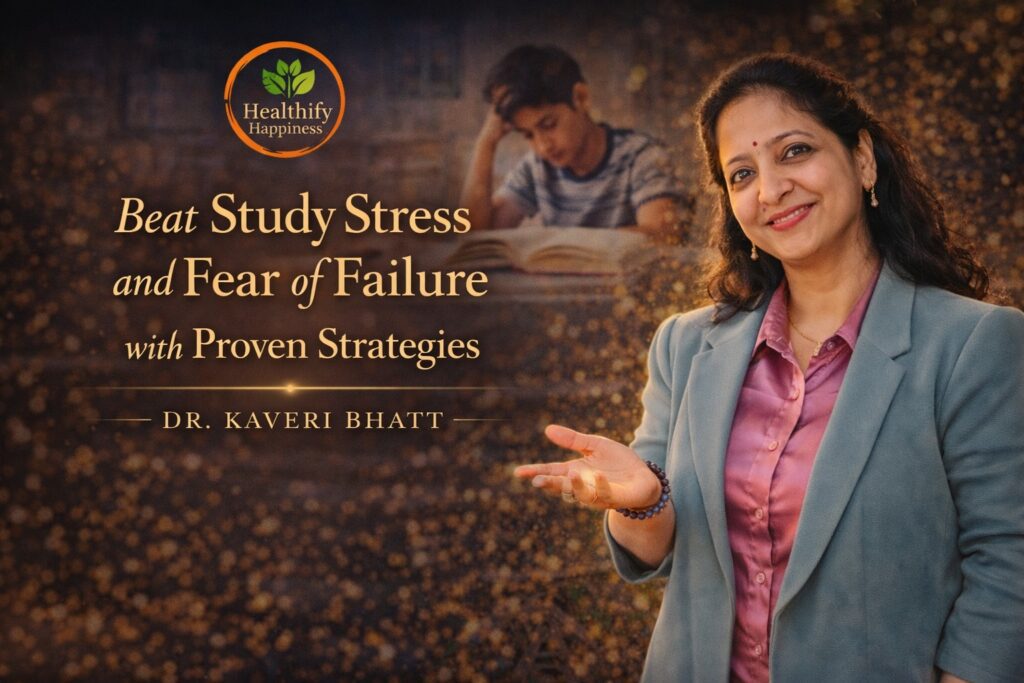
Dr. Kaveri Bhatt brings a rare blend of logical clarity and deep emotional wisdom. With over two decades in the IT industry and certifications in multiple healing modalities, she understands performance pressure from lived experience.
Her approach integrates techno spiritual healing with trauma informed care. Rather than focusing only on surface motivation, she works at the subconscious level.
Through methods such as inner child healing, emotional freedom techniques, subconscious reprogramming, and guided reflection, she helps students release stored fear. These processes gently dissolve the emotional charge linked to exams.
Importantly, her work respects nervous system safety. She teaches grounding practices that students can use before and during exams. As a result, confidence feels embodied rather than theoretical.
Dr. Bhatt also supports parents in creating emotionally secure environments. She emphasizes reassurance, active listening, and separating love from performance. Over time, students stop chasing approval. Instead, they reconnect with self trust. That internal shift allows them to Beat Study Stress and Fear of Failure in a sustainable way.
Success Story
Arjun, a twelve grade student from Mumbai, struggled with intense exam panic. Although he studied for hours, he froze during mock tests. His hands trembled and his thoughts scattered.
In sessions with Dr. Kaveri Bhatt, he discovered that his fear traced back to childhood criticism. Together, they worked on subconscious release and emotional reframing. Gradually, his body response changed. He still felt normal nervousness, yet he no longer experienced paralysis.
By the final exams, Arjun remained steady and focused. His grades improved. More importantly, he began to trust his own preparation. He realized he could Beat Study Stress and Fear of Failure not by studying harder, but by healing deeper. That transformation extended beyond academics into everyday confidence.
Real Voices: Student Reviews
Neha from Delhi shares that she used to cry before every exam. After working with Dr. Bhatt, she feels calm and centered. She says she finally understands her anxiety instead of fearing it.
Rohan from Bengaluru explains that average marks once made him feel ashamed. Now, he views results as feedback. He feels motivated without panic.
Simran from Jaipur mentions that her sleep improved significantly. She studies with focus and speaks openly about her worries. Her parents also notice her new stability.
Forum Conversations
Question: Does anxiety mean weakness?
Answer: One student asked whether anxiety means weakness. Dr. Bhatt clarified that anxiety often signals stored emotional memory rather than lack of strength. That explanation helped the student feel understood.
Question: How to motivate without pressure?
Answer: A concerned mother asked how to motivate her daughter without increasing pressure. The guidance focused on emotional reassurance, realistic expectations, and supportive communication. Gradually, the home environment felt lighter.
Frequently Asked Questions
Is it normal to feel physical symptoms before exams?
Yes, reactions like sweating or nausea occur when the nervous system perceives threat, even if the situation is not physically dangerous.
How long does it take to reduce exam anxiety?
The timeline differs for each person because emotional patterns vary. However, consistent subconscious work and regulation practices bring gradual relief.
Can fear of failure affect career decisions later in life?
Yes, unresolved academic fear often influences confidence in professional settings. Addressing it early prevents long term self doubt.
Do high expectations always cause anxiety?
Expectations alone do not create stress. Anxiety develops when expectations lack emotional reassurance and safety.
Is it possible to completely eliminate study stress?
A small amount of stress is natural and even helpful. The goal is to Beat Study Stress and Fear of Failure through balance and emotional resilience, not elimination.
Conclusion
Choosing to Beat Study Stress and Fear of Failure is not about becoming fearless. It is about becoming aware. When you understand your emotional patterns, anxiety loses its mystery.
Awareness leads to compassion. Compassion builds confidence. As you reconnect with your own worth, exams stop defining you.
With the right support and inner work, pressure transforms into focused energy. You prepare with clarity rather than panic. In that grounded state, success feels like a natural extension of effort, helping you Beat Study Stress and Fear of Failure for good.
Overcome exam stress today.