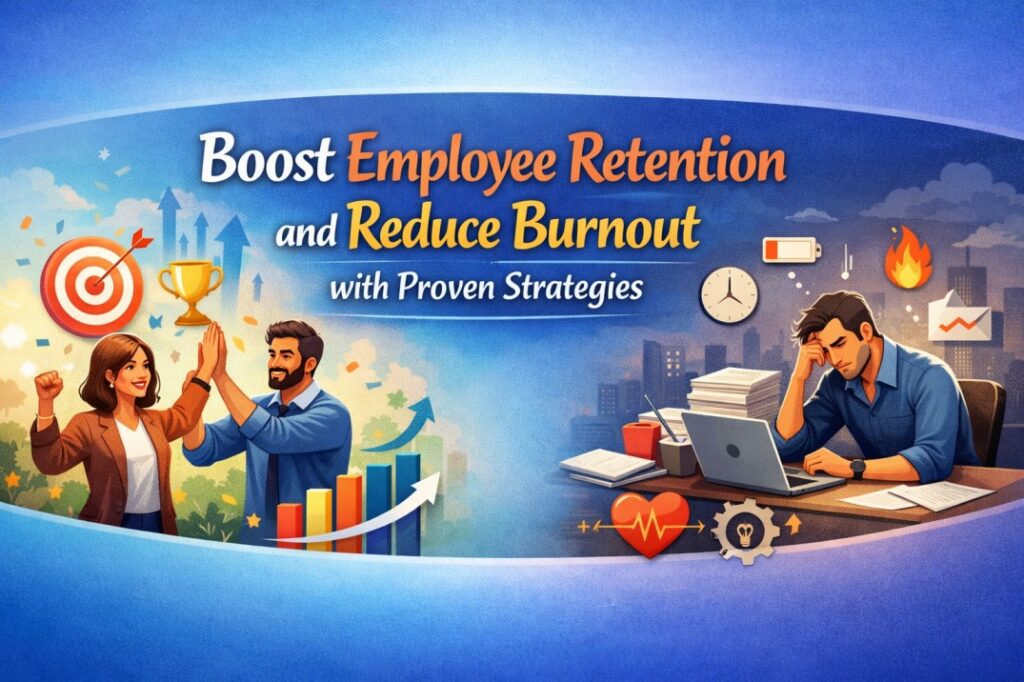
There is a moment many leaders quietly recognize. Teams still deliver, meetings still happen, yet something feels emotionally distant. When conversations turn toward how to Boost Employee Retention, the concern often carries unease rather than clarity.
Burnout does not announce itself loudly. It settles slowly through emotional fatigue, unspoken pressure, and constant inner adjustment. People begin conserving energy instead of offering it. This space deserves gentleness. Retention challenges often signal a need for emotional recalibration, not stronger incentives or stricter expectations.
In this Guide:
Understanding Burnout Beyond Workload
Burnout rarely begins with long hours alone. It forms when emotional effort exceeds recovery for too long. Employees regulate themselves constantly, adapting tone, suppressing stress, and staying composed despite internal strain.
Over time, this invisible work drains the nervous system. Even meaningful roles begin to feel heavy. Motivation fades quietly, replaced by survival mode. Recognizing burnout as emotional exhaustion shifts the conversation to Boost Employee Retention effectively.
Why High Performers Burn Out Quietly
High performers often feel safest staying capable. They meet expectations even when depleted, because consistency feels protective. Their competence hides their exhaustion. Eventually, the cost surfaces as withdrawal rather than complaint. Engagement lowers while output remains stable, creating the illusion of resilience.
The Emotional Cost of Constant Self Regulation at Work
Many workplaces reward emotional control. Employees learn to manage reactions, stay agreeable, and remain composed regardless of internal state. While useful short term, this pattern consumes energy. Without spaces for release or authenticity, stress accumulates below awareness.
Why Traditional Retention Strategies Stop Working
Retention efforts often focus on visible solutions. Benefits increase, perks expand, yet disengagement continues. The missing element is emotional trust. When people feel unseen or unsupported internally, surface comforts lose meaning. To Boost Employee Retention, emotional realities must receive attention alongside performance goals.
When Perks Replace Emotional Safety
Perks can soften experience but cannot replace connection. A comfortable workspace does not resolve unspoken pressure or unresolved stress. Employees notice when comfort substitutes for care. Over time, this disconnect creates emotional distance rather than loyalty.
The Hidden Gap Between Productivity and Wellbeing
Productivity metrics often reflect output, not capacity. People can perform while depleted, especially for short periods. However, sustained performance requires regulation and recovery. When wellbeing declines, productivity eventually follows.
The Emotional Link Between Burnout and Retention
Burnout alters how people relate to work. Meaning fades, belonging weakens, and connection feels effortful. Employees begin questioning sustainability rather than role fit. Leaving often becomes a form of self protection. Understanding this link reframes turnover as communication, not failure.
How Unresolved Stress Leads to Disengagement
Stress that remains unprocessed slowly narrows emotional range. Curiosity declines, initiative reduces, and collaboration feels draining. Disengagement often appears before visible burnout. It signals the system seeking relief.
How Dr. Kaveri Bhatt Helps to Boost Employee Retention
Dr. Kaveri Bhatt brings a grounded, techno spiritual approach to workplace wellbeing. Her work integrates emotional healing with practical systems thinking, addressing burnout at its root. She recognizes that workplace stress often mirrors deeper patterns stored in the subconscious.
Rather than addressing symptoms alone, her approach supports release, regulation, and emotional clarity. Organizations experience stability not through motivation, but through restored capacity and trust. This method helps Boost Employee Retention naturally.
Techno Spiritual Healing in Corporate Settings
Her work blends modern organizational insight with inner regulation practices. This balance helps teams remain skeptical yet open. The focus stays practical. Emotional work integrates seamlessly into daily professional life.
Subconscious Release and Trauma Informed Workplace Work
Unresolved stress patterns influence behavior, communication, and resilience. Trauma informed approaches acknowledge this without labeling individuals. Release work allows teams to respond rather than react. Emotional resilience increases organically.
Practical Emotional Tools for Daily Integration
Simple practices support regulation during real work moments. These tools fit naturally into meetings, decision making, and leadership interactions. Consistency builds safety. Small shifts compound into cultural change.
Success Story
A mid sized organization faced rising attrition despite competitive benefits. Leadership sensed emotional fatigue but lacked language to address it. They needed a strategy to Boost Employee Retention urgently.
Through guided emotional regulation and subconscious release work, conversations shifted. Teams felt permission to express limits without fear. Within months, engagement stabilized. Retention improved as emotional trust returned. Performance followed without additional pressure.
What Employees Are Saying
Rohit from Bengaluru: “Work finally feels manageable again. Clarity replaced constant tension after sessions.”
Meera from Pune: “Felt seen for the first time at work. Motivation returned once safety replaced pressure.”
Arjun from Hyderabad: “Relief that productivity no longer requires emotional sacrifice. Felt present rather than functional.”
Real Workplace Conversations
Question: How to identify burnout early without invading privacy?
Answer: Observe energy shifts, not personal disclosures. Withdrawal often precedes decline.
Question: Can retention improve without pressure?
Answer: Yes. Sustainable retention emerges when safety supports ambition.
Frequently Asked Questions
How does burnout differ from stress?
Burnout reflects prolonged emotional exhaustion and reduced capacity, not temporary pressure.
Can safety exist in high performance?
Yes, safety enhances performance by stabilizing nervous systems and supporting consistent engagement.
Is retention possible without role changes?
Often yes, when emotional load reduces and trust rebuilds naturally, you can Boost Employee Retention.
How long does recovery take?
Recovery varies. Regulation begins quickly, while deeper capacity restoration unfolds gradually.
Why does emotional work matter?
Emotional stability supports focus, creativity, and collaboration, which sustain long term results.
Conclusion
Efforts to Boost Employee Retention succeed when leaders honor emotional reality. Burnout reflects unmet needs, not lack of commitment. Organizations thrive when safety supports ambition. Clarity replaces confusion, and confidence grows through understanding.
Retention becomes natural when people feel regulated, valued, and emotionally secure. Trust sustains both performance and people.
Need personalized guidance?