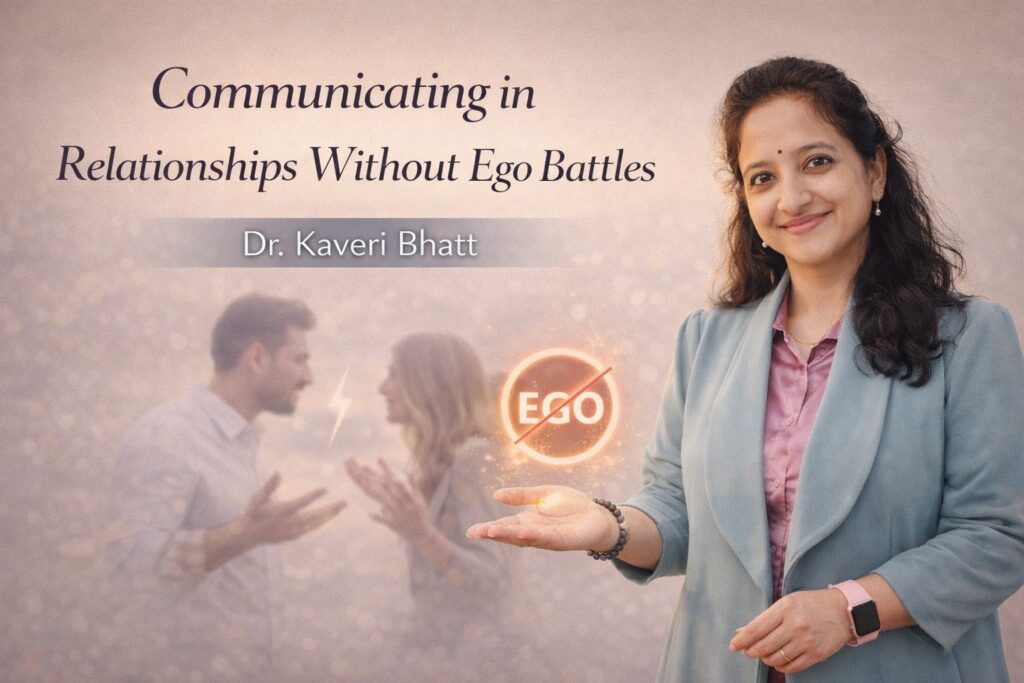
Communicating in Relationships often begins with love and good intentions. Yet somewhere between daily stress and unspoken expectations, simple conversations turn into silent competitions. You say something small, and suddenly it feels personal.
Many couples do not realize when dialogue shifts into defense. You try to explain your hurt, however your partner hears accusation. Gradually, the real issue gets buried under tone, volume, and pride. Instead of solving a concern, both partners try to protect themselves.
This pattern does not mean the relationship lacks love. It usually means emotional safety feels fragile. Communicating in Relationships becomes challenging when protection replaces connection. However, awareness can gently change that direction.
In this Guide:
Why Ego Battles Begin in Relationships
Behind most arguments lives a quiet fear. Sometimes it is fear of being unimportant or controlled. When your partner questions something, your mind may interpret it as rejection. Therefore, the body reacts before reflection begins.
Emotional maturity in marriage begins when we pause long enough to ask, “What am I truly afraid of right now?” That simple awareness softens intensity.
Emotional Triggers and Old Wounds
Many reactions in adult relationships connect to earlier emotional memories. A raised voice may echo childhood criticism. Consequently, today’s disagreement activates yesterday’s pain. Communicating in Relationships becomes clearer when individuals recognize their emotional triggers. Awareness creates space between stimulus and response.
The Cost of Winning and Losing
Ego battles always leave marks. Over time, resentment builds silently. Conversations become functional instead of intimate. Conflict resolution skills are not about suppressing disagreement. They are about protecting emotional safety while addressing concerns.
Communicating in Relationships With Emotional Awareness
Communicating in Relationships improves when awareness becomes intentional. Listening transforms when you genuinely try to understand rather than defend. Active listening skills require presence. You allow your partner to finish speaking and reflect back what you heard.
Speaking without blame changes tone instantly. Instead of saying, “You never support me,” you might say, “I feel unsupported.” Moreover, emotional regulation matters deeply. Therefore, Communicating in Relationships becomes less about control and more about collaboration.
How Dr. Kaveri Bhatt Helps You Improve Communicating in Relationships
Dr. Kaveri Bhatt approaches communicating in relationships through a deeply integrative lens. With a background in engineering and decades of corporate experience, she understands logical patterns as well as emotional complexity.
Her techno spiritual therapy blends structured reflection with subtle energy awareness. She recognizes that communication problems often originate in the subconscious. Therefore, she guides clients toward subconscious emotional release in a safe environment.
Trauma Informed Healing for Couples
Through inner child healing and chakra balancing, she helps individuals access stored emotional memories. Her trauma informed healing framework ensures that no partner feels judged. Instead, both explore their triggers with dignity. Practical tools like grounding techniques and conscious dialogue integrate easily into daily life.
Success Story: From Reactive Patterns to Respectful Dialogue
Ananya and Karan sought guidance after years of repetitive arguments. Every disagreement ended with silence. They loved each other, yet both felt emotionally exhausted.
During reflection, Ananya realized she feared abandonment, while Karan recognized that criticism triggered childhood insecurity. Through trauma informed healing, they practiced expressing vulnerability instead of accusation. Today, their connection feels steadier and kinder.
Real Voices: Client Experiences
Radhika from Mumbai: “Felt constantly misunderstood. Now describes my marriage as calmer and emotionally secure.”
Siddharth from Hyderabad: “Understanding triggers reduced defensiveness significantly. I feel more present during difficult conversations.”
Priya from Jaipur: “Subconscious emotional release helped me let go of resentment. I experience greater compassion toward my partner.”
Forum Conversations Around Ego in Marriage
Question: Do ego clashes mean incompatibility?
Answer: Often ego masks fear. With awareness and effort, many couples rediscover connection.
Question: How to handle a partner who avoids serious discussions?
Answer: Patience, emotional safety, and gentle invitations build trust over time.
Frequently Asked Questions
Does communicating in relationships require perfect emotional control?
No. It requires willingness to reflect, apologize when necessary, and remain respectful during disagreement.
Can one partner change the dynamic alone?
While mutual effort helps, one person practicing emotional awareness often influences the relational atmosphere positively.
How long does it take to reduce ego battles?
Progress varies. However, consistent conscious effort usually brings noticeable improvement within a few months.
Does trauma informed healing truly affect daily communication?
Yes. When unresolved pain receives compassionate processing, reactive patterns naturally soften.
Can long term resentment heal?
With guided support, honesty, and patience, emotional distance can gradually transform into renewed closeness.
Conclusion: Choosing Connection Over Ego
Communicating in Relationships demands courage and humility. Yet it offers something far greater than temporary victory. It offers emotional safety. When partners choose understanding over being right, conversations shift.
Ego protects pride for a moment. Conscious communication protects love for a lifetime. With compassionate guidance from practitioners like Dr. Kaveri Bhatt, couples can move from confusion to clarity.
Need personalized guidance?