When leaders decide to Create Psychological Safety, they often begin with confusion. The team appears skilled. Targets are mostly met. Yet something vital feels missing. Meetings feel careful, disagreement feels rare, and creativity seems muted.
Many leaders assume they need better strategy. However, strategy rarely solves emotional tension. People do not share bold ideas when their nervous system senses risk. To Create Psychological Safety means addressing what remains unspoken. It means understanding how subtle fear shapes performance long before results decline.
In this Guide:
Why Innovation Fails Without Emotional Safety
Brilliant minds cannot function freely inside emotional pressure. Teams may deliver tasks efficiently, yet they withhold ideas that challenge the status quo. Fear rarely announces itself loudly. Instead, it shows up as over agreement and avoidance of honest feedback.
When employees fear judgment, they filter their thoughts before speaking. Over time, this habit reduces creative risk. High performance environments often celebrate resilience. However, resilience without emotional safety turns into silent endurance.
Nervous System Responses at Work
The human nervous system reacts to perceived threat instantly. Even subtle criticism can activate stress responses rooted in past experiences. When stress activates repeatedly, individuals shift into caution mode. Therefore, to Create Psychological Safety, leaders must understand regulation. Emotional steadiness signals safety without words.
What It Truly Means to Create Psychological Safety
Some leaders worry that safety reduces accountability. In reality, clarity and safety strengthen each other. To Create Psychological Safety does not mean avoiding difficult conversations. It means holding those conversations without humiliation. It means separating behavior from identity.
Safety Is Not Softness
Strong leadership includes emotional containment. Teams respect leaders who address issues directly while remaining regulated. When correction feels respectful, trust deepens. Consequently, employees feel secure enough to admit mistakes. Mistakes then become learning moments instead of hidden liabilities.
The Link Between Trauma and Workplace Silence
Workplaces rarely discuss trauma. Yet personal history travels silently into professional spaces. An employee who once faced harsh criticism may avoid speaking up. A leader who experienced instability may over control situations.
Subconscious Patterns That Block Innovation
Unprocessed experiences create subconscious beliefs. These beliefs shape reactions faster than conscious thought. For example, someone who equates disagreement with rejection may avoid offering alternative ideas. Recognizing these patterns does not weaken professionalism. Instead, it humanizes leadership.
Breaking the Fear of Judgment Cycle
To Create Psychological Safety, teams must normalize reflection. Open conversations about emotional triggers reduce shame. When subconscious tension softens, communication naturally improves. Innovation begins to reappear without force.
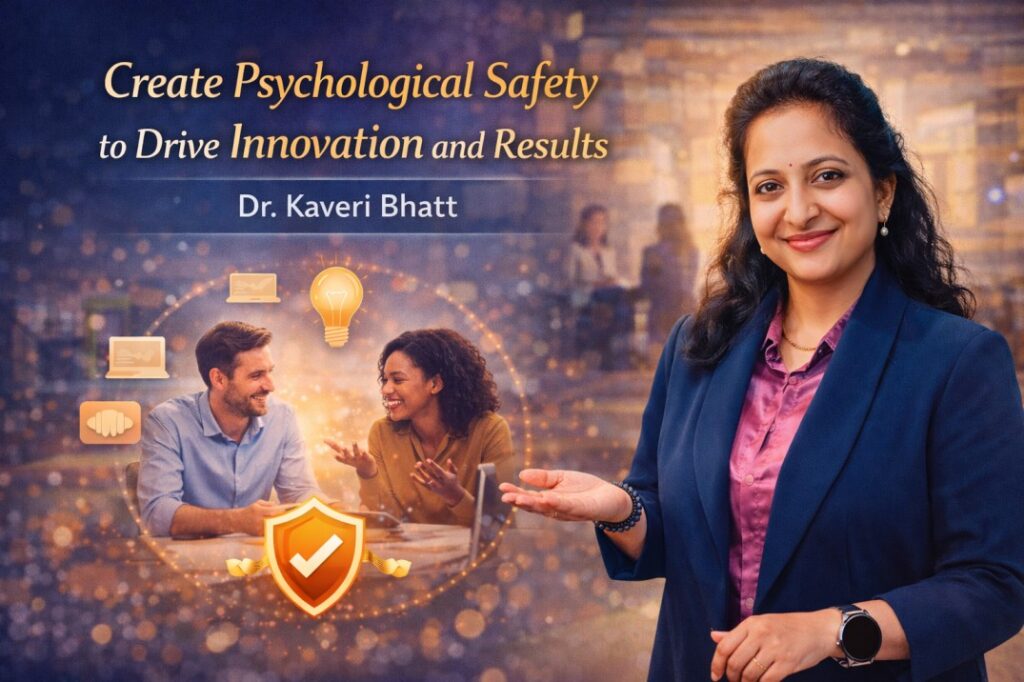
How Dr. Kaveri Bhatt Helps Leaders Create Psychological Safety
Dr. Kaveri Bhatt brings a rare blend of technical precision and spiritual depth. With over two decades in the IT industry, she understands performance pressure intimately. Her techno spiritual healing approach integrates neuroscience awareness with subconscious release techniques.
Rather than offering motivational talks, she guides leaders into experiential awareness. Participants learn to regulate emotional reactions in real time. Through subconscious release work, leaders identify hidden fears that drive over control or avoidance.
Over time, leaders build cultures where openness feels natural. They Create Psychological Safety through presence, not policy alone.
Success Story: From Control to Consciousness
Rohit, a technology founder in Pune, struggled with high employee turnover. His team described the environment as intense and unpredictable. He needed to Create Psychological Safety to save his company culture.
During coaching with Dr. Kaveri Bhatt, he recognized his own fear of failure driving micromanagement. Through emotional regulation practices, he gradually shifted his communication style. Within months, team meetings changed tone. Innovation projects increased by thirty percent. Trust replaced silent compliance.
Real Voices: Client Experiences
Ananya S from Mumbai: “Finally understood how my anxiety influenced team silence. Process was deeply grounding.”
David M from Bengaluru: “Coaching felt respectful and structured. Immediate improvement in feedback response.”
Meera R from Delhi: “Emotional tools improved both workplace culture and personal relationships.”
Forum Conversations on Psychological Safety
Question: Does safety slow decision making?
Answer: No. Clarity speeds decisions because people communicate honestly without fear.
Question: How to address resistant leaders?
Answer: Modeling regulated behavior gradually shifts team norms. Respect does not require dominance.
Frequently Asked Questions
Does safety reduce discipline?
No. It strengthens accountability because employees admit mistakes openly.
How long does change take?
Sustainable change depends on consistency, but shifts often appear within months.
Is trauma informed leadership relevant?
Yes. Emotional patterns influence performance everywhere, so awareness supports growth.
How do you measure impact?
Improved idea sharing, reduced defensiveness, and stronger collaboration are key indicators.
How do I begin personally?
Start by observing your own reactions during conflict. Regulation always begins within.
Conclusion
To Create Psychological Safety requires courage. It asks leaders to examine their own emotional patterns before expecting transformation from others. However, this inner shift produces profound external results.
Dr. Kaveri Bhatt reminds leaders that emotional safety is not softness. It is strategic wisdom grounded in human understanding. When leaders regulate themselves, they invite openness naturally. Innovation then emerges as a byproduct of trust.
Need personalized guidance?