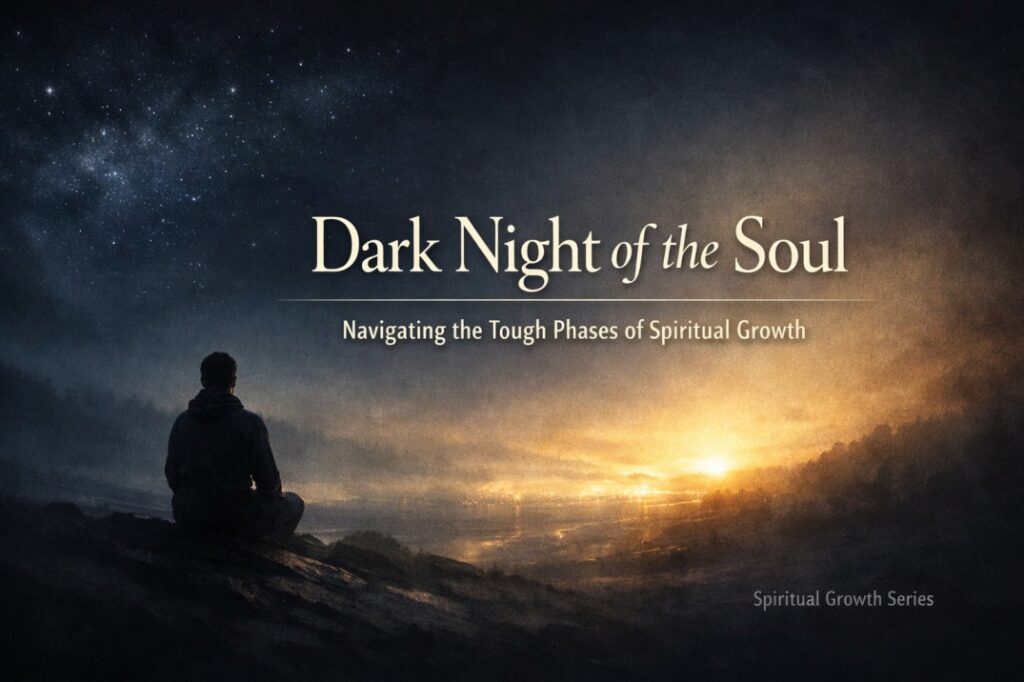
There comes a moment when the Dark Night of the Soul enters quietly and shakes everything that once felt familiar, stable, or emotionally safe. This phase does not arrive with drama, yet it creates deep confusion, emotional heaviness, and an unsettling loss of inner direction. Many people assume something has gone wrong, while in truth, something essential has begun to shift beneath the surface.
The Dark Night of the Soul often appears when old identities stop working, beliefs feel hollow, and motivation fades without warning. Although frightening, this experience carries meaning, structure, and purpose when understood with clarity rather than fear.
In this Guide:
Understanding the Dark Night of the Soul
The Dark Night of the Soul describes a period of inner dismantling where emotional certainty dissolves before deeper awareness forms. It feels like standing between who you were and who you have not yet become.
This phase removes external reassurance and forces attention inward, often without comfort or clear answers. Instead of offering peace, growth initially creates silence, emotional distance, and internal questioning.
What the Dark Night of the Soul Really Feels Like
The experience often feels emotionally flat, mentally foggy, and strangely empty despite external stability. You may continue daily life while feeling disconnected from meaning, purpose, or enthusiasm.
Previously comforting practices might stop working, which adds to confusion and self doubt. Rather than intense sadness, many feel numb, restless, or quietly overwhelmed without knowing why.
Why This Phase Appears During Spiritual Growth
Spiritual growth challenges identity, beliefs, and emotional patterns that once provided safety. When inner awareness expands, outdated structures cannot survive unchanged.
The Dark Night of the Soul appears when the subconscious releases false identities and emotional conditioning. This release feels uncomfortable because the mind resists losing familiar narratives, even painful ones.
Common Emotional and Mental Symptoms
People often report emotional heaviness without obvious triggers or external problems. Thoughts become repetitive, clarity fades, and decision making feels exhausting.
Energy drops while inner awareness increases, creating a strange imbalance. Although isolating, these symptoms indicate internal reorganization rather than emotional failure.
Emotional Numbness and Inner Emptiness
Emotional numbness often acts as a protective response during deep inner change. The nervous system reduces intensity to prevent overload.
This emptiness does not mean emotional loss, but temporary withdrawal. Feeling less does not mean caring less, it means the system is recalibrating.
Loss of Meaning, Direction, and Identity
Goals that once mattered may suddenly feel irrelevant or forced. Identity structures tied to success, roles, or validation begin to collapse.
This loss feels destabilizing, yet it clears space for authenticity. Without old labels, the inner self slowly prepares to rebuild truthfully.
Spiritual Confusion and Mental Overload
Many question their spiritual path during this phase. Meditation, affirmations, or rituals may feel empty or ineffective.
This confusion encourages discernment rather than blind belief. Mental overload arises because awareness increases faster than emotional integration.
What the Dark Night of the Soul Is Not
Misunderstanding this phase creates unnecessary fear and resistance. Clarity begins when false assumptions fall away.
The Dark Night of the Soul does not represent punishment or regression. Instead, it reflects inner restructuring beyond surface awareness.
Not Depression or Personal Failure
Although symptoms may overlap, this phase differs from clinical depression. People often maintain functionality despite emotional confusion.
However, seeking professional support remains important when distress becomes overwhelming. Acknowledging help reflects awareness, not weakness.
Not Spiritual Punishment or Regression
Growth does not follow a straight upward path. Periods of contraction prepare the ground for deeper expansion.
Pain during transformation does not signal wrongdoing. It signals honesty between the conscious and subconscious mind.
The Deeper Purpose Behind This Phase
The Dark Night of the Soul dismantles false identities formed through conditioning, fear, or expectation. It removes external anchors to reveal internal truth.
Rather than adding knowledge, this phase subtracts illusions. What remains feels unfamiliar, yet deeply real.
Ego Dissolution and Identity Reset
Ego structures provide safety until awareness outgrows them. When growth occurs, these structures dissolve naturally.
This dissolution feels uncomfortable because identity shifts precede clarity. Stability returns once authenticity replaces performance.
Subconscious Patterns Coming to the Surface
Unresolved emotional patterns emerge for acknowledgment and release. Suppression no longer works because awareness has matured.
The subconscious invites integration rather than avoidance. Healing occurs when emotions receive attention without judgment.
How Long the Dark Night of the Soul Lasts
Timelines vary widely because emotional readiness differs for everyone. Some move through quickly, while others require deeper integration.
Comparison only delays healing. Trust develops when progress follows inner pacing rather than external expectations.
Why Timelines Differ for Everyone
Resistance, fear, or avoidance can extend this phase. Self compassion, honesty, and grounding often soften the experience.
No schedule exists for inner truth. Acceptance shortens struggle naturally.
What Prolongs or Softens the Experience
Ignoring emotional signals intensifies discomfort. Listening without forcing resolution creates inner safety.
Gentle routines, emotional honesty, and body awareness help stabilize growth. Healing flows when control loosens.
Read more on Healthify Happiness:
- The Healing Crisis: Why Feeling Worse is Sometimes Part of Getting Better
- Work-Life Balance Myth? Practical Wellness Hacks for Busy Professionals
- Financial Freedom & Self-Worth: Why Money Mindset Matters for Women
- The Comparison Trap: How to Stop Competing with Classmates and Focus on You
- Manifestation Mistakes: Why Your Affirmations Aren’t Working (And How to Fix It)
Success Story: A Personal Transformation Journey
Rohit from Gurugram entered a phase where nothing felt meaningful despite professional success. Meditation stopped bringing calm, and emotional numbness replaced motivation.
Instead of forcing positivity, he slowed down and focused on emotional grounding. Over time, clarity returned through acceptance rather than effort.
Stability grew quietly, without dramatic breakthroughs. His confidence rebuilt on authenticity rather than external validation.
How Dr. Kaveri Bhatt Helps Individuals Navigate the Dark Night of the Soul
Dr. Kaveri Bhatt supports individuals moving through the Dark Night of the Soul by addressing subconscious blocks and emotional imprints gently. Her approach combines techno spiritual healing, trauma informed awareness, and practical emotional tools.
Rather than bypassing pain, her methods create emotional safety for release. Clients learn to regulate emotions, process subconscious patterns, and rebuild identity consciously.
Her work focuses on integration, not escape. This alignment allows growth to stabilize without overwhelm.
Practical Ways to Navigate This Phase Safely
Navigating the Dark Night of the Soul requires gentleness rather than intensity. Pushing for answers often deepens resistance.
Simple grounding practices support emotional regulation. Daily structure offers safety during uncertainty.
Grounding the Nervous System
Grounding calms the body so emotions process safely. Breath awareness, walking, and physical routines stabilize awareness.
A regulated nervous system supports clarity. Healing accelerates when the body feels safe.
Emotional Regulation Without Suppression
Allow emotions to exist without analysis or judgment. Observation creates distance without denial.
Writing, quiet reflection, or guided support helps expression. Release occurs through presence, not force.
Creating Inner Safety During Uncertainty
Safety comes from consistency rather than certainty. Small routines anchor awareness during emotional shifts.
Trust grows when self support replaces self pressure. Clarity follows safety naturally.
User Reviews
Neha, Pune: “I felt emotionally blank for months and assumed something was wrong with me. The guidance helped me understand this phase without panic and slowly regain stability.”
Rahul, Delhi: “Instead of forcing positivity, I learned to ground myself emotionally. That shift changed everything and brought clarity back naturally.”
Ananya, Bengaluru: “The approach felt safe and practical. I stopped fearing my inner silence and started trusting the process.”
Forum Style Discussions
Question: Why does spiritual growth feel painful before it feels peaceful?
Response: Growth dismantles familiar identity structures before rebuilding truth. Discomfort appears during transition, while peace emerges after integration stabilizes.
Question: Is it possible to avoid the Dark Night of the Soul completely?
Response: Avoidance delays growth rather than preventing it. Awareness naturally brings emotional reckoning when readiness develops.
Frequently Asked Questions
What triggers the Dark Night of the Soul?
It often begins after emotional awareness increases, life shifts occur, or inner honesty deepens beyond old identity structures.
Can the Dark Night of the Soul happen more than once?
Yes, each phase reflects a deeper layer of growth as awareness expands and subconscious patterns release.
How do I know if I am going through this phase?
Persistent emotional confusion, loss of meaning, and inner withdrawal without external cause often indicate this transition.
Should I continue meditation during this period?
Gentle awareness practices help, while forcing intensity may increase resistance and emotional overload.
When does clarity usually return?
Clarity returns gradually when emotional safety, acceptance, and grounding replace fear and urgency.
Final Reflections on Trusting the Inner Transformation Process
The Dark Night of the Soul feels disorienting because it removes false certainty before revealing truth. Although uncomfortable, this phase strengthens emotional honesty and inner resilience.
Growth does not always feel inspiring. Sometimes it feels quiet, heavy, and uncertain.
Trust develops when you stop fighting the process and begin listening. What emerges afterward feels grounded, authentic, and deeply aligned.
Need personalized guidance?