
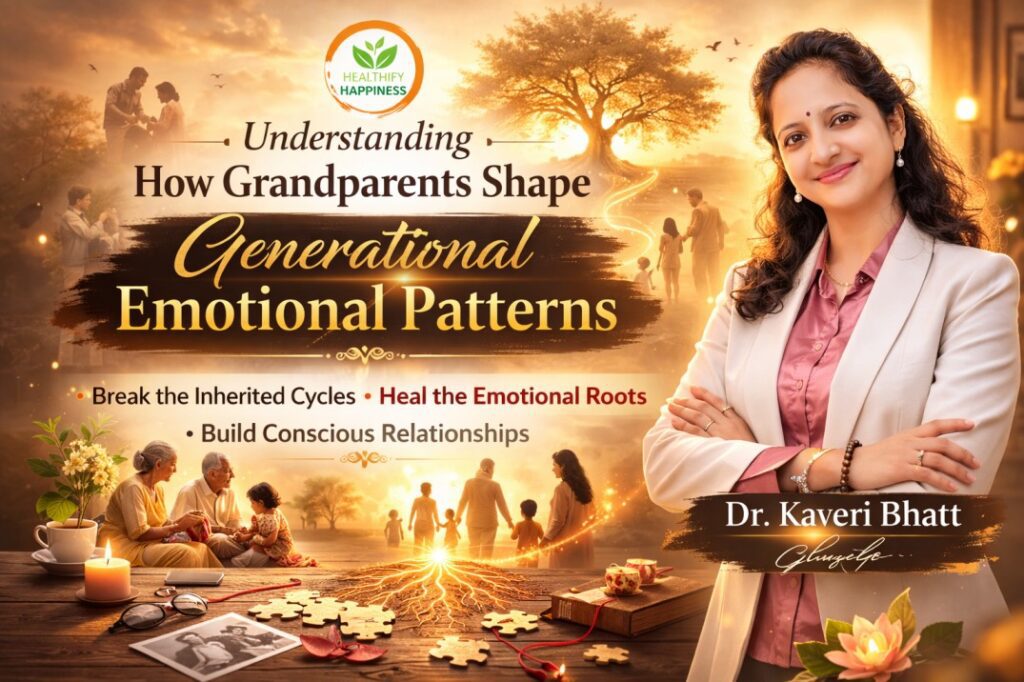
Sometimes your reaction surprises even you. The intensity feels bigger than the moment. When we explore How Grandparents Shape Generational Emotional Patterns, we begin to see that certain emotional responses did not start in our lifetime.
You may feel guilt while setting a simple boundary. You may panic during mild conflict. Although nothing dangerous is happening, your body responds as if it remembers something older. That confusion often creates shame. However, shame fades when context appears. Instead of asking what is wrong with you, a different question emerges: What did your emotional system inherit?
In this Guide:
Understanding How Grandparents Shape Generational Emotional Patterns
Families pass down more than stories and traditions. They pass down emotional climates. A grandparent who survived instability may have learned to suppress fear or sadness. That suppression can quietly shape parenting styles for decades.
Children absorb tone before language. If a household felt tense, controlled, or emotionally distant, the nervous system registered that environment as normal. Understanding How Grandparents Shape Generational Emotional Patterns allows you to separate protection from limitation. Once you see the difference, you can keep the wisdom and release the fear.
Emotional Climate of a Household
Emotional climate shapes a child long before conscious memory forms. If affection felt conditional, love may now feel uncertain. Later in life, you may believe you are simply anxious or overly responsible. However, your nervous system may be repeating what it learned early.
Silence, Survival, and Emotional Suppression
Many grandparents lived through scarcity, loss, or social pressure. Survival required strength, silence, and endurance. Although that strategy ensured survival, it also normalized emotional restraint. Their children learned that vulnerability was risky. Consequently, emotional conversations often remained shallow or avoided.
The Psychology Behind Emotional Inheritance
Emotional inheritance is not mystical. It is psychological and biological. The nervous system learns safety and danger through repeated exposure. If previous generations lived in threat, hyper-vigilance may become normal.
Neuroscience shows that stress patterns influence regulation capacity. This provides a biological basis for How Grandparents Shape Generational Emotional Patterns across decades. It means your system learned to protect you. Once protection becomes excessive, healing invites recalibration.
Inherited Coping Mechanisms
Over-responsibility, people-pleasing, emotional withdrawal, or perfectionism often trace back to earlier family survival patterns. Someone once needed those behaviors to maintain stability. Children internalize these coping styles because they feel safe. Later, the same strategies create exhaustion or resentment.
How These Patterns Show Up in Adult Life
Inherited emotional patterns influence intimacy, career decisions, and self-worth. For example, someone raised in emotional distance may struggle with vulnerability. Another person raised in high criticism may chase perfection relentlessly. Success brings temporary relief but not safety.
Recognizing How Grandparents Shape Generational Emotional Patterns transforms confusion into context. Context reduces shame and strengthens choice.
Relationship Dynamics
In relationships, inherited patterns appear during stress. You may withdraw during conflict because silence once prevented escalation. Alternatively, you may over-explain yourself to avoid rejection. These responses feel automatic. When you recognize their origin, you pause. Instead of reacting instantly, you choose communication consciously.
How Dr. Kaveri Bhatt Helps You Heal Generational Patterns
Dr. Kaveri Bhatt brings over two decades of structured professional experience combined with deep therapeutic training. Her approach integrates techno-spiritual awareness with grounded psychological methods.
She helps clients decode How Grandparents Shape Generational Emotional Patterns using subconscious release. Her sessions focus on identifying inherited emotional scripts. Once identified, she helps clients gently reframe and release them.
Subconscious Release and Regulation
Using guided visualization and reframing, she accesses emotional memory gently. Clients revisit past associations in a safe therapeutic space. Dr. Bhatt also emphasizes nervous system regulation. Clients learn practical tools to stabilize themselves during emotional triggers. This ensures healing integrates into daily life.
Success Story: Breaking an Inherited Emotional Cycle
A client once shared that she feared disappointing authority figures. Even minor feedback created panic. Through sessions with Dr. Kaveri Bhatt, she explored her grandmother’s history. The grandmother had endured constant criticism and survived by staying compliant.
That survival style shaped family communication for years. The client realized her anxiety reflected inherited conditioning. Dr. Bhatt guided her through subconscious release. Gradually, feedback stopped triggering panic. She began responding with clarity instead of fear.
Real Client Reviews
Anita from Pune: “Carried intense guilt while asserting boundaries. After working with Dr. Bhatt, relationships feel balanced and respectful.”
Rahul from Delhi: “Anger dominated reactions. Through subconscious work, understood inherited frustration. Now responds thoughtfully.”
Meera from Bangalore: “Emotional distance shaped childhood. Sessions helped understand family history. Now connects with warmth.”
Forum Conversations on Generational Healing
Question: Can inherited emotional patterns affect my parenting style?
Answer: Yes. Awareness allows you to consciously model healthier communication for your children.
Question: Is exploring family trauma disrespectful to elders?
Answer: No. When done with compassion, it honors resilience while updating patterns that no longer serve.
Frequently Asked Questions
How do I identify inherited emotional patterns?
Notice repeated reactions that feel intense or automatic. Reflect on family dynamics and emotional tone. Patterns often reveal themselves through consistent triggers.
Can healing generational patterns improve mental health?
Yes. Understanding origin reduces confusion and self-blame. When the nervous system feels safe, anxiety and emotional reactivity often decrease.
Do I need details about my grandparents?
No. You can begin with observable family behaviors and emotional themes. Even limited awareness provides useful insight.
Is subconscious work safe?
When guided by trauma-informed practitioners, subconscious work remains paced and contained. Emotional safety always takes priority.
Will healing change my family relationships?
It often improves clarity and boundaries. While dynamics may shift, growth usually fosters healthier and more respectful interaction.
Conclusion
How Grandparents Shape Generational Emotional Patterns becomes clear when you look at emotional climate, coping styles, and nervous system memory. Patterns travel quietly across decades. However, awareness interrupts repetition.
With compassionate guidance, you can evolve inherited scripts into conscious responses. Dr. Kaveri Bhatt’s work reminds us that healing is not rebellion. It is maturity. You carry your lineage with strength. Yet you also carry the power to choose emotional freedom for yourself and future generations.
Need personalized guidance?