
If you are searching for How to Fix Trust Issues in Long Term Relationships, something inside likely feels unsettled. You may still care deeply for your partner, yet your heart no longer feels fully relaxed. That quiet tension can feel confusing and exhausting at the same time.
Trust rarely collapses in one moment. Instead, it shifts slowly through small hurts, unanswered questions, or emotional distance that never truly gets resolved. Over time, your body starts reacting before your mind can explain why.
This is not about labeling anyone as wrong. It is about understanding what feels unsafe within you. When awareness grows, clarity follows. And when clarity arrives, trust can begin to rebuild from a steadier place.
In this Guide:
Why Trust Issues Develop in Long Term Relationships
Trust issues often develop gradually, especially in long term bonds where expectations run deep. When emotional needs go unheard or dismissed, the nervous system stores those moments as subtle threats. Eventually, you stop feeling fully secure.
Sometimes betrayal plays a role. However, emotional neglect or repeated misunderstandings can create the same impact. Your heart begins protecting itself even when you consciously want closeness. Learning How to Fix Trust Issues in Long Term Relationships requires acknowledging these subtle shifts first.
In many cases, past experiences also influence present reactions. Old wounds blend into current situations, making everything feel heavier than it truly is. Therefore, understanding the origin of distrust becomes the first step toward meaningful repair.
The Silent Build Up of Emotional Hurt
Small disappointments matter more than we admit. A forgotten promise, a dismissive comment, or emotional unavailability can accumulate quietly. While each event may seem minor, the emotional residue builds over time.
Eventually, those unresolved moments create internal barriers. You withdraw to protect yourself. Conversations become transactional rather than emotional. You may find yourself checking up on your partner or doubting their words without clear evidence. This is the mind’s way of trying to prevent future pain.
Subconscious Patterns and Trauma Responses
Often, the struggle to trust is not just about the partner—it is about the nervous system. If you have experienced past instability, your subconscious mind may be hyper-alert to danger. This can make you perceive a neutral situation as a threat.
For example, a delayed text might trigger abandonment fears from childhood. A slightly sharp tone might remind you of a critical parent. These reactions happen automatically.
To How to Fix Trust Issues in Long Term Relationships effectively, one must look beyond the surface arguments and address these root causes. Healing the subconscious allows you to respond to the present moment, rather than reacting to the past.
How Dr. Kaveri Bhatt Helps You Rebuild Trust
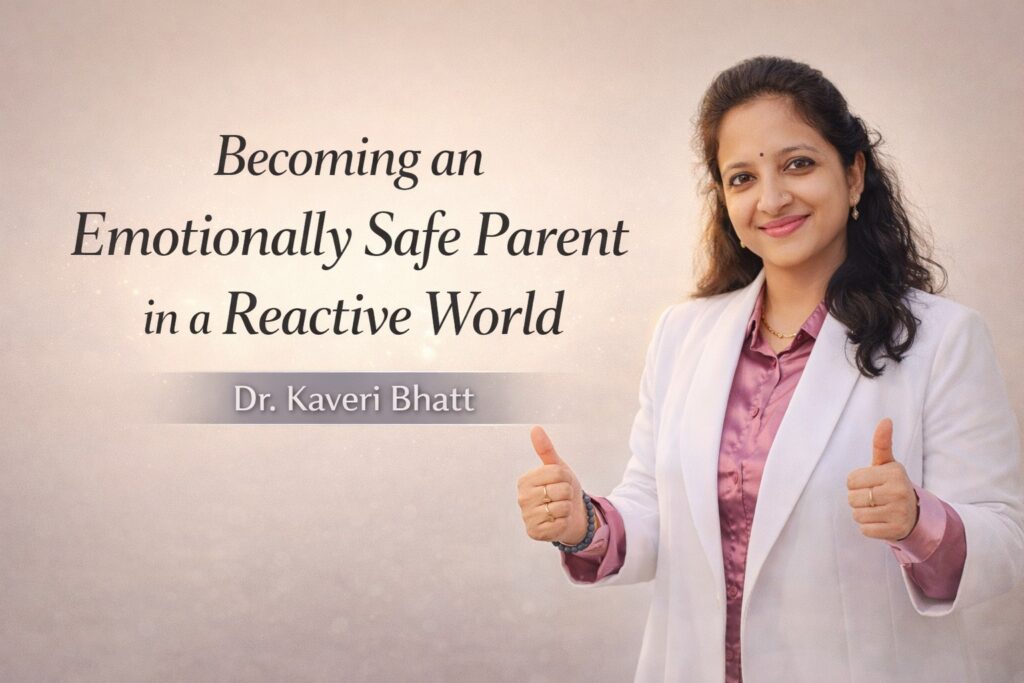
Dr. Kaveri Bhatt brings a grounded, techno-spiritual approach to relationship healing. With her background in engineering and extensive training in holistic modalities, she combines structure with emotional depth.
She understands that trust is a biological and emotional safety mechanism. Her work focuses on regulating the nervous system so that safety can be felt again. She uses subconscious release techniques to clear old emotional charge, allowing partners to see each other clearly.
Trauma Informed Healing for Couples
Dr. Kaveri Bhatt uses trauma-informed methods like Inner Child Healing, EFT, and NLP to address the root of distrust. She helps individuals identify whether their doubt stems from current reality or past conditioning.
Through guided sessions, clients learn to communicate needs without accusation. They learn to self-soothe when anxiety rises. This creates a stable foundation where trust can grow naturally again. The process is gentle, safe, and respectful of both partners’ emotional pace.
Practical Tools for Daily Connection
Healing does not stay in the therapy room. Dr. Kaveri provides practical tools for daily life. These include conscious communication scripts, grounding exercises for moments of doubt, and rituals to rebuild intimacy. Consistency in these small actions is the key to How to Fix Trust Issues in Long Term Relationships sustainably.
Success Story: From Suspicion to Security
Rohan and Meera had been married for ten years when silence took over their home. Meera felt constantly anxious about Rohan’s commitment, despite no evidence of betrayal. Rohan felt suffocated by her questions.
During sessions with Dr. Kaveri Bhatt, Meera discovered that her father’s sudden departure in her childhood fueled her fear. Rohan learned that his withdrawal was a defense mechanism against conflict. Once they understood these subconscious patterns, the blame dissolved.
They practiced nervous system regulation together. Meera learned to express fear without attacking. Rohan learned to offer reassurance without feeling controlled. Within months, the heaviness lifted. They found a new, deeper security that they had not experienced before.
Real Experiences from Clients
Sanya from Mumbai shares that she was ready to give up on her relationship. Dr. Kaveri helped her distinguish between intuition and insecurity. Today, she feels grounded and trusts her partner fully.
Vikram from Delhi explains that he didn’t realize his silence was destroying trust. Through the sessions, he learned to vocalize his feelings, which transformed his marriage.
Anjali from Bangalore appreciated the practical tools. She says understanding her nervous system changed how she handles conflict, making her relationship resilient.
Forum Conversations
Question: Can trust return after it is completely broken?
Answer: Yes, but it requires transparency and time. Dr. Kaveri Bhatt emphasizes that consistent actions and emotional safety are more powerful than apologies.
Question: Is it possible to fix trust issues alone?
Answer: While both partners help, one person’s emotional shift can change the dynamic. When you become secure within yourself, your relationship often mirrors that stability.
Frequently Asked Questions
How long does it take to fix trust issues?
There is no fixed timeline. However, with consistent subconscious work and conscious communication, couples often see significant shifts in emotional safety within a few months.
Do we need to discuss every past hurt?
Not necessarily. We focus on the emotional patterns and the root causes. Releasing the emotional charge is more effective than reliving every detail.
Can this help if my partner is not willing to join?
Yes. Many clients start individually. As you learn How to Fix Trust Issues in Long Term Relationships from your side, your changing reactions often invite a positive shift in your partner.
Is this approach practical for busy couples?
Absolutely. The tools provided are designed to integrate into daily life, requiring minutes rather than hours, focusing on quality of connection.
Does trauma informed healing mean we are broken?
No. It means your system is protecting you. Healing simply updates that protection mechanism so you can connect safely again.
Conclusion
Rebuilding trust is a journey from fear to safety. It requires patience, honesty, and the courage to look inward. You do not have to live with constant doubt.
When you address the root causes and learn How to Fix Trust Issues in Long Term Relationships with compassion, you open the door to a deeper, more resilient love. Dr. Kaveri Bhatt’s guidance offers the structure and safety needed to navigate this path.
Clarity is waiting. Peace is possible. And your relationship can emerge stronger than before.
Start rebuilding trust and connection today.