
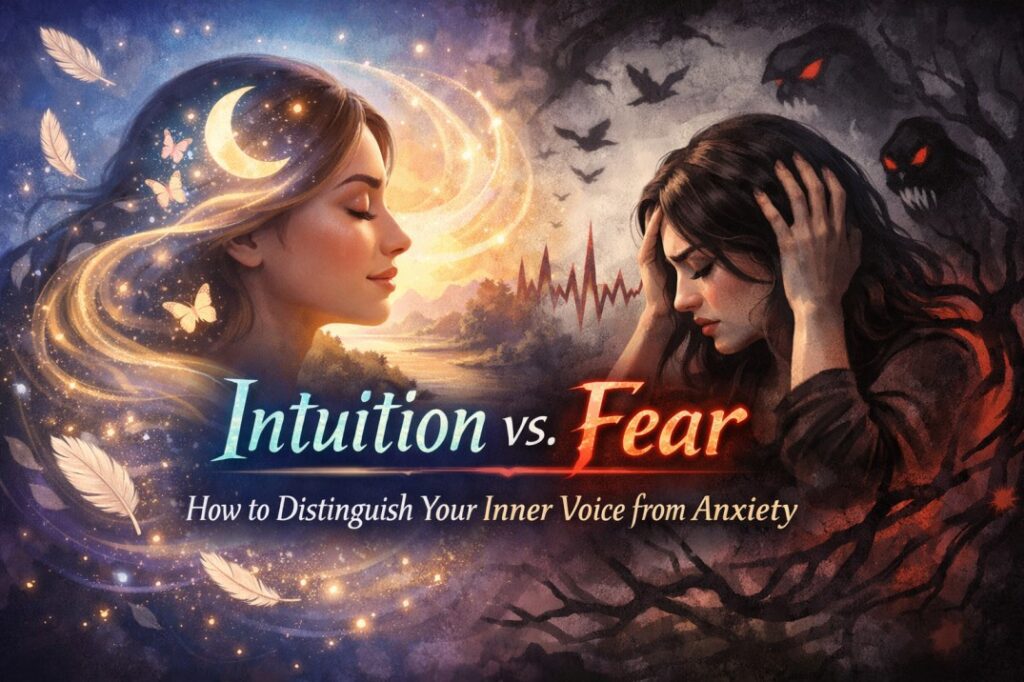
Most people experience intuition as a quiet sense rather than a loud command. It feels steady, neutral, and calm. However, it rarely demands attention, which makes it easy to overlook.
Fear behaves differently. It rushes in with urgency and pressure. It creates scenarios, predicts outcomes, and demands immediate action. This intensity often feels convincing, even when it lacks truth.
The confusion begins when fear imitates intuition. Both speak internally. Yet their emotional textures remain very different when observed closely.
In this Guide:
Why Intuition Feels Quiet vs Urgent
Why intuition feels quiet
Intuition does not argue. It simply presents a knowing. It often arrives when the body feels relaxed and the breath feels steady.
Because it lacks emotional drama, the mind sometimes dismisses it. People often expect clarity to feel powerful, yet intuition prefers subtlety.
Why fear feels urgent
Fear activates the nervous system. It tightens muscles and speeds up thoughts. It pushes the mind toward protection rather than presence.
This urgency feels important, which tricks the mind into believing it must be right. In reality, fear speaks from survival, not wisdom.
Emotional Signals That Create Confusion
The body often reacts before the mind understands. Tightness in the chest or restlessness can feel like intuition warning you. However, these sensations often signal anxiety instead.
Thought patterns also blur clarity. Repetitive questioning and worst case scenarios create mental noise. Over time, this noise masks the inner voice.
Learning to notice emotional texture rather than content brings clarity. Calm feels different from tension, even when thoughts sound similar.
Physical sensations and body cues
Intuition often comes with grounded sensations. The body feels settled, even if the decision feels unfamiliar. There is no rush.
Fear brings contraction. Breathing becomes shallow. The body prepares to defend or escape. These signals matter more than thoughts.
Thought patterns that mimic intuition
Fear uses logic to sound convincing. It strings together reasons that appear practical. Yet beneath them lies discomfort.
Intuition does not need justification. It remains consistent without argument. When observed, this difference becomes clear.
The Role of Past Experiences
Many fear responses originate from earlier experiences. The nervous system remembers emotional pain and tries to prevent repetition.
This memory based reaction does not mean something is wrong. It means the system learned survival well. However, it does not always reflect the present.
Understanding this distinction softens self judgment. You stop blaming yourself for hesitation and begin listening with compassion.
Trauma memory versus present awareness
Trauma lives in the body, not in logic. It activates quickly when something feels familiar.
Awareness helps separate memory from reality. You begin to ask whether the reaction belongs to now or then.
Conditioning and emotional survival
Social conditioning teaches avoidance and approval seeking. Over time, fear adopts these patterns.
Recognizing conditioning helps release it. You regain choice instead of reacting automatically.
Awareness as the Turning Point
Clarity emerges when the nervous system feels safe. Slowing down creates space between sensation and decision.
This pause allows intuition to surface naturally. You do not force insight. You allow it.
Breathing, grounding, and emotional presence restore balance. From this state, fear loses its grip.
Slowing down the nervous system
Gentle awareness calms internal noise. The body relaxes when it feels heard.
As tension reduces, thoughts slow down. This quiet creates room for inner clarity.
Creating emotional space
Space allows feelings to move without control. You observe rather than resist.
Within this space, intuition becomes easier to recognize and trust.
Rebuilding Trust in Yourself
Trust rebuilds through small experiences. Each calm decision strengthens confidence.
You begin noticing how intuition feels over time. Consistency replaces doubt.
Confidence grows without force. You stop seeking certainty and start honoring clarity.
Learning from calm decisions
Calm choices feel stable afterward. There is no lingering regret.
These moments teach the body what safety feels like again.
Confidence without force
Self trust grows gently. You no longer rush decisions to escape discomfort.
Instead, you listen and respond with patience.
Read more on Healthify Happiness:
- Reclaim Your Joy: A Practical Guide to Overcoming Emotional Numbness
- Mindful Leadership: 5 Ways to Lead with Calm in a High-Pressure Environment
- Toxic Relationships: Signs It’s Time to Walk Away and Choose Yourself
- Mental Health Day For Students: Why Taking a Break Can Save Your Semester
- Dark Night of the Soul: Navigating the Tough Phases of Spiritual Growth
Success Story
Riya, a working professional from Bengaluru, struggled with constant self doubt. Every decision felt heavy, and anxiety followed her daily.
Through awareness practices, she learned to pause before reacting. Over months, she recognized fear patterns and separated them from intuition.
Today, her decisions feel calmer. She trusts herself without overthinking, and anxiety no longer dominates her inner space.
How Dr. Kaveri Bhatt Helps
Dr. Kaveri Bhatt works with a grounded techno spiritual approach that blends modern understanding with subconscious healing. Her work focuses on releasing stored emotional patterns rather than suppressing symptoms.
She uses trauma informed methods that respect the nervous system. Her sessions help clients feel safe while gently addressing deep emotional memory.
Through subconscious release, emotional integration, and practical awareness tools, she supports lasting clarity. Clients learn to respond instead of react, building trust from within.
What People Are Saying
Anita from Mumbai: “I finally understand the difference between fear and intuition. Her anxiety reduced as clarity increased, and decision making feels lighter.”
Rohit from Delhi: “Emotional awareness helped me trust myself again. He feels calmer and less reactive during important moments.”
Meera from Pune: “My inner voice feels clearer now. She no longer rushes decisions and feels emotionally grounded.”
Community Conversations
Question: How do I know if my fear is protecting me or limiting me?
Answer: Protection feels calm and present. Limitation feels tense and repetitive. Observing your body helps distinguish the two over time.
Question: Can intuition exist alongside anxiety?
Answer: Yes, but anxiety often masks intuition. Calming the nervous system allows intuition to emerge naturally.
Frequently Asked Questions
How long does it take to clearly distinguish intuition vs fear?
Clarity develops gradually as awareness grows. With consistent observation and emotional regulation, most people notice clear differences within weeks.
Can intuition ever feel uncomfortable?
Yes, intuition may guide you toward unfamiliar choices. However, it does not create panic or urgency, even when discomfort exists.
Why does fear feel logical sometimes?
Fear borrows logic to justify emotional reactions. Its urgency often hides beneath rational sounding thoughts.
Is overthinking always a sign of fear?
Overthinking usually indicates anxiety. Intuition feels simple and does not require repeated analysis.
Can professional support help build intuition?
Yes, guided emotional work helps regulate the nervous system. This creates the safety needed for intuitive clarity.
Closing Reflection
The journey between intuition vs fear requires patience, not pressure. As awareness deepens, clarity replaces confusion naturally.
When you learn to listen without urgency, trust returns. Your inner voice has always been present, waiting for space to be heard.
Need personalized guidance?