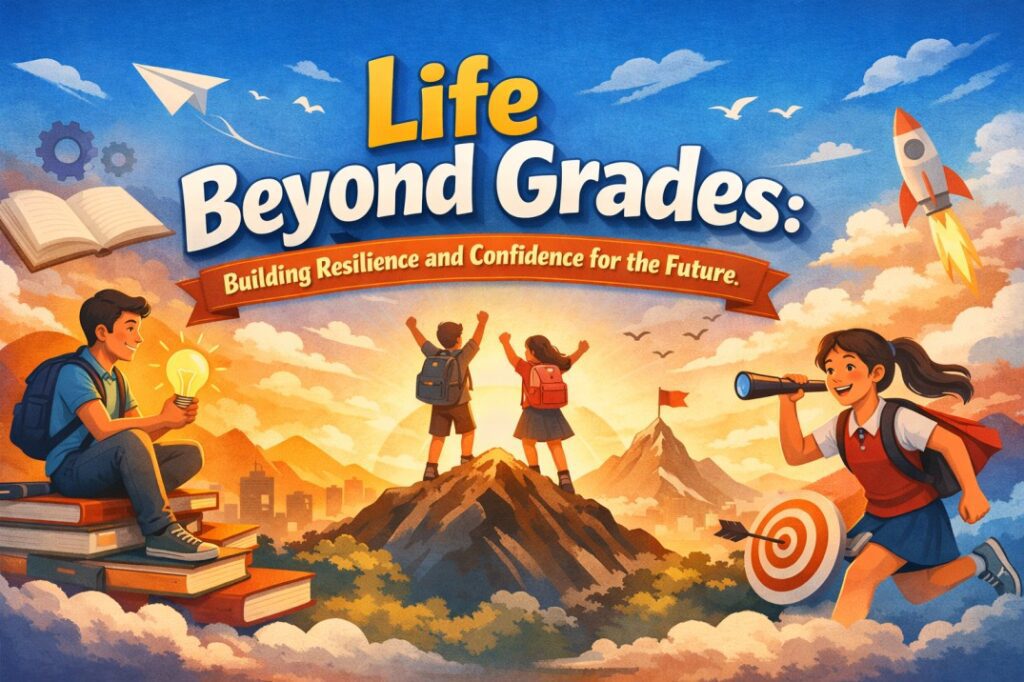
Life Beyond Grades becomes relevant the moment a student feels heavy before an exam result. That weight often comes from expectations, comparisons, and fear of disappointing others.
Many students do well academically yet feel anxious inside. They carry the belief that one number can define their future and value.
Over time, this pressure shapes identity. It creates self doubt even in capable, intelligent young minds.
In this Guide:
Why Grades Became a Measure of Identity
Grades were never meant to measure worth. However, repetition slowly taught students that success equals approval.
Parents, teachers, and society often reinforce this unintentionally. As a result, achievement starts replacing emotional self awareness. Embracing life beyond grades helps students separate their human value from their academic output.
When identity depends on results, confidence becomes fragile. Every setback then feels personal rather than situational.
When Achievement Starts Replacing Self Worth
Students begin asking who they are without success. This question can feel uncomfortable and unsettling.
Yet this discomfort holds an important truth. Self worth needs a deeper foundation than performance alone.
Recognizing this gap is the first step toward resilience. Awareness creates space for emotional growth and a balanced life beyond grades.
Understanding Life Beyond Grades and Resilience
Resilience is the ability to stay steady during uncertainty. It grows through emotional regulation, not constant achievement.
Choosing life beyond grades teaches students to respond rather than react. They learn how to recover after disappointment.
This skill supports every area of life. Careers, relationships, and personal choices all rely on resilience.
Emotional Strength as a Life Skill
Emotional strength develops through reflection and support. It strengthens when feelings feel safe to express.
Students who build this skill adapt better to change. They trust themselves even when outcomes remain uncertain.
This confidence feels quieter but stronger. It lasts longer than external validation.
Confidence That Is Not Tied to Results
Confidence rooted only in success often collapses under pressure. True confidence comes from knowing you can handle uncertainty.
When students trust their inner stability, fear reduces. They stop measuring themselves against others constantly.
This shift creates emotional freedom. It allows curiosity and growth to replace anxiety, laying the groundwork for a successful life beyond grades.
Learning to Trust Yourself Again
Trust grows when students listen to their own needs. They learn to pause instead of pushing constantly.
Gradually, self belief becomes internal. Approval stops being the only source of motivation.
This inner confidence supports long term fulfillment. It helps students navigate life with clarity.
The Role of Failure in Emotional Growth
Failure often feels threatening because it challenges identity. Yet it carries valuable emotional lessons.
When processed gently, setbacks strengthen resilience. They teach flexibility and patience.
Students who understand this recover faster. They move forward without carrying shame.
How Setbacks Shape Inner Stability
Each challenge offers feedback, not judgment. Emotional processing transforms experience into wisdom.
This mindset reduces fear of trying. Growth becomes safer and more sustainable.
How Families and Schools Can Support Life Beyond Grades
Support begins with emotional safety. Students need reassurance that love and respect remain constant.
Open conversations reduce fear of failure. Listening without immediate correction builds trust.
Schools that value emotional intelligence nurture balanced individuals. This approach prepares students for a meaningful life beyond grades amidst real world complexity.
Creating Emotional Safety Instead of Pressure
When effort receives appreciation, resilience grows. Encouragement feels more powerful than comparison.
This environment supports long term confidence. Students feel free to explore their potential.
Read more on Healthify Happiness:
- Intuition vs Fear: How to Distinguish Your Inner Voice from Anxiety
- Reclaim Your Joy: A Practical Guide to Overcoming Emotional Numbness
- Mindful Leadership: 5 Ways to Lead with Calm in a High-Pressure Environment
- Toxic Relationships: Signs It’s Time to Walk Away and Choose Yourself
- Mental Health Day For Students: Why Taking a Break Can Save Your Semester
Success Story: Reclaiming Confidence Beyond Marks
Riya, a sixteen year old student from Pune, felt lost after failing an entrance exam. Her confidence collapsed despite years of strong academic performance.
Through emotional reflection and support, she explored her fear of disappointing others. Gradually, she rebuilt trust in herself beyond scores.
Today, she approaches learning with curiosity instead of fear. Her confidence now feels stable and self driven, proving that a fulfilling life beyond grades is possible.
How Dr. Kaveri Bhatt Helps Students Embrace Life Beyond Grades
Dr. Kaveri Bhatt works with students using a techno spiritual healing approach. Her methods focus on subconscious release and trauma informed care.
She helps students identify emotional patterns linked to performance pressure. Through practical tools, they learn regulation and self trust.
Her work integrates real world application with inner healing. Students experience confidence that feels grounded and authentic, helping them transition smoothly into a life beyond grades.
What Students and Parents Say
Ananya, Bengaluru: “My anxiety reduced significantly after emotional sessions. I now approach exams with calm focus.”
Rohit, Delhi: “Improved self belief beyond academic outcomes. I feel emotionally balanced and confident.”
Meera, Mumbai: “Appreciate the practical tools for emotional clarity. I feel supported without judgment.”
Forum Questions and Answers
Question: How can students stop comparing themselves to others constantly?
Answer: Comparison reduces when self awareness increases. Emotional grounding helps students reconnect with their own journey.
Question: Is confidence possible after repeated academic setbacks?
Answer: Yes, when confidence shifts from results to resilience, setbacks become learning experiences rather than identity threats.
Frequently Asked Questions
How does life beyond grades improve mental health?
It reduces pressure, builds emotional regulation, and strengthens self trust, allowing students to feel stable regardless of outcomes.
Can students still aim high without grade pressure?
Yes, ambition becomes healthier when driven by curiosity and growth rather than fear and comparison. This is the core of living a life beyond grades.
What role do parents play in building resilience?
Parents create emotional safety by validating effort and feelings instead of focusing only on results.
Is emotional resilience more important than academic success?
Both matter, yet resilience supports success sustainably across life, relationships, and career challenges.
How long does it take to build confidence beyond grades?
The process varies, yet consistent emotional support creates noticeable shifts over time.
Conclusion: Choosing Life Beyond Grades
Life Beyond Grades invites students to trust themselves beyond numbers. It offers freedom from constant evaluation.
When resilience replaces fear, confidence grows naturally. The future then feels open, flexible, and self directed.
This journey builds inner stability. It prepares students not just to succeed, but to thrive.
Need personalized guidance?