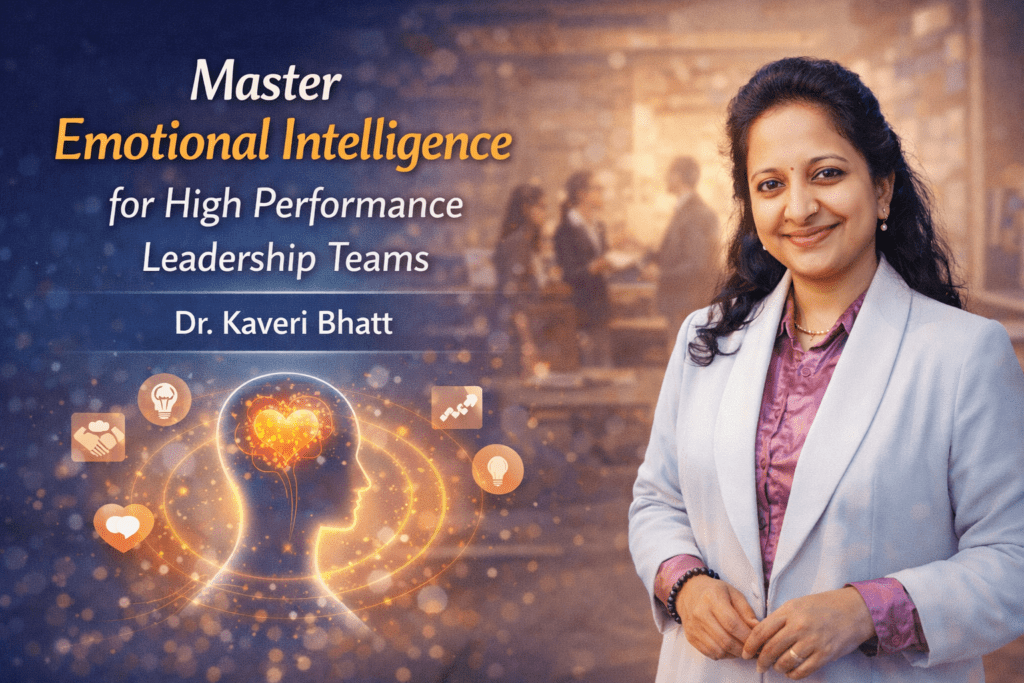
To Master Emotional Intelligence inside a leadership team is not about becoming softer. It is about becoming clearer in moments that usually feel charged or uncertain. Many leaders sense tension in meetings, subtle defensiveness in conversations, and emotional fatigue across departments. Yet they often struggle to name what is truly happening.
On paper, performance looks stable. Targets are met, revenue grows, and deadlines are honored. However, beneath those numbers, emotional misalignment quietly affects trust and creativity. Dr. Kaveri Bhatt frequently meets leaders at this intersection of success and strain. They are not incapable. They are emotionally overloaded. Once they decide to Master Emotional Intelligence, clarity begins to replace confusion.
In this Guide:
Why High Performance Teams Still Struggle Emotionally
High performance leadership teams carry enormous pressure. They make fast decisions, navigate uncertainty, and manage expectations from multiple directions. Over time, this pressure compresses emotions rather than resolving them. Because leaders value strength, they often suppress discomfort.
Eventually, these unprocessed emotions surface as impatience, rigidity, or silent withdrawal. Moreover, teams mirror their leaders. If emotional awareness remains low at the top, communication becomes transactional. Dr. Kaveri Bhatt explains that emotional intelligence coaching is not a luxury. When leaders Master Emotional Intelligence, they reduce reactive patterns and build genuine team trust.
Hidden Emotional Blind Spots in Leadership
Every leader has blind spots. Some avoid difficult conversations. Others over control situations when uncertainty rises. Many intellectualize emotions instead of feeling them. Although these patterns appear small, they influence strategic thinking. Awareness creates the first shift. When leaders recognize their emotional triggers, they reclaim choice.
The Cost of Ignored Emotions in Corporate Spaces
Ignored emotions do not disappear. They accumulate. Over time, this accumulation creates burnout, disengagement, and turnover. Furthermore, teams start operating in survival mode. People focus on avoiding mistakes rather than contributing ideas. Choosing to Master Emotional Intelligence becomes a strategic decision, not an emotional indulgence.
What It Truly Means to Master Emotional Intelligence
To Master Emotional Intelligence is to understand your emotional landscape without being ruled by it. It includes awareness, self regulation in leadership, empathy, and conscious communication skills. This mastery does not mean constant calmness. Instead, it means responding thoughtfully even when discomfort arises.
Dr. Kaveri Bhatt emphasizes that emotional mastery is trainable. It requires structured practice and guided reflection. With consistency, leaders build emotional clarity at work that transforms decision making.
Emotional Awareness Beyond Theory
Reading about emotions is easy. Experiencing them consciously requires courage. True awareness means feeling discomfort without rushing to fix it. It means naming fear, disappointment, or frustration honestly. As leaders practice this awareness, teams respond differently. Conversations become transparent. Feedback flows with less defensiveness.
Self Regulation and Conscious Communication
Self regulation in leadership begins with small pauses. Before responding in a heated moment, leaders breathe intentionally and slow their speech. This simple act prevents escalation. Conscious communication skills also include reflective listening. Leaders repeat what they heard before offering their perspective. This approach builds emotional safety immediately.
The Science and Subconscious Layer of Leadership
Modern neuroscience confirms that emotions influence cognition. When stress rises, the brain shifts into protection mode. Strategic thinking narrows. Therefore, trauma informed leadership becomes essential. Many professionals carry past experiences that shape current reactions. Without awareness, these subconscious patterns guide decisions silently.
Dr. Kaveri Bhatt integrates subconscious healing methods into leadership development. She helps leaders identify emotional triggers rooted in earlier experiences. When leaders understand their subconscious emotional patterns, they respond with clarity. Executive emotional mastery emerges from this deeper self understanding.
Trauma Informed Leadership in Modern Workplaces
Trauma informed leadership does not label employees. It acknowledges that everyone carries emotional history. Leaders learn to create boundaries, regulate their own stress, and communicate with sensitivity. This approach increases psychological safety. Teams feel seen rather than judged. As a result, engagement improves naturally.
How Dr. Kaveri Bhatt Helps You Master Emotional Intelligence
Dr. Kaveri Bhatt combines structured emotional intelligence coaching with a techno spiritual approach. Her background in engineering and holistic healing allows her to bridge logic and intuition seamlessly. She works through subconscious release methods that address stored emotional tension.
Moreover, she applies trauma informed frameworks. Leaders learn grounding practices, breath regulation, and emotional mapping tools that integrate into real corporate environments. Her sessions focus on real world integration. Leaders practice conscious communication skills during actual team scenarios. Over time, clients report stronger workplace emotional resilience. Dr. Bhatt guides leaders to Master Emotional Intelligence from the inside out.
Success Story: A Leadership Transformation Case Study
A mid sized technology firm approached Dr. Bhatt after repeated internal conflicts. Performance metrics remained steady, yet employee turnover increased. During sessions, the executive team discovered deep rooted communication gaps.
Through structured emotional intelligence coaching, they practiced self regulation and conscious communication. Within six months, employee engagement scores improved significantly. Most importantly, the leadership team reported renewed trust. Their journey to Master Emotional Intelligence reshaped not only performance but internal culture.
What Leaders Say
Rohan Mehta from Mumbai: “Helped me understand reactive patterns. Team meetings became calmer and more productive.”
Anita Sharma from Bengaluru: “Discovered how empathy strengthened authority rather than weakening it.”
Vikram Sethi from Delhi: “Trauma informed leadership transformed the organization. Conflict is now approached with steadiness.”
Forum Conversations on Emotional Intelligence
Question: Does emotional intelligence reduce decisiveness?
Answer: No. Clarity enhances decisiveness by reducing impulsive reactions.
Question: Does emotional work belong in corporate spaces?
Answer: Yes. Emotions already influence every meeting; awareness makes leadership more precise.
Frequently Asked Questions
How long does it take to master?
The timeline varies, yet consistent practice over months produces noticeable shifts.
Are outcomes measurable?
Yes. Coaching often improves engagement, reduces conflict, and strengthens collaboration.
Must I revisit painful memories?
No. Dr. Bhatt focuses on present regulation rather than reliving distress.
Does it suit high pressure industries?
Yes. Regulation and clarity directly impact strategic performance in high pressure environments.
Will I appear vulnerable?
Grounded emotional clarity enhances credibility and authority instead of diminishing them.
Conclusion: Leading with Emotional Clarity and Confidence
To Master Emotional Intelligence is to lead from steadiness rather than reaction. It transforms confusion into awareness, awareness into clarity, and clarity into confident action. Dr. Kaveri Bhatt offers a path that feels both structured and compassionate.
High performance leadership teams thrive when emotional awareness becomes normalized. When leaders commit to mastering their inner landscape, they create workplaces that feel both productive and human.
Need personalized guidance?