To Master Emotional Regulation often feels harder than it sounds. You decide to stay calm, yet your heart races during a simple disagreement. You promise yourself patience, yet irritation slips out before you can stop it.
That inner mismatch creates quiet shame. You begin to question your maturity or emotional strength. However, strong reactions rarely mean you are unstable. More often, they signal an overwhelmed nervous system asking for safety. When you stop judging the reaction and start understanding it, the ground beneath you steadies.
In this Guide:
Why Emotional Reactions Feel Stronger Than Logic
Many people believe emotions should obey logic. Yet the body does not operate through reasoning alone. It responds through memory, sensation, and stored experience. When stress appears, the nervous system reacts in milliseconds. Logic, on the other hand, takes longer. Therefore, reactions often feel automatic and disproportionate.
Understanding this removes blame. It replaces confusion with biological clarity. To Master Emotional Regulation, one must first respect the speed of the body’s response.
The Nervous System and Emotional Memory
Your nervous system records emotional experiences long before you consciously analyze them. Childhood stress, repeated criticism, or sudden loss may create patterns of alertness. Later in life, similar tones, situations, or expressions can activate the same response. Even if the current moment is safe, the body may not recognize it.
When Triggers Feel Larger Than the Present Moment
Sometimes a small comment feels deeply personal. You may withdraw, snap, or freeze without understanding why. In many cases, the present moment has touched an older emotional imprint. Recognizing this connection softens self judgment. Instead of labeling yourself as dramatic, you begin exploring the origin of the reaction.
What It Truly Means to Master Emotional Regulation
To Master Emotional Regulation does not mean suppressing anger or forcing positivity. True regulation involves staying connected to your emotional experience without being controlled by it. You allow the emotion to arise. At the same time, you stay anchored in awareness. That balance creates choice.
Moving Beyond Suppression
Many adults learned to silence emotions to survive. They were praised for being strong or criticized for being sensitive. Over time, suppression became a coping style. However, suppressed emotions do not disappear. They accumulate in the body as tension, fatigue, or sudden outbursts. When you shift to safe expression, the body relaxes.
Awareness Before Control
Control often fails because it ignores the body. Awareness works because it includes it. A simple pause can change everything. You notice your breath, your heartbeat, and the story forming in your mind. That observation creates distance. In that space, you regain choice.
The Hidden Role of the Subconscious Mind
Much of emotional life unfolds beneath conscious thought. The subconscious mind stores beliefs, memories, and emotional conclusions formed early in life. If you once concluded that conflict leads to rejection, your body may fear disagreement. Therefore, lasting change requires more than surface techniques. It requires gentle work with subconscious patterns.
Releasing Emotional Imprints Safely
Releasing old emotional imprints must feel safe and gradual. When done gently, the nervous system learns that the present is different from the past. The goal is not reliving pain. The goal is completing what remained unresolved. As imprints soften, reactions reduce in intensity.
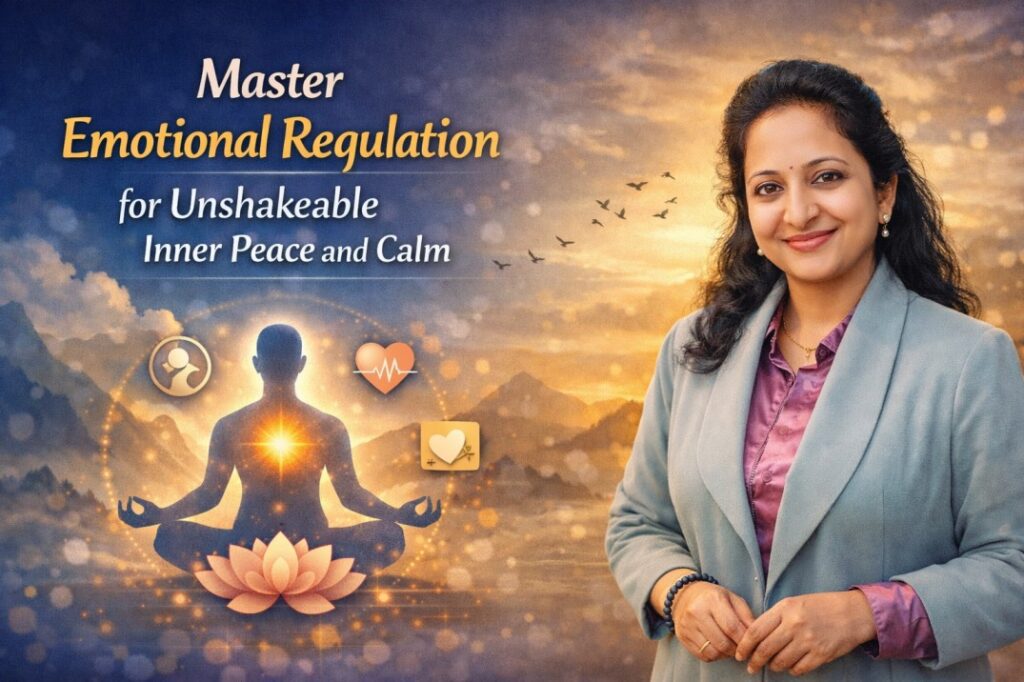
How Dr. Kaveri Bhatt Helps You Master Emotional Regulation
Dr. Kaveri Bhatt approaches emotional healing through a techno spiritual lens. With a background in engineering and decades in structured environments, she integrates analytical clarity with intuitive healing. Her work combines subconscious release methods with trauma informed sensitivity.
Through guided sessions, she helps clients identify emotional triggers without shame. Then she introduces subconscious healing tools that gently uncover stored beliefs and imprints. Her approach includes breath based nervous system regulation, inner child dialogue, and belief reframing.
Real World Integration
Importantly, she emphasizes real world integration. Clients do not leave sessions floating in theory. They learn how to apply emotional awareness in daily conversations, workplace stress, and family dynamics. This integration builds confidence. Over time, clients truly Master Emotional Regulation as a practiced state.
Success Story: From Reaction to Understanding
Ritika, a corporate manager from Pune, struggled with sudden anger during team meetings. She felt embarrassed after each outburst. During her sessions with Dr. Bhatt, she discovered that criticism reminded her of childhood experiences where mistakes led to harsh judgment.
Through subconscious release work, Ritika learned to notice early tension. She practiced grounding before responding. Within months, her reactions softened. Colleagues noticed her composed presence. She described the shift simply: “I no longer fight myself. I understand myself.”
Real Experiences from Clients
Ananya from Mumbai: “Once lived in constant anxiety. Now feel emotionally balanced even during family conflicts.”
Rahul from Delhi: “Used to suppress emotions until they exploded. Now I recognize triggers early and communicate calmly.”
Meera from Bengaluru: “Sessions helped me reconnect with my inner child. I feel lighter and more secure.”
Community Forum Conversations
Question: Does regulation mean never feeling anger?
Answer: No. It means staying aware during anger so it becomes information, not destruction.
Question: Will deep healing reopen painful memories?
Answer: Safe guidance ensures old memories surface gently, prioritizing integration over overwhelm.
Frequently Asked Questions
How long does it take to master?
Shifts often happen within weeks, while deeper subconscious patterns stabilize over months.
Can this work without therapy?
Basic techniques help, but professional support addresses deeper subconscious layers effectively.
Is trauma informed work necessary?
Yes, for many adults carrying subtle imprints, it ensures healing remains safe and respectful.
Will I become less sensitive?
No. You remain sensitive but gain stability. Sensitivity becomes strength rather than vulnerability.
Can habits change long term?
Yes. Subconscious work updates emotional beliefs, allowing reactions to shift naturally.
Conclusion
To Master Emotional Regulation is not about becoming emotionless. It is about becoming steady within emotion. You feel fully, yet you remain grounded. Confusion transforms into awareness, and clarity strengthens confidence.
With guided support from Dr. Kaveri Bhatt, emotional healing becomes structured and compassionate. Inner peace becomes a lived experience, practiced daily with intention.
Need personalized guidance?