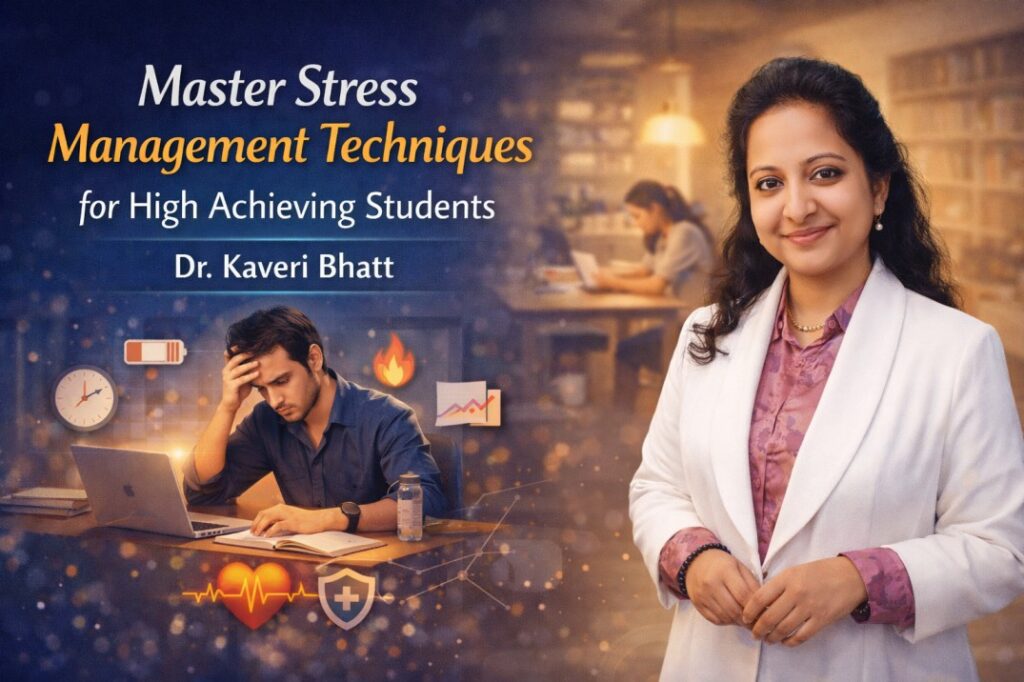
There comes a moment when the desire to Master Stress Management Techniques no longer feels like self improvement. Instead, it feels like an urgent need to breathe without guilt. For many high achieving students, stress does not arrive loudly. It settles quietly into the background of daily life.
You may still meet deadlines, score well, and stay disciplined. Yet, inside, the mind rarely rests. Even calm moments feel borrowed. Silence feels heavy instead of peaceful. This inner tension often creates confusion. You wonder why success feels exhausting when it was supposed to feel rewarding.
In this Guide:
Understanding Why Stress Feels Different for High Achieving Students
Stress shows up differently when achievement becomes part of identity. For driven students, performance is not just something you do. Over time, it becomes something you are. This shift happens slowly. Praise, expectations, and self standards merge. Eventually, rest begins to feel unearned, and slowing down feels risky.
The Hidden Pressure Behind Consistent Performance
Consistency brings pride, but it also creates fear. Once you perform well repeatedly, the mind quietly asks how long you can maintain it. That question often runs beneath awareness. Yet, it shapes behavior. You push harder, even when tired. You avoid pauses, even when needed. To Master Stress Management Techniques, one must first recognize this pressure.
When Ambition Quietly Turns Into Emotional Strain
Ambition starts as inspiration. However, without emotional balance, it can become constant vigilance. The body stays alert. The mind stays busy. Over time, this strain feels normal. You may not notice it until irritability, fatigue, or numbness appear.
The Emotional Cost of Always Staying Ahead
Staying ahead often looks impressive from the outside. Internally, it can feel like carrying invisible weight. This emotional load rarely releases on its own. Instead, it accumulates quietly through skipped emotions, postponed rest, and unspoken fears.
How Unexpressed Stress Settles Into the Body
The body remembers what the mind avoids. Stress that remains unexpressed often shows up physically. You may notice tight shoulders, shallow breathing, or constant fatigue. These signals are not failures. They are messages. Listening to the body with curiosity allows healing to begin naturally.
Why Rest Often Fails to Feel Restful
Many students rest physically while staying mentally alert. The body lies down, but the mind keeps scanning. This happens because the nervous system has learned to associate safety with control. Letting go feels unfamiliar. Recognizing this pattern removes self judgment.
Awareness Before Action in Stress Healing
True stress healing begins before techniques. It starts with awareness. When you slow down enough to notice your inner state without trying to change it, something shifts. The system feels acknowledged. This acknowledgment creates safety, which is essential for real change.
Master Stress Management Techniques Through Inner Alignment
When students aim to Master Stress Management Techniques, they often expect effort. However, the most effective shifts come through alignment. Alignment means your inner state supports your outer goals. Pressure gives way to presence. This approach feels lighter because it works with your system, not against it.
Releasing Subconscious Pressure Instead of Suppressing It
Suppression demands energy. Release creates space. Subconscious pressure builds from past experiences, expectations, and emotional memory. When acknowledged safely, it begins to dissolve. Curiosity replaces force. Relief follows naturally.
How Dr. Kaveri Bhatt Helps You Master Stress Management Techniques
Dr. Kaveri Bhatt works with students who feel capable yet overwhelmed. Her approach respects both emotional depth and practical reality. Rather than fixing symptoms, she supports understanding patterns beneath stress. This creates lasting change without pressure.
A Techno Spiritual Approach to Stress Regulation
Dr. Bhatt integrates modern understanding with inner awareness. She bridges cognitive insight with subtle emotional regulation. This balance helps students feel understood intellectually while supported emotionally. Nothing feels abstract or disconnected from real life.
Trauma Informed Emotional Release for Students
Stress often carries traces of past experiences. Dr. Bhatt works gently, respecting personal boundaries. Sessions focus on safety, consent, and pacing. Students never feel pushed or overwhelmed. This trauma informed lens allows deep release without reactivation.
Practical Tools for Daily Emotional Integration
Healing must fit daily life. Dr. Bhatt emphasizes integration over isolation. Students learn how to recognize emotional cues, ground themselves, and respond with clarity. These tools feel usable because they align with real schedules and responsibilities.
Success Story: Finding Calm in Achievement
Riya, a postgraduate student from Pune, arrived feeling constantly on edge. Despite academic success, she struggled with sleep and self doubt. She wanted to Master Stress Management Techniques to regain control.
Through sessions focused on awareness and emotional regulation, she began noticing patterns rather than resisting them. Over time, her nervous system softened. Riya did not lose ambition. Instead, she gained clarity. Exams felt manageable again, and rest felt restorative.
Student Voices and Experiences
Ananya from Delhi: “Constant urgency finally eased. Feeling more present during studies without losing focus.”
Arjun from Bengaluru: “Improved emotional balance. Less reactive and more confident in decisions.”
Meera from Jaipur: “Better sleep and reduced anxiety. Valued the gentle pace and support.”
Community Conversations
Question: Will stress management reduce my competitiveness?
Answer: Emotional balance often enhances performance rather than dulling it.
Question: Is stress unavoidable for achievers?
Answer: Choice, awareness, and emotional literacy make the difference.
Frequently Asked Questions
How long does it take to feel calmer?
Small shifts often appear within weeks through gentle emotional alignment.
How to handle exam pressure?
Stress reduces when the nervous system feels safe, improving focus naturally.
Will I relive emotional discomfort?
Trauma informed pacing ensures safety and avoids overwhelm during inner work.
Do techniques fit busy schedules?
Yes. Emotional integration works best when aligned with daily routines.
Will ambition suffer?
No. Calm presence usually strengthens motivation while reducing burnout risk.
Conclusion
Learning to manage stress is not about becoming different. It is about returning to balance. High achieving students do not need fixing. They need understanding, safety, and space to breathe.
When you Master Stress Management Techniques, confidence grows quietly. You trust yourself again, not because stress disappears, but because it no longer controls you.
Need personalized guidance?