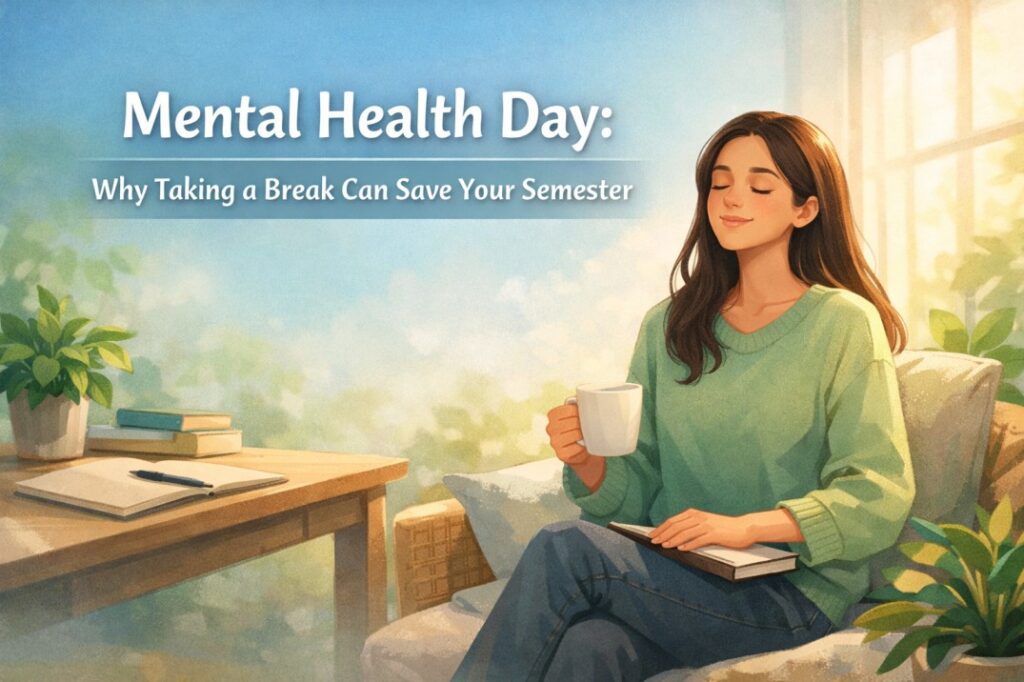
A mental health day for students often feels like a risky choice, especially when deadlines pile up and exams sit dangerously close. Many students feel exhausted yet hesitate to pause, fearing academic damage or judgment.
This confusion grows when effort remains high but results begin to slip. Concentration fades, motivation drops, and anxiety quietly increases. At this point, pushing harder stops helping.
A mental health day for students offers clarity, not escape. When used intentionally, it protects focus, restores balance, and prevents semester burnout from taking control.
In this Guide:
Understanding Mental Overload in College Life
Why Constant Studying Stops Working
Studying longer hours feels productive, yet the brain does not respond well to nonstop pressure. Mental energy drains faster when rest never enters the routine.
As fatigue increases, focus narrows and comprehension weakens. Students reread the same material repeatedly without absorbing meaning. Eventually, effort increases while output declines.
This pattern frustrates motivated students the most. They work harder but feel less capable. Without recovery, the brain struggles to process, store, and recall information accurately.
A mental pause restores cognitive rhythm. When rest enters the cycle, attention sharpens and learning becomes efficient again.
The Hidden Cost of Ignoring Emotional Fatigue
Emotional fatigue builds quietly. Students often ignore it because stress feels normal during college years. Over time, emotional overload leaks into daily functioning.
Small tasks feel heavy. Minor setbacks trigger strong reactions. Confidence drops even when preparation stays solid. These shifts signal deeper exhaustion, not weakness.
When emotional strain remains unaddressed, it affects sleep, memory, and emotional regulation. Academic pressure then feels personal and overwhelming.
Recognizing emotional fatigue early allows correction. A mental health day for students interrupts this buildup before it damages performance or self belief.
What a Mental Health Day Actually Means for Students
It Is Not Skipping Responsibility
Many students associate breaks with avoidance. This belief creates guilt that prevents timely rest. In reality, responsibility includes protecting mental capacity.
High performing students often reach burnout faster because they ignore limits. Discipline without recovery leads to breakdown, not success.
A mental health day for students supports accountability. It allows reflection, recalibration, and emotional grounding before damage occurs.
Choosing rest shows awareness, not laziness. It reflects maturity and long term academic thinking.
It Is Strategic Academic Reset
A mental health day functions like a system reset. Stepping away briefly restores mental clarity and emotional stability.
Timing matters more than duration. One intentional day prevents weeks of ineffective studying. During rest, the brain reorganizes information naturally.
After resetting, students return with improved focus and emotional control. Tasks feel manageable again. Confidence returns gradually.
Strategic breaks protect semesters by preventing collapse rather than reacting after damage occurs.
How Taking a Break Protects Your Semester
Focus Improves After Mental Rest
Focus depends on mental freshness. When fatigue dominates, attention scatters and errors increase. Rest allows concentration to rebuild.
After a mental pause, students notice sharper reading, faster understanding, and reduced distraction. This improvement feels immediate and reassuring.
Instead of forcing productivity, rest creates it naturally. Focus improves because the brain finally receives recovery time.
A mental health day for students strengthens attention without extra effort.
Memory Retention and Learning Recovery
Learning requires consolidation. Without rest, new information struggles to move into long term memory.
Mental fatigue interrupts recall during exams. Students know material yet fail to retrieve it under pressure.
Rest supports memory consolidation. After recovery, recall improves and learning feels stable again.
Protecting memory through rest safeguards exam performance and reduces panic during assessments.
Emotional Regulation During Exam Pressure
Exams amplify emotional responses. Stress reactions intensify when emotional reserves run low.
A mental health day for students restores emotional regulation. Anxiety softens. Emotional reactions slow down.
This stability helps students approach exams calmly. Clear thinking replaces panic, allowing preparation to work effectively.
Emotional balance directly supports academic performance during critical periods.
Signs You Need a Mental Health Day
Physical and Emotional Warning Signals
The body communicates overload clearly. Persistent headaches, disrupted sleep, and constant tiredness signal deeper strain.
Emotionally, irritability increases and motivation drops. Students feel detached from work they once cared about.
Ignoring these signals leads to burnout escalation. Responding early prevents long term damage.
A mental health day for students works best when taken at the first signs of overload.
Academic Performance Red Flags
Grades may not drop immediately, but effort increases while results plateau. Focus issues appear during lectures and self study.
Procrastination rises despite motivation. Simple assignments feel overwhelming.
These red flags indicate mental depletion rather than ability gaps. Addressing recovery restores performance faster than pushing through.
How to Take a Mental Health Day Without Guilt
Planning a Break That Supports Academics
A mental health day works best with intention. Students should pause academically without avoiding responsibility entirely.
Light organization, gentle reflection, and emotional rest create balance. Avoid excessive stimulation or digital overload.
Rest includes sleep, quiet activities, and mental detachment from deadlines. This approach restores energy without falling behind.
Planning prevents guilt and maximizes recovery benefits.
Communicating Boundaries With Confidence
Students often fear judgment when taking breaks. Clear communication reduces pressure.
Boundaries do not require explanation to everyone. Sharing intentions with trusted peers or mentors builds support.
Confidence grows when students treat rest as maintenance, not excuse. Emotional clarity strengthens communication naturally.
A mental health day for students deserves respect, not justification.
Read more on Healthify Happiness:
- The Healing Crisis: Why Feeling Worse is Sometimes Part of Getting Better
- Work-Life Balance Myth? Practical Wellness Hacks for Busy Professionals
- Financial Freedom & Self-Worth: Why Money Mindset Matters for Women
- The Comparison Trap: How to Stop Competing with Classmates and Focus on You
- Manifestation Mistakes: Why Your Affirmations Aren’t Working (And How to Fix It)
Success Story: One Day That Prevented a Semester Collapse
Riya, a second year psychology student in Mumbai, felt overwhelmed mid semester. Despite studying daily, her focus declined and anxiety increased.
Instead of pushing harder, she took a mental health day. She rested, reflected, and disconnected from academic pressure intentionally.
The following week, her focus improved significantly. Assignments felt manageable again. Her exam preparation regained structure.
That single day prevented prolonged burnout. Riya completed the semester with confidence and stable performance, proving rest can protect results.
How Dr. Kaveri Bhatt Helps Students Restore Balance
Academic burnout often links to unresolved emotional stress stored in the subconscious. Many students push through without understanding these deeper patterns.
Dr. Kaveri Bhatt works with students using a techno spiritual healing approach that blends emotional awareness with practical grounding tools.
Her methods focus on subconscious release, trauma informed work, and emotional regulation. Students learn to recognize internal pressure cycles and respond without overwhelm.
Through guided techniques, students release emotional fatigue that traditional study advice overlooks. This process restores clarity, confidence, and inner stability.
Her work supports students beyond academics, helping them maintain balance, resilience, and emotional health throughout demanding semesters.
Student Reviews
Aman, Delhi: “I felt guilty taking a break until I realized my productivity returned stronger. One mental health day saved my entire exam preparation flow.”
Sneha, Pune: “Rest helped me regain emotional balance. I stopped panicking before exams and focused better during study sessions.”
Rahul, Bengaluru: “After ignoring burnout signs, my grades dipped. Taking a mental health day helped me reset and recover academically faster.”
Forum Discussions
Forum Question One: Is taking a mental health day during exams irresponsible?
Response: Students shared experiences explaining that rest improved clarity and reduced anxiety. Many noticed better retention after short breaks.
Forum Question Two: How often should students take mental health days?
Response: Peers suggested listening to warning signs rather than fixed schedules. Timely breaks prevented burnout escalation.
FAQs
What exactly should students do on a mental health day?
Students should rest intentionally, reduce academic pressure, sleep properly, and engage in calming activities that restore mental clarity and emotional balance.
Will taking a mental health day affect attendance or grades?
When planned thoughtfully, one mental health day for students protects performance rather than harming grades or long term academic outcomes.
How often can students take mental health days safely?
There is no fixed number. Students should respond to burnout signals and avoid using breaks as avoidance patterns.
Can a single day really make a difference?
Yes, one well timed mental health day for students often restores focus, emotional regulation, and academic motivation quickly.
How do students overcome guilt around resting?
Understanding that rest supports performance helps replace guilt with confidence and long term academic thinking.
Conclusion: Choosing Rest as an Academic Strength
A mental health day for students is not a pause from responsibility. It is a conscious step toward protecting focus, emotional stability, and long term performance.
Burnout thrives on silence and guilt. Recovery begins with awareness and timely action.
When students honor mental limits, academic confidence grows. Clarity returns. Motivation stabilizes.
Choosing rest transforms semesters by preventing collapse and supporting sustainable success. Mental strength builds when balance leads the way.
Need personalized guidance?