There are moments in college when you look fine on the outside, yet something inside feels tight and unsettled. You try to Navigate College Pressure with logic and planning, but your thoughts keep looping at night. That quiet strain rarely shows on your face, yet it shapes your days.
Classes move fast. Expectations grow louder. Meanwhile, your inner voice asks whether you are capable enough to keep up. You may not name it as anxiety, yet your chest feels heavy before deadlines. Many students believe pressure is normal, so they silence their discomfort. However, normal does not mean harmless. When stress becomes constant, clarity slowly fades.
This space is not about pushing you to perform better. Instead, it invites you to understand what is happening within you. As awareness grows, steadiness follows. From there, confidence becomes natural rather than forced.
In this Guide:
Why College Pressure Feels Heavier Than It Looks
College often links achievement with identity. When grades dip, self-worth also feels threatened. Therefore, even small setbacks can feel personal. You might tell yourself that one low score should not matter. Yet internally, it feels like proof of inadequacy.
Many students grew up hearing praise only when they excelled. As a result, achievement became equal to love or approval. In college, that old pattern quietly activates again. To Navigate College Pressure effectively, understanding this link is crucial. Grades reflect effort and strategy, not your value as a human being. When you separate identity from outcomes, emotional space opens.
Social Comparison and Internal Dialogue
College life also brings constant comparison. Peers discuss internships, side projects, and achievements. Social media amplifies curated success stories. Gradually, your mind starts measuring your journey against others. Even when you logically know everyone has a different pace, comparison still stings.
The deeper issue lies in your internal dialogue. If your mind often says, “I am behind” or “I am not good enough,” stress intensifies. However, that voice is learned, not permanent. Once you notice that narrative, you regain choice.
Fear of Falling Behind
Another layer of pressure comes from timeline anxiety. Many students fear they must achieve everything quickly. Life rarely follows a single schedule. Still, the fear of falling behind creates constant urgency. That urgency exhausts the nervous system.
Understanding Emotional Resilience in a Real Way
Emotional resilience for students does not mean staying positive all the time. It does not mean ignoring fear or pretending everything feels manageable. True resilience allows discomfort without collapse. You can feel anxious before an exam and still show up.
Suppression creates internal tension. In contrast, resilience builds capacity. When you acknowledge emotion, it moves through you rather than getting stuck. Permission to feel actually strengthens you. That shift alone changes how you Navigate College Pressure.
Emotional Regulation Versus Suppression
Emotional regulation begins with noticing your body. When stress rises, your breath shortens. Your shoulders tighten. Instead of pushing those signals away, you can slow down. A few steady breaths calm the nervous system. Suppression forces emotions down. Regulation guides them safely through.
How Early Emotional Patterns Affect College Life
Many students carry invisible expectations from home. Some families value academic excellence strongly. While those intentions may come from love, they can create fear of failure. You may study not from curiosity, but from anxiety about disappointing someone.
Recognizing this pattern brings relief. You begin to see that part of your stress belongs to old beliefs, not present reality. When awareness grows, choice returns. You can still honor your goals, yet without carrying inherited fear.
Subconscious Beliefs About Worth
Deep inside, many students hold beliefs like “I must prove myself” or “I am only valuable when I achieve.” These beliefs operate quietly. The subconscious mind stores early emotional experiences. If you once felt unseen unless you performed, that memory shapes your reactions today.
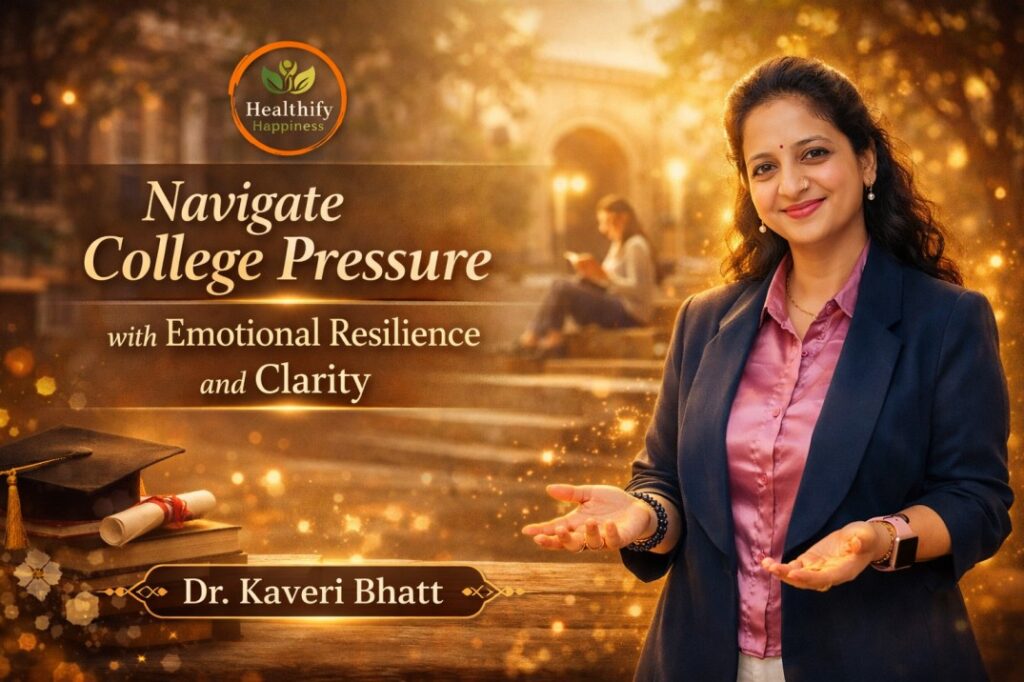
How Dr. Kaveri Bhatt Helps You Navigate College Pressure
Dr. Kaveri Bhatt brings a rare blend of technical understanding and spiritual depth to student mental health. With decades in the corporate world and advanced certifications in healing modalities, she understands performance pressure intimately.
Her techno-spiritual healing approach integrates neuroscience awareness with energy-based practices. Therefore, sessions feel grounded rather than abstract. Through subconscious emotional release methods such as NLP processes, EFT tapping, inner child healing, and guided introspection, students gently process stored stress.
Trauma Informed Support for Students
Her trauma-informed work respects the nervous system. She never pushes a student to revisit painful memories without preparation. Safety and pacing remain central. Beyond healing conversations, she offers practical emotional tools for daily campus life. Students learn grounding breathwork, clarity journaling, and boundary language that feels natural.
Success Story: From Panic to Presence
Riya, a second-year engineering student from Pune, felt constant anxiety before exams. She studied long hours, yet panic blocked her focus. She believed something was wrong with her. During her sessions with Dr. Bhatt, she discovered a deep fear of disappointing her family.
That fear began in childhood when praise followed high scores. Instead of fighting anxiety directly, they worked on subconscious emotional release. Riya learned to separate love from performance. Gradually, her breath steadied before tests. After a few months, her results improved. More importantly, her mind felt clearer. She now says she can Navigate College Pressure without losing herself.
What Students Are Saying
Aman (Delhi): “Used to experience sleepless nights. After working with Dr. Bhatt, I feel emotionally stable even during deadlines. The process is gentle and deeply personal.”
Megha (Bangalore): “Peer pressure affected confidence. Through sessions, understood comparison patterns. Now approaches opportunities with calm clarity.”
Rahul (Mumbai): “Burnout felt real. Chose emotional support instead of quitting. Now feels balanced and self-aware.”
Real Questions from Student Forums
Question: Does seeking help mean weakness?
Answer: No. Awareness shows strength. Choosing help reflects maturity and responsibility toward your mental health.
Question: How long does it take to feel better?
Answer: Healing timelines vary. However, many notice subtle shifts within weeks when they practice consistently and stay open.
Practical Shifts to Build Emotional Clarity
Small daily anchors build resilience steadily. Begin with five minutes of conscious breathing each morning. This resets your nervous system before the day begins. During exam stress, pause before reacting. Notice your thoughts. Then ask whether they reflect facts or fear. This simple check reduces panic.
Frequently Asked Questions
Can emotional resilience change academic performance?
Yes. Emotional stability improves focus and reduces panic, which often supports better learning outcomes over time.
How do I handle parental expectations?
Students can respect family values while still building personal boundaries and emotional clarity through guided reflection.
Does healing work interfere with study time?
In reality, regulated emotions enhance concentration, making study sessions more efficient and less exhausting.
Is subconscious release overwhelming?
With trauma-informed guidance, the process remains paced, safe, and supportive.
Will this help me in my future career?
Absolutely. When you learn to Navigate College Pressure consciously, those skills extend into careers and relationships later in life.
Conclusion
College represents growth, exploration, and challenge. Yet pressure often clouds that experience. When stress feels constant, clarity fades and self-doubt grows. However, emotional awareness changes the entire journey.
As you understand your patterns, you stop fighting yourself. Gradually, confidence feels grounded rather than forced. With compassionate guidance from practitioners like Dr. Kaveri Bhatt, healing becomes structured and safe. You learn not only to Navigate College Pressure but to understand your emotional landscape deeply. In that understanding, steadiness returns.
Need support navigating stress?