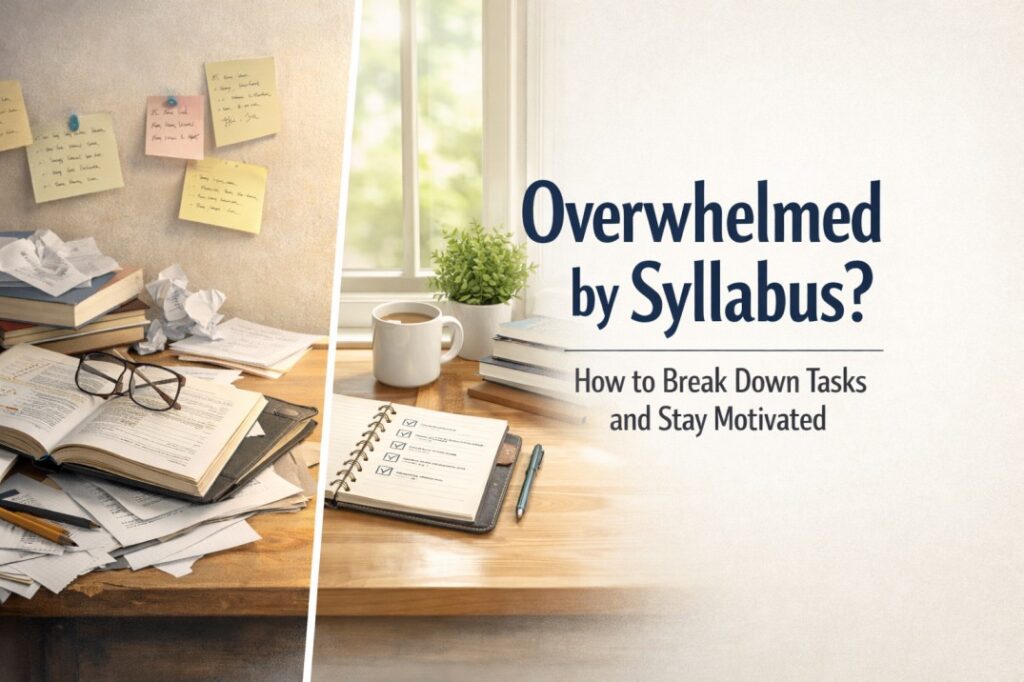
Feeling overwhelmed by syllabus pressure can freeze even the most sincere students. You sit with books open, yet your mind feels crowded, tired, and unsure where to begin.
This confusion does not mean you lack discipline or ability. It means your brain feels overloaded and needs clarity, not force, to move forward calmly and confidently.
In this Guide:
Understanding Why Students Feel Overwhelmed by Syllabus
Students rarely struggle because the syllabus feels hard. Most struggle because it feels endless, undefined, and emotionally heavy from the first glance.
When everything feels urgent, the mind enters survival mode. Instead of planning, it focuses on escaping discomfort, which creates mental shutdown.
Comparison adds pressure. Seeing others appear confident or ahead increases self doubt, even when their reality looks different behind the scenes.
This overwhelm builds quietly. Over time, it drains energy before studying even begins, which makes progress feel impossible.
How Mental Overload Affects Focus and Motivation
Mental overload directly affects focus. Anxiety keeps the brain scanning for threats instead of processing information deeply.
Even when time exists, attention slips. Thoughts jump between chapters, deadlines, and fear of failure, which blocks learning completely.
Motivation fades because the brain associates studying with stress. Each attempt feels heavy, so avoidance feels safer in the moment.
This reaction protects you emotionally, yet it delays growth. Recognizing this pattern creates space for change without self blame.
The Hidden Cost of Avoiding Study Tasks
Avoidance feels like relief at first. However, unfinished tasks remain mentally active and continue consuming emotional energy silently.
Guilt grows when days pass without progress. This guilt reduces confidence and makes restarting feel even harder.
Soon, students avoid planning itself. Looking at the syllabus triggers anxiety, which strengthens the cycle further.
Breaking this loop requires safety, clarity, and small actions that rebuild trust with yourself gently.
How to Break Down a Large Syllabus Without Panic
Breaking down the syllabus means turning emotional chaos into clear structure. The goal is not speed but emotional calm and direction.
Start by removing the idea of finishing everything quickly. Focus on understanding what exists, not completing it immediately.
List subjects separately. Then divide each subject into chapters, topics, or logical sections based on understanding level.
Each breakdown reduces fear. Smaller tasks feel approachable, which signals safety to the brain and restores control.
Turning Subjects Into Clear Study Blocks
Study blocks create boundaries. Each block should answer one question clearly and end within a realistic time frame.
For example, one block may include reading a concept, writing short notes, and revising key points briefly.
Avoid vague blocks like complete chapter. Instead, use focused blocks like understand definitions or solve five problems.
Clear endpoints reduce mental resistance. You know when to stop, which makes starting easier every day.
Daily Study Planning That Feels Realistic
Daily planning works only when it respects mental energy. Planning too much creates pressure and leads to avoidance again.
Choose two or three blocks per day. Align them with your natural energy rhythm instead of forcing long sessions.
Leave buffer time. Life interruptions happen, and flexibility prevents frustration when plans shift unexpectedly.
A realistic plan builds confidence. Completing it reinforces trust and creates steady progress without emotional overload.
How Small Wins Restore Motivation Naturally
Motivation grows from evidence, not willpower. Every completed block tells your brain that progress is possible again.
Small wins release relief and satisfaction. This emotional reward strengthens focus for the next task naturally.
Momentum builds quietly. You stop forcing yourself and start trusting the process instead.
Consistency emerges when effort feels manageable and emotionally safe.
Building Study Consistency Without Burnout
Consistency does not mean intensity. It means returning daily without exhausting your mental reserves.
Protect rest intentionally. Short breaks reset focus and prevent emotional fatigue from accumulating silently.
Rotate subjects to avoid monotony. Variety keeps engagement alive and reduces mental strain.
Sustainable routines respect both effort and recovery equally.
Read more on Healthify Happiness:
- Beyond Talk Therapy: Why Somatic Healing is the Key to Emotional Freedom
- The ROI of Happiness: How Corporate Healing Boosts Company Profits
- Feminine Energy: How to Balance Softness and Strength in a Modern World
- Sleep Your Way to Better Grades: Why Rest is Your Secret Weapon
- Energy Vampires: How to Protect Your Aura and Maintain Spiritual Hygiene
Success Story: From Panic to Plan
Rohan, a college student from Indore, felt paralyzed every time he opened his syllabus. Panic replaced focus, and avoidance became routine.
He stopped chasing completion. Instead, he broke subjects into small blocks and planned only two tasks daily.
Within one week, his anxiety reduced. Studying felt calmer. Confidence returned as he completed tasks consistently.
Clarity replaced panic, and progress followed naturally.
How Dr. Kaveri Bhatt Helps Students Release Study Overwhelm
Dr. Kaveri Bhatt supports students who feel emotionally stuck, anxious, or mentally blocked by academic pressure. Her approach blends practical tools with deep emotional regulation.
She works with subconscious release methods that help students let go of fear, self doubt, and performance anxiety stored beneath conscious effort.
Through techno spiritual healing practices, she helps restore internal balance. Students learn grounding techniques, emotional clarity tools, and stress release practices that support learning naturally.
Her trauma informed approach ensures students feel safe, understood, and empowered rather than pushed. This alignment helps motivation return without force.
By addressing emotional roots alongside planning habits, students experience sustainable focus and long term confidence.
Student Reviews
Ananya Sharma, Jaipur
“I stopped blaming myself after understanding why overwhelm happens. Breaking tasks helped me feel in control again without stress.”
Rahul Mehta, Pune
“Planning small blocks changed everything. I now study daily without fear, even during exam season.”
Sneha Kulkarni, Nagpur
“This approach made studying feel lighter. Motivation returned once pressure reduced and clarity improved.”
Forum Discussion
Question One
Is this method suitable for competitive exam preparation with huge syllabi?
Answer
Yes, especially for large syllabi. Breaking content reduces panic and improves retention. Many students report better focus and steady progress.
Question Two
What if motivation drops again after some days?
Answer
Motivation fluctuates naturally. Returning to small blocks and realistic planning restores momentum without forcing discipline.
Frequently Asked Questions
How long does it take to stop feeling overwhelmed by syllabus pressure?
Relief often begins within a few days of structured planning. Emotional calm grows as clarity replaces confusion and small wins build confidence steadily.
Can this method work when exams are very close?
Yes, especially during tight timelines. Focused blocks reduce panic and help you prioritize effectively without wasting mental energy.
What if I cannot complete daily plans consistently?
Adjust task size, not effort. Smaller plans maintain momentum and prevent guilt cycles that disrupt progress.
Does breaking tasks reduce study quality?
No. Focused blocks improve understanding and retention by reducing cognitive overload and emotional stress.
How do I stay calm when unexpected syllabus changes happen?
Return to clarity. Reorganize blocks gently and avoid reacting emotionally. Structure restores stability quickly.
Conclusion
Feeling overwhelmed by syllabus pressure does not mean you are failing. It means your mind needs structure, safety, and clarity to function well.
Breaking tasks, planning realistically, and honoring emotional limits transforms chaos into confidence. Progress follows when pressure reduces.
You do not need perfection. You need direction and trust in small steps taken consistently.
With the right approach, studying becomes calm, focused, and achievable again.
Need personalized guidance?