Trauma does not just affect memories. It changes how safe you feel within yourself. After a painful experience, your mind starts protecting you in quiet ways.
You may begin to question your choices, your instincts, and even your worth. This is not because you are weak. It happens because your inner safety was disrupted.
Rebuilding Confidence After Trauma begins by understanding this shift. When your emotional world feels unstable, confidence naturally fades. Your system focuses more on protection than growth.
However, this response is human. Once you understand it, you stop blaming yourself and start listening to what your emotions are trying to tell you.
In this Guide:
- 🔹 Understanding Why Trauma Shakes Confidence
- 🔹 Signs You Are Struggling with Confidence After Trauma
- 🔹 The Inner Conflict Between Healing and Fear
- 🔹 Gentle Steps for Rebuilding Confidence After Trauma
- 🔹 How Dr Kaveri Bhatt Helps in Trauma Recovery
- 🔹 Success Story
- 🔹 User Reviews
- 🔹 Common Questions
- 🔹 FAQs
Understanding Why Trauma Shakes Confidence
Trauma does not just affect memories. It changes how safe you feel within yourself. After a painful experience, your mind starts protecting you in quiet ways.
You may begin to question your choices, your instincts, and even your worth. This is not because you are weak. It happens because your inner safety was disrupted.
Rebuilding Confidence After Trauma begins by understanding this shift. When your emotional world feels unstable, confidence naturally fades. Your system focuses more on protection than growth.
However, this response is human. Once you understand it, you stop blaming yourself and start listening to what your emotions are trying to tell you.
How Emotional Pain Impacts Self Trust
Emotional pain often breaks the trust you once had in yourself. You may replay past decisions and wonder where things went wrong.
As a result, even simple choices begin to feel overwhelming. You hesitate, second guess, and look for external validation more than before.
This happens because your mind is trying to avoid repeating the same pain. While it protects you, it also limits your confidence.
Gradually, learning to trust yourself again becomes an important part of healing.
The Hidden Patterns That Keep You Stuck
After trauma, certain patterns quietly take control. You may avoid situations that once felt normal. At the same time, overthinking becomes constant.
You might assume the worst even in safe situations. These patterns feel automatic, yet they are learned responses.
Because they happen internally, many people do not notice them clearly. They simply feel stuck without understanding why.
Awareness brings the first shift. Once you see these patterns, you can slowly begin to change them.
Signs You Are Struggling with Confidence After Trauma
Sometimes, the loss of confidence does not appear obvious. It hides in everyday thoughts and behaviors.
You may feel uncertain while speaking, or hesitate before sharing your opinions. At times, you might withdraw from situations that once felt comfortable.
Rebuilding Confidence After Trauma involves noticing these small changes without judgment. These signs are not failures. They are signals.
When you start recognizing them, you give yourself the chance to respond with care instead of criticism.
Emotional and Behavioral Signals
You might notice a constant inner doubt, even when there is no clear reason. You may seek reassurance more often than before.
Some people become overly cautious, while others withdraw completely. Emotional reactions may feel stronger or harder to control.
At the same time, you might struggle to accept compliments or positive feedback.
These signals show that your confidence needs gentle rebuilding, not pressure.
Why These Signs Often Go Unnoticed
Many people normalize these changes over time. They assume it is just how life is now.
Because the shift happens gradually, it becomes difficult to identify the exact moment things changed.
Also, people often stay busy to avoid facing these emotions directly. This creates temporary comfort but delays deeper healing.
When you slow down and observe yourself, these patterns become clearer.
The Inner Conflict Between Healing and Fear
Healing is not a straight path. Part of you wants to move forward, yet another part feels afraid.
You may feel ready one day and completely withdrawn the next. This back and forth can feel confusing.
Rebuilding Confidence After Trauma includes accepting this conflict instead of fighting it. Both parts exist for a reason.
Your desire to heal shows strength. Your fear shows protection. When you acknowledge both, the struggle begins to soften.
Wanting to Move Forward but Feeling Stuck
You may set intentions to change, yet struggle to follow through. This can feel frustrating.
However, this does not mean you lack discipline. It often means your emotional system is not fully ready.
Your mind may want progress, but your body still holds the memory of past pain.
When you move gently, instead of forcing yourself, progress becomes more sustainable.
Fear of Repeating the Same Pain
Fear often shows up as hesitation. You may avoid new situations or keep emotional distance from others.
This fear is not irrational. It is your system trying to protect you from getting hurt again.
However, staying in constant protection can limit your growth.
Learning to balance safety with openness becomes an important step in healing.
Gentle Steps for Rebuilding Confidence After Trauma
Rebuilding confidence does not require big changes. It begins with small, consistent steps.
First, allow yourself to move at your own pace. Healing is not a race, and forcing it can create more resistance.
Second, practice self compassion daily. Speak to yourself with understanding instead of criticism.
Rebuilding Confidence After Trauma grows when you create a safe internal space where mistakes are allowed.
Over time, these small actions begin to rebuild trust within yourself.
Reconnecting with Your Inner Voice
Your inner voice may feel distant after trauma. You may struggle to hear what you truly want.
Start by creating quiet moments for yourself. Journaling or mindful reflection can help.
Instead of judging your thoughts, observe them gently. This builds awareness.
Slowly, your inner voice becomes clearer and more reliable.
Creating Emotional Safety Within
Emotional safety does not always come from outside. You can learn to create it within yourself.
This begins with accepting your feelings without labeling them as wrong.
Grounding techniques like deep breathing or body awareness can help you feel present.
When you feel safe inside, confidence starts to return naturally.
Small Daily Actions That Restore Confidence
Confidence grows through consistent actions. Even small steps matter.
You can start with simple tasks that feel manageable. Completing them builds a sense of achievement.
Celebrate small wins instead of waiting for big changes.
Over time, these actions create a strong foundation for self belief.
How Dr Kaveri Bhatt Helps in Trauma Recovery
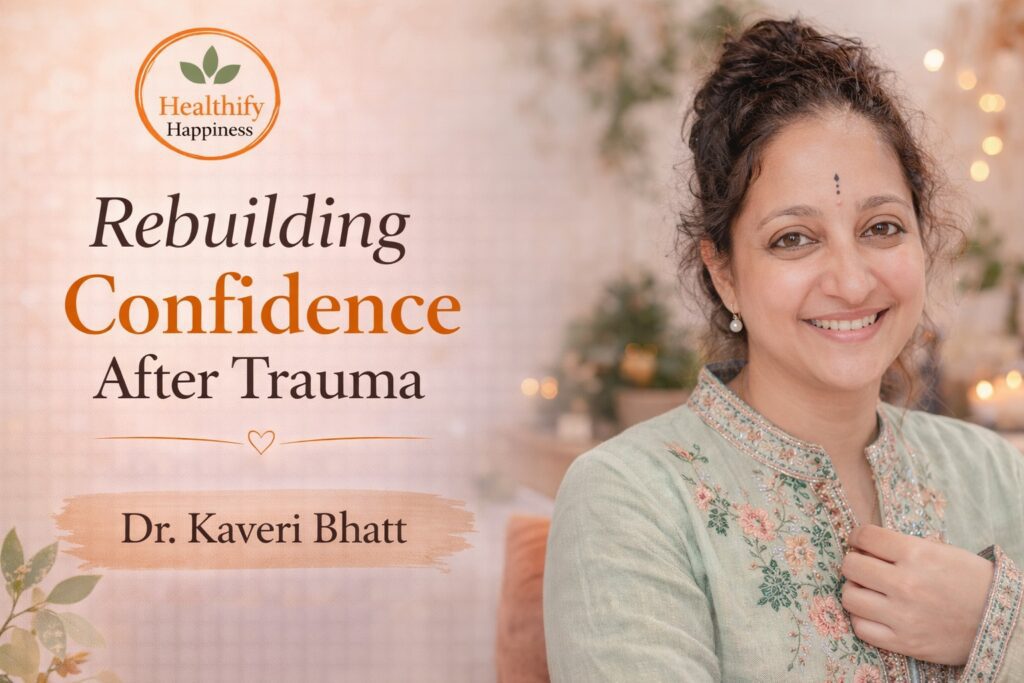
Rebuilding Confidence After Trauma becomes easier with the right guidance. Dr. Kaveri Bhatt offers a holistic approach that combines emotional awareness with deeper healing techniques.
Her work focuses on understanding the root cause of emotional pain rather than just managing symptoms. She integrates subconscious healing methods with practical emotional tools.
This approach allows individuals to release stored emotional patterns safely. At the same time, it helps them rebuild inner stability step by step.
Through her sessions, people learn to reconnect with themselves in a supportive environment that respects their pace, and many also explore a detailed healing journey case study to understand real transformation experiences.
Additionally, her guidance helps individuals strengthen their relationships, and they often apply techniques shared in ways to strengthen emotional bond for deeper emotional connection.
Her Unique Healing Approach
Dr Kaveri Bhatt uses a techno spiritual healing approach. This includes methods that work on both the conscious and subconscious levels.
She integrates techniques like inner child healing, energy balancing, and emotional release practices.
These methods help individuals process unresolved emotions without feeling overwhelmed.
As a result, healing becomes deeper and more sustainable.
Practical Tools for Emotional Strength
Along with deeper healing, she also provides simple tools for daily life. These include journaling practices, grounding exercises, and emotional awareness techniques.
People learn how to respond to triggers instead of reacting automatically.
This builds emotional resilience over time.
With regular practice, these tools support long term confidence restoration.
Success Story: A Journey from Self Doubt to Inner Strength
Neha, a 32 year old professional from Pune, struggled after a difficult relationship ended suddenly. She began doubting her choices and avoided social interactions.
Initially, she believed something was wrong with her. She tried to stay busy, but her confidence continued to drop.
With guidance and consistent emotional work, she slowly began understanding her patterns. She learned how her fear was protecting her.
Over time, she started taking small steps. She reconnected with activities she once enjoyed and allowed herself to trust again.
Today, she still values caution, yet she no longer feels controlled by fear. Her confidence feels calm and grounded.
Real User Reviews on Healing and Confidence
Anjali Mehta, Ahmedabad
I felt lost for months after my breakup. Slowly, I started understanding my patterns. Now I feel more stable and confident in my decisions.
Rakesh Iyer, Chennai
I used to overthink everything. The healing process helped me slow down. I feel more in control of my emotions now.
Simran Kaur, Chandigarh
I struggled with trusting people again. With time, I learned to trust myself first. That changed everything for me.
Common Questions People Ask During Healing
Forum Q&A 1
Question: Why do I feel stuck even when I want to move forward?
Answer: Feeling stuck often means your emotional system is still processing past experiences. Moving slowly and safely helps create lasting change.
Forum Q&A 2
Question: Is it normal to fear trusting people again after trauma?
Answer: Yes, it is completely normal. Trust rebuilds gradually, starting with yourself before extending to others.
Frequently Asked Questions
How long does rebuilding confidence after trauma take?
Healing time varies for each person. It depends on emotional depth, support, and personal readiness. Progress happens gradually, not instantly.
Can confidence return fully after trauma?
Yes, confidence can return in a deeper and more stable form. It may feel different, but often becomes more grounded.
What is the first step to rebuilding confidence?
The first step is awareness. Understanding your emotions without judgment creates a strong foundation for healing.
Why do I keep doubting myself even after progress?
Self doubt may appear during healing phases. It reflects old patterns that are slowly being replaced.
Do I need professional help to rebuild confidence?
While self work helps, guided support can make the process safer and more effective.
Conclusion: Confidence Returns When You Feel Safe Again
Rebuilding Confidence After Trauma is not about becoming who you were before. It is about becoming someone who feels safe within themselves.
Healing takes time, yet each small step matters. When you stop forcing progress and start understanding yourself, change begins naturally.
Your confidence will not return overnight. However, it will return steadily, with more awareness and strength.
Most importantly, you will begin to trust yourself again.
Start Your Healing Journey with Confidence