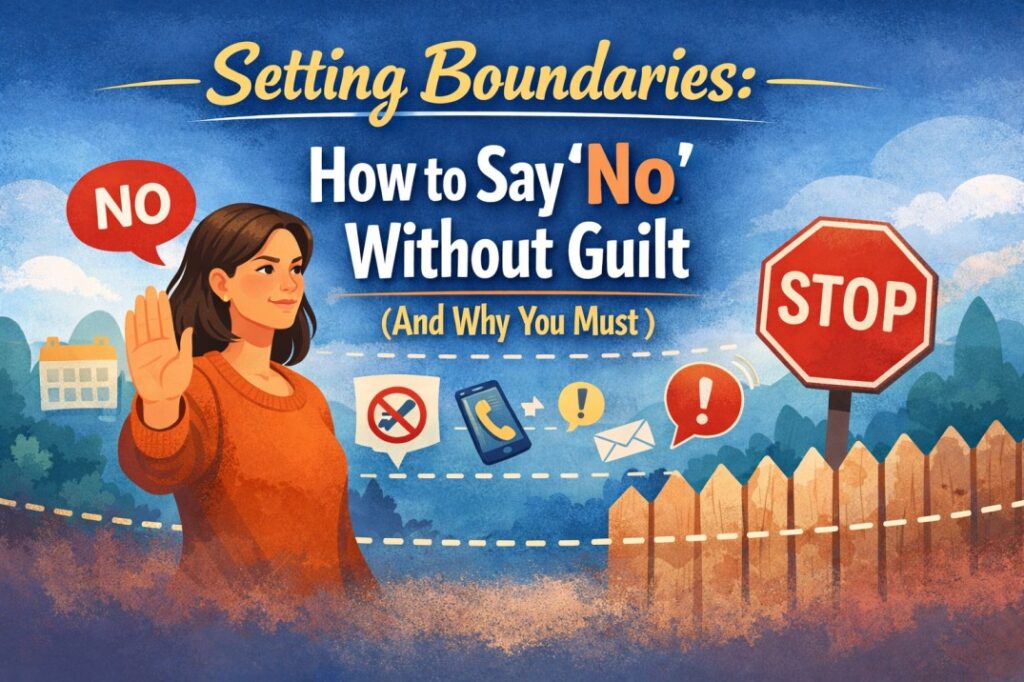
Setting boundaries without guilt feels difficult because many people confuse kindness with constant availability, which slowly drains emotional energy and self respect over time.
You may agree to things while your body feels tense, yet your mind convinces you that saying yes keeps peace and protects relationships.
This inner conflict grows quietly, and soon guilt appears even before you consider your own needs, which is why learning this skill matters deeply.
In this Guide:
Understanding Why Saying No Feels So Hard
Saying no triggers emotional reactions rooted in old patterns rather than present reality, which explains why logic alone rarely removes guilt.
Many people learned early that approval ensured safety, connection, or love, so refusal now feels risky even when situations differ.
As a result, the nervous system reacts faster than rational thought, making hesitation feel automatic rather than chosen.
The Emotional Conditioning Behind Guilt
Guilt often forms through repeated experiences where obedience earned praise and resistance created tension or withdrawal from others.
Over time, the brain links compliance with belonging, while refusal connects with fear, even when no real danger exists today.
Because these responses live emotionally, not intellectually, they surface quickly and feel difficult to control without awareness.
Fear of Rejection and Approval Seeking
Approval seeking develops when emotional validation comes from outside rather than internal self trust.
People then avoid disappointing others because rejection feels like emotional loss rather than a normal part of human interaction.
This fear does not reflect weakness, instead it reflects a nervous system trained to prioritize harmony over honesty.
What Boundaries Actually Mean in Real Life
Boundaries define how you care for your emotional capacity, time, and energy, not how you control or punish others.
They clarify what feels sustainable for you, which allows relationships to remain honest rather than quietly resentful.
When boundaries feel clear, communication improves because expectations become visible instead of assumed.
Boundaries Are Not Punishment
Boundaries do not aim to hurt, withdraw, or manipulate others into change.
They simply communicate limits that protect emotional health and prevent future resentment.
When framed calmly, boundaries create clarity rather than conflict.
Boundaries Are Personal Responsibility
Each person holds responsibility for managing their own emotional capacity and wellbeing.
Expecting others to sense limits without communication often leads to disappointment and frustration.
Boundaries work best when expressed clearly and owned without apology or justification.
The Hidden Cost of Always Saying Yes
Constant agreement may seem harmless initially, yet it slowly creates emotional imbalance and internal resentment.
Over time, the body carries exhaustion while the mind carries regret for ignored needs.
This pattern damages relationships because suppressed feelings eventually surface through withdrawal or irritation.
Emotional Burnout and Resentment
Burnout develops when emotional energy flows outward without replenishment.
Resentment grows silently when sacrifices remain unacknowledged, even by yourself.
Eventually, kindness feels forced, which strains both connection and self respect.
Loss of Self Trust
Each ignored boundary weakens confidence in your ability to protect yourself emotionally.
Decision making becomes heavier because past experiences taught you to doubt your inner signals.
Rebuilding self trust begins by honoring small limits consistently.
Setting Boundaries Without Guilt Starts Internally
External communication works best after internal permission settles, because words follow mindset.
When you accept your right to choose, guilt loses much of its power.
Inner clarity allows calm expression rather than emotional over explanation.
Shifting the Inner Dialogue
Internal dialogue shapes emotional responses long before conversations begin.
Replacing self criticism with self validation reduces internal conflict.
Reminding yourself that needs matter equally creates steadiness during difficult moments.
Separating Discomfort From Danger
Discomfort often feels intense, yet it rarely signals actual threat.
Learning to stay present through uncomfortable emotions builds resilience.
With practice, the body learns that saying no does not equal emotional harm.
How to Say No Calmly and Clearly
Clear communication reduces misunderstanding and prevents unnecessary emotional escalation.
Short, honest responses work better than lengthy explanations that invite negotiation.
Calm delivery reflects confidence and helps others accept boundaries more easily.
Simple Language That Reduces Guilt
Simple statements like I cannot commit right now feel respectful and firm.
Avoiding excessive reasons prevents others from debating your decision.
Clarity creates relief because it closes emotional loops quickly.
Tone, Timing, and Emotional Neutrality
Tone matters more than wording, because calm voices reduce defensive reactions.
Choosing appropriate timing supports understanding and respect.
Neutral emotional delivery prevents conversations from becoming personal conflicts.
When People React Poorly to Your Boundaries
Not everyone responds positively to change, especially when they benefited from previous over availability.
Resistance often reflects adjustment discomfort rather than your wrongdoing.
Understanding this helps you remain grounded rather than reactive.
Understanding Resistance Without Taking It Personally
Others may feel surprised or inconvenienced when dynamics shift.
Their reactions belong to their expectations, not your worth.
Maintaining emotional distance protects confidence during adjustment periods.
Staying Grounded During Pushback
Grounding techniques such as steady breathing or brief pauses support emotional regulation.
Repeating boundaries calmly reinforces clarity without escalation.
Consistency teaches others what to expect over time.
Success Story
Riya from Bengaluru worked in a fast paced corporate role where she accepted extra tasks to appear reliable.
Over months, exhaustion grew, yet guilt stopped her from refusing additional responsibilities.
After practicing calm boundary statements, she declined non essential work respectfully.
Within weeks, stress reduced, confidence improved, and colleagues adjusted without lasting conflict.
How Dr. Kaveri Bhatt Helps You Build Healthy Boundaries With Emotional Safety
Dr. Kaveri Bhatt supports boundary development by addressing emotional patterns stored beneath conscious awareness.
Her approach recognizes that guilt and people pleasing often originate from unresolved emotional imprints rather than weak willpower.
By combining structured emotional tools with techno spiritual healing practices, she helps individuals release subconscious fear responses gently.
Subconscious Release and Emotional Safety
Subconscious techniques allow emotional reactions to soften without force or suppression.
When the nervous system feels safe, boundaries form naturally without internal conflict.
This process reduces emotional overwhelm while strengthening inner stability.
Techno Spiritual Tools for Boundary Clarity
Practical exercises support emotional regulation alongside deeper healing methods.
Consistency helps rewire emotional responses linked to guilt.
Over time, clarity replaces confusion, allowing boundaries to feel peaceful rather than heavy.
Read more on Healthify Happiness:
- Social Media vs. Grades: How to Reclaim Your Focus in a Distracted World
- Finding Your Why: A Spiritual Guide to Discovering Your Soul’s Purpose
- Why You Feel Stuck: Unlocking the Power of Subconscious Emotional Healing
- From Chaos to Calm: How to Build a Stress-Free Work Culture
- Heal the Mother Wound: Breaking Generational Patterns for a Freer Life
Practical Daily Boundary Practices
Small daily practices build confidence without emotional overload.
Consistency matters more than intensity when reshaping habits.
Simple awareness shifts create lasting emotional change.
Micro Boundaries in Everyday Conversations
Start with low risk situations like declining minor requests.
Practice clear responses without apology.
Each success strengthens internal confidence gradually.
Energy Check Ins Before Commitments
Pause briefly before responding to requests.
Notice physical and emotional signals.
This moment of awareness supports aligned decisions.
User Reviews
Anita Sharma, Delhi
Learning to say no reduced my anxiety significantly. Conversations feel lighter, and I no longer replay them with regret afterward.
Rohit Mehra, Jaipur
Boundary clarity helped my relationships feel honest again. I communicate calmly without fear of upsetting everyone.
Sneha Iyer, Chennai
This approach felt gentle and practical. Guilt reduced gradually, and confidence improved without confrontation.
Forum Style Discussions
Forum Question by Kunal, Pune
Why do I feel guilty even when my reasons feel valid?
Response
Guilt often reflects conditioning rather than logic. Awareness and consistent practice slowly retrain emotional responses.
Forum Question by Meera, Ahmedabad
What if family reacts emotionally to boundaries?
Response
Initial discomfort is common. Staying calm and consistent helps relationships adjust over time.
Frequently Asked Questions
Is setting boundaries without guilt selfish behavior?
No, boundaries protect emotional health and create honest relationships. They prevent resentment and support mutual respect over time.
How long does guilt last after saying no?
Guilt usually fades faster with practice. Emotional responses adjust as the nervous system learns safety.
Can boundaries damage close relationships?
Healthy boundaries strengthen relationships by preventing silent resentment and improving communication clarity.
What if people keep pushing after I say no?
Repeating boundaries calmly without justification reinforces clarity and reduces repeated pressure.
Do boundaries require confrontation?
Boundaries work best when communicated calmly. Confrontation becomes unnecessary when clarity replaces explanation.
Conclusion
Setting boundaries without guilt builds emotional stability, self trust, and healthier connections over time.
Saying no does not reduce kindness, instead it preserves emotional honesty and sustainable relationships.
With awareness, practice, and supportive tools, boundaries become calm expressions of self respect rather than sources of fear.
Each clear decision strengthens confidence and restores balance in daily life.
Need personalized guidance?