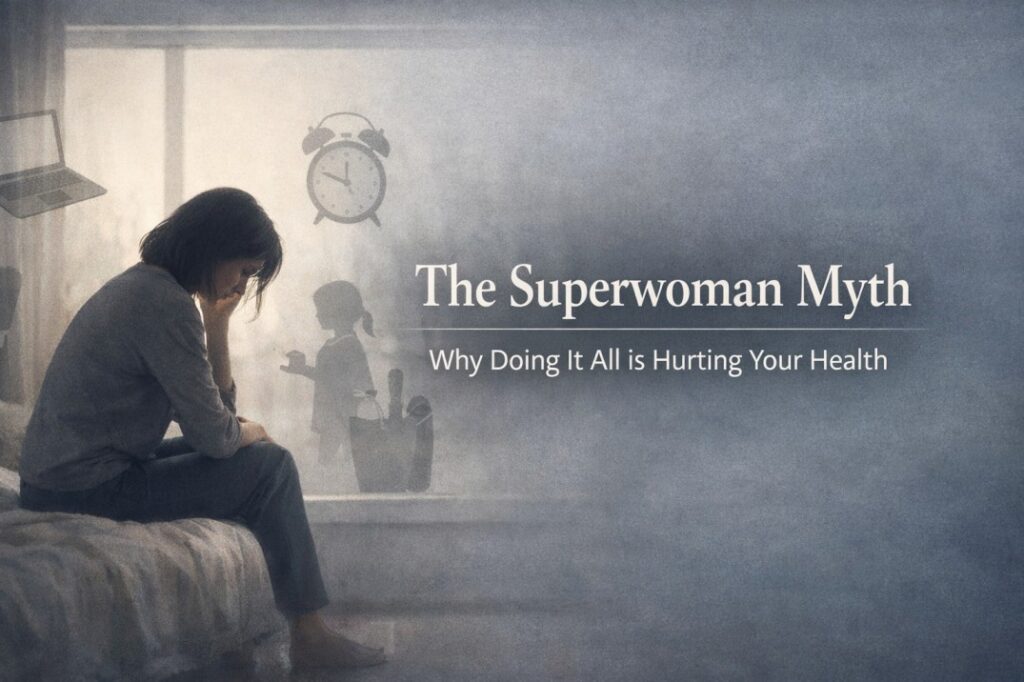
The Superwoman myth health impact feels empowering on the surface. Yet, it is quietly exhausting underneath. Many women appear capable, reliable, and calm. However, they carry invisible pressure every single day.
They manage work, family, emotions, and expectations without pause. Still, their bodies feel tired. Their minds feel crowded. Rest feels undeserved. This confusion creates self-doubt. If everything looks fine, why does it feel so heavy inside? That question often stays unanswered. Yet, the strain continues silently.
This blog unpacks why doing everything is not strength anymore. It explains how the Superwoman myth slowly harms health, emotions, and inner balance.
In this Guide:
Understanding the Superwoman Myth
The Superwoman myth praises women who never stop. She handles responsibilities flawlessly. She supports everyone and she rarely asks for help. This image looks admirable. However, it hides a dangerous belief. Worth comes from endurance, not wellbeing.
Over time, women internalize this message. They stop listening to fatigue. They normalize stress and ignore emotional overload. Superwoman myth health concerns emerge when constant capability replaces self-care. The body and mind eventually react.
How the Superwoman Ideal Was Created
The ideal did not appear overnight. It grew from survival, adaptation, and social change. Women entered multiple roles. Yet, they still held emotional responsibility at home. Strength became necessary, not optional. Generations passed this pattern forward. Responsibility became identity. Rest slowly felt irresponsible.
Why Society Rewards Overfunctioning Women
Overfunctioning often looks like leadership. People rely on women who manage everything smoothly. Praise reinforces behavior. Appreciation replaces support. Capability replaces care. As a result, burnout stays invisible. No one checks on the strong one.
What “Doing It All” Really Costs Your Health
Doing everything requires constant alertness. The nervous system rarely relaxes. The body stays prepared for the next task. The mind plans continuously. Emotions stay contained. Over time, stress becomes chronic. Recovery windows disappear. Fatigue turns into normal life.
Chronic Stress and Nervous System Overload
The nervous system responds to pressure, not logic. Continuous responsibility signals danger, not achievement. Stress hormones remain active. The body forgets how to switch off. Even rest feels restless. Relaxation feels unfamiliar. Silence feels uncomfortable. This state drains energy deeply. It happens even when life appears stable.
Emotional Suppression and Silent Burnout
Strong women often suppress emotions to stay functional. Feelings get postponed, not processed. Over time, joy dulls. Motivation fades. Numbness replaces enthusiasm. Burnout does not always look dramatic. Sometimes it looks like disinterest, irritation, or emotional distance.
Physical Symptoms Women Often Ignore
The body eventually speaks. Headaches, fatigue, hormonal shifts, and back pain appear. Gut issues are also common. These symptoms signal overload, not weakness. Ignoring them worsens imbalance. Listening early supports recovery.
Why Rest Feels Like Failure for High-Performing Women
Rest threatens identity for many women. Slowing down feels unsafe. Productivity feels tied to worth. Doing less feels like becoming less. This fear keeps women moving. They keep going even when exhausted. Superwoman myth health patterns continue because rest triggers guilt instead of relief.
Productivity Guilt and Self-Worth
Many women learned to earn appreciation through output. Helpfulness became self-value. When productivity drops, self-doubt rises. This belief keeps stress cycles active. It happens even without external pressure.
Emotional Conditioning and People Pleasing
People pleasing often starts early. Approval feels like safety. Women prioritize harmony over honesty. Needs stay unspoken. Over time, emotional boundaries weaken. Exhaustion grows silently.
The Emotional Toll No One Talks About
Strength often isolates. People assume strong women do not need support. They listen to others but rarely feel heard. Emotional loneliness develops despite constant interaction.
Invisible Labor and Mental Load
Planning, remembering, and anticipating consume energy. Managing emotions also takes a toll. This invisible labor never pauses. The mind rarely rests. Mental load explains why women feel tired even without physical effort.
Loneliness Behind Capability
Capability creates distance. Others rely instead of reciprocating. Strong women often crave softness. But they feel unable to ask. This loneliness quietly erodes emotional wellbeing.
When Strength Turns Into Survival Mode
At some point, strength stops being a choice. It becomes automatic. The body shifts into survival mode. Control replaces rest. Overfunctioning feels safer than slowing down. Superwoman myth health decline accelerates when survival replaces presence.
Trauma Patterns and Overfunctioning
Past instability often trains hyper-responsibility. Control creates predictability. Overdoing creates safety. These patterns run subconsciously. They are not intentional.
How Dr. Kaveri Bhatt Helps Strong Women Heal Without Breaking
Letting go of the Superwoman myth does not mean losing ambition. It does not mean losing capability. It means redefining strength in a healthier way. Dr. Kaveri Bhatt works with women who appear successful yet feel emotionally depleted. Her approach respects intelligence, resilience, and lived experience.
She combines techno-spiritual healing with trauma-informed methods. This allows healing without reliving pain. It avoids forcing emotional breakdowns. Her work focuses on subconscious release. She also works on nervous system regulation and emotional safety. Women learn to soften without fear of collapse.
Releasing the Superwoman Identity Safely
Identity release requires safety. Dr. Bhatt helps women detach from overfunctioning without guilt. Strength evolves instead of disappearing. Capacity remains, but pressure reduces. This process feels grounding, not destabilizing.
Success Story: From High-Functioning to Truly Healthy
Ritika from Gurgaon managed a demanding career and family life effortlessly. Others admired her strength. Yet she felt constantly drained. Sleep issues and anxiety became normal. Rest made her uneasy. Through subconscious and nervous system work, she released control patterns. Emotional softness returned. She still leads confidently. But now, she does it with energy, clarity, and inner calm.
Read more on Healthify Happiness:
- Beat the Burnout: How to Study Smarter, Not Harder
- Raise Your Vibration: 5 Daily Habits to Attract Positivity and Abundance
- The Art of Letting Go: How to Release Past Pain and Find Inner Peace
- Productivity vs. Mental Health: Why Your Team Needs a Wellness Break Today
- Stop Apologizing: A Woman’s Guide to Unapologetic Self-Love and Confidence
User Reviews
Ananya, Bengaluru
“I felt seen without being judged. The process helped me slow down without fear. I regained emotional stability.”Meera, Noida
“My anxiety reduced naturally. I learned to listen to my body. I stopped fighting it constantly.”Pallavi, Mumbai
“This work changed how I define strength. I feel capable and peaceful for the first time.”
Forum Discussions
Question: Is it normal to feel exhausted even when life looks successful?
Answer: Yes. Emotional load affects health regardless of external success. Chronic stress is real. Awareness is the first step toward balance.
Question: Can healing happen without quitting responsibilities?
Answer: Yes. Healing focuses on internal regulation. It does not mean abandoning roles. Sustainable strength grows alongside responsibility.
Frequently Asked Questions
Is the Superwoman myth harmful even if I enjoy being productive?
Yes, productivity itself is healthy. The harm begins when rest feels unsafe. It is harmful when self-worth depends only on output.
Why do strong women struggle to ask for help?
Early conditioning often links independence with safety. Asking for help can subconsciously feel risky.
Can emotional exhaustion affect physical health?
Yes. Emotional overload directly impacts hormones. It affects digestion, sleep, and immunity over time.
Does healing mean becoming less ambitious?
No. Healing helps ambition feel energizing instead of draining. Goals remain, but the pressure reduces.
How long does it take to feel better?
Every journey differs. Many women feel relief quickly. This happens as soon as emotional safety and awareness increase.
Conclusion: Letting Go of the Myth Without Losing Yourself
The Superwoman myth promised empowerment. Instead, it delivered exhaustion. Letting it go does not mean giving up strength. It means choosing health, presence, and emotional honesty. Superwoman myth health recovery restores balance. It does this without diminishing capability. Strength feels lighter when it comes from alignment, not survival. You do not need to do everything to be worthy. You already are.