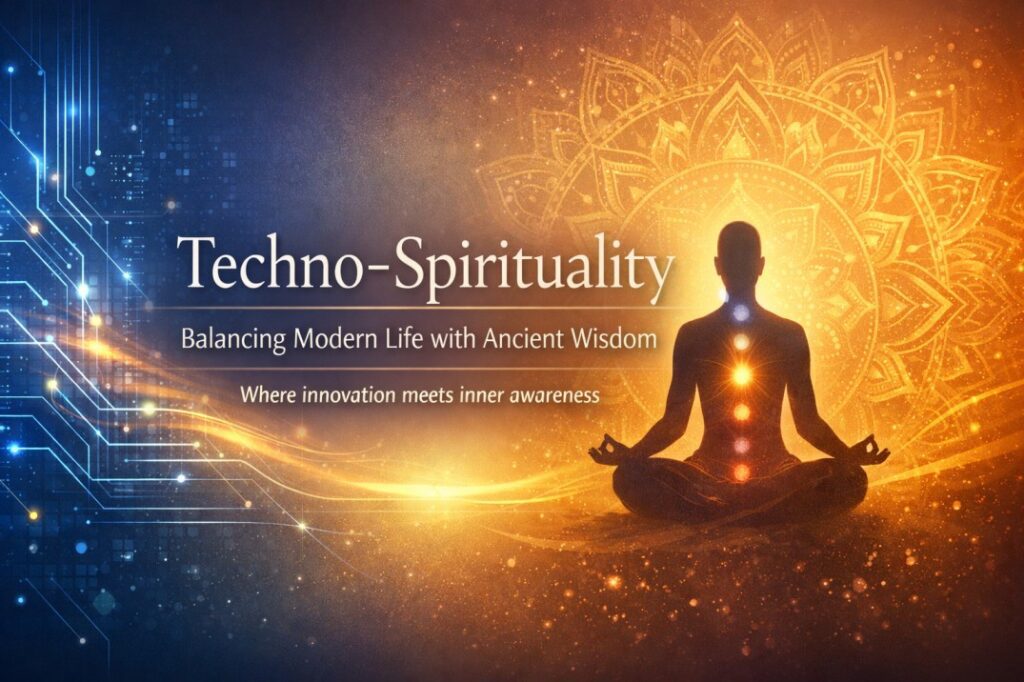
Techno-Spirituality feels relevant today because modern life moves fast, while the human nervous system still seeks rhythm, meaning, and emotional safety. Most people do not reject technology, yet they quietly feel drained by constant alerts, screens, and mental noise. This inner tension creates confusion, guilt, and restlessness.
Techno-Spirituality offers a grounded path that blends digital living with ancient wisdom, without forcing extremes or disconnection. It helps people stay productive while remaining emotionally balanced. Instead of escaping technology, it teaches conscious engagement. This approach feels realistic, humane, and deeply supportive for modern lives.
In this Guide:
Understanding Techno-Spirituality
Techno-Spirituality means integrating awareness into how technology is used, rather than separating spiritual life from daily routines. It does not ask people to renounce devices or retreat from responsibilities. Instead, it brings presence into everyday digital moments.
Ancient wisdom focused on awareness, regulation, and inner balance. Modern life adds speed, stimulation, and constant input. Techno-Spirituality connects these worlds by helping individuals remain conscious while engaging with modern tools. This integration restores stability without rejecting progress.
Why Modern Life Feels Emotionally Overloaded
Modern life overwhelms emotions because the mind processes more information than ever before, often without pause or integration. Notifications, news, messages, and content compete for attention. This constant input keeps the nervous system alert for long periods.
As a result, emotional fatigue builds quietly. People feel tired without physical effort. Irritability, anxiety, and numbness appear without obvious causes. This overload reflects overstimulation, not weakness.
Where Ancient Wisdom Still Fits Today
Ancient wisdom emphasized awareness, moderation, and emotional regulation. These principles remain relevant because the human mind still functions the same way. Awareness creates space between stimulus and reaction.
When applied today, these practices help people respond consciously instead of reacting automatically. Ancient tools feel powerful because they slow internal processes, even when external life moves quickly.
The Conflict Between Technology and Inner Peace
Many people believe they must choose between technology and inner peace. This belief creates frustration and unrealistic expectations. Avoiding technology completely often feels impossible or isolating.
True balance does not come from rejection. It comes from awareness. Technology itself remains neutral. The relationship with it determines emotional impact.
Digital Convenience Versus Mental Noise
Digital tools increase efficiency, yet they also increase mental clutter when used unconsciously. Multitasking fragments attention. Constant switching keeps the mind restless.
Mental noise grows when awareness drops. Speed replaces presence. Over time, this pattern weakens emotional regulation and inner calm.
Why Escapism Does Not Create Balance
Short digital breaks or extreme detoxes often feel refreshing initially. However, they rarely create lasting change. The same patterns return once normal routines resume.
Balance requires understanding internal responses, not avoiding external tools. Awareness builds resilience that lasts beyond temporary escapes.
Ancient Wisdom Principles That Still Work
Ancient wisdom focused on inner alignment rather than external control. Simplicity, awareness, and emotional regulation formed the foundation of mental stability. These principles remain effective because they work with human psychology.
When practiced gently, they support modern life without adding pressure or complexity. Simplicity becomes a strength in a complex world.
Awareness as the Foundation
Awareness means noticing thoughts, emotions, and body sensations without judgment. It creates space between experience and reaction.
In daily life, awareness softens impulsive responses. It helps individuals pause before reacting, scrolling, or engaging emotionally.
Emotional Regulation Through Conscious Practice
Emotional regulation does not suppress feelings. It allows emotions to move through the body safely. Conscious practices calm the nervous system and reduce reactivity.
When emotions stabilize, clarity improves. Decisions feel grounded instead of rushed.
How Technology Can Support Spiritual Growth
Technology can support growth when used intentionally. Digital tools amplify existing patterns. With awareness, they enhance reflection, learning, and connection.
Spiritual growth happens through intention, not tools themselves. Conscious use transforms technology into support rather than distraction.
Using Digital Tools With Intention
Intentional use begins with clarity. Knowing why a device is picked up changes the experience. Pausing before opening an app restores agency.
This simple shift reduces fatigue and improves focus without strict rules.
Creating Boundaries Without Disconnection
Boundaries protect emotional energy. They create rhythm rather than restriction. Flexible limits allow engagement without overwhelm.
Healthy boundaries feel supportive, not punishing. They evolve with awareness.
Everyday Practices for Techno-Spiritual Balance
Balance grows through small, consistent actions. Short practices fit easily into busy routines and create lasting change.
Daily awareness strengthens emotional stability. Over time, these micro practices build trust with oneself.
Mindful Phone Usage
Mindful phone usage begins with noticing impulses. A brief pause before scrolling creates awareness.
This pause reduces unconscious consumption and restores intentional choice.
Short Awareness Rituals During Workdays
Micro rituals calm the nervous system during work. Deep breaths, posture checks, or brief pauses reset attention.
Consistency matters more than duration.
Reconnecting With the Body in Digital Spaces
The body anchors awareness. Gentle movement, stretching, or grounding sensations reduce anxiety during screen use.
Embodiment restores presence without disrupting work.
Emotional Health in a Hyperconnected World
Emotional fatigue often comes from subconscious overload. The mind absorbs constant stimuli, even when attention feels scattered.
Techno-Spirituality addresses emotional health by supporting the nervous system, not blaming habits.
Understanding Subconscious Overstimulation
The subconscious processes far more information than awareness registers. Continuous input keeps stress responses active.
Rest alone does not resolve this overload. Awareness helps integrate experiences.
Healing Emotional Fatigue Without Isolation
Healing does not require withdrawal from life. Integration allows healing while staying connected.
Balance grows through conscious engagement, not isolation.
Read more on Healthify Happiness:
- Beyond Talk Therapy: Why Somatic Healing is the Key to Emotional Freedom
- The ROI of Happiness: How Corporate Healing Boosts Company Profits
- Feminine Energy: How to Balance Softness and Strength in a Modern World
- Sleep Your Way to Better Grades: Why Rest is Your Secret Weapon
- Energy Vampires: How to Protect Your Aura and Maintain Spiritual Hygiene
Success Story or Case Study
Rohan, a product manager from Bengaluru, felt constantly exhausted despite professional success. His screen time felt unavoidable. Sleep felt restless. Emotions felt flat.
Through techno-spiritual practices, he learned to pause, regulate emotions, and reconnect with bodily awareness. Gradually, his focus improved. Stress reduced. His relationship with technology shifted from compulsion to choice. Balance returned without quitting his career.
How Dr. Kaveri Bhatt Helps
Dr. Kaveri Bhatt helps individuals integrate Techno-Spirituality by combining subconscious release methods with trauma informed care. Her approach supports emotional safety while addressing modern overstimulation.
She works with inner patterns rather than surface habits. Through techno spiritual healing, she guides clients to regulate emotions, release stored stress, and rebuild inner trust. Her work blends awareness, practical tools, and deep emotional understanding.
This approach helps people remain engaged with modern life while restoring inner balance and clarity.
User Reviews
Ananya Mehta, Mumbai: “Emotional reactions softened within weeks. I felt calmer while working long digital hours.”
Suresh Iyer, Chennai: “Improved sleep and reduced anxiety. I felt more present without changing my workload.”
Neha Kapoor, Gurugram: “Feeling emotionally grounded. My relationship with technology became peaceful instead of draining.”
Forum Style Discussions
Question: Can Techno-Spirituality work with demanding corporate schedules?
Answer: Yes. It focuses on awareness within existing routines rather than adding tasks or removing responsibilities.
Question: Does this approach require spiritual beliefs?
Answer: No. It works through emotional regulation, awareness, and nervous system balance, regardless of belief systems.
Frequently Asked Questions
Is Techno-Spirituality suitable for beginners?
Yes. It focuses on simple awareness practices that integrate easily into daily routines without requiring prior spiritual experience.
Does this mean reducing screen time drastically?
No. It emphasizes conscious engagement rather than strict reduction, allowing flexibility based on personal needs.
How long does it take to feel emotional changes?
Many people notice subtle shifts within weeks, especially improved calmness, focus, and emotional regulation.
Can this help with anxiety caused by digital overload?
Yes. By calming the nervous system and increasing awareness, emotional reactivity often reduces naturally.
Is professional guidance necessary?
Guidance helps deepen understanding and safety, especially when addressing subconscious patterns or emotional fatigue.
Conclusion
Techno-Spirituality offers a realistic path for modern living by blending ancient wisdom with digital awareness. It does not demand rejection or extremes. Instead, it restores balance through conscious engagement.
By integrating awareness, emotional regulation, and intentional technology use, individuals regain clarity and inner stability. This balance feels sustainable, humane, and deeply supportive in a hyperconnected world.
Need personalized guidance?