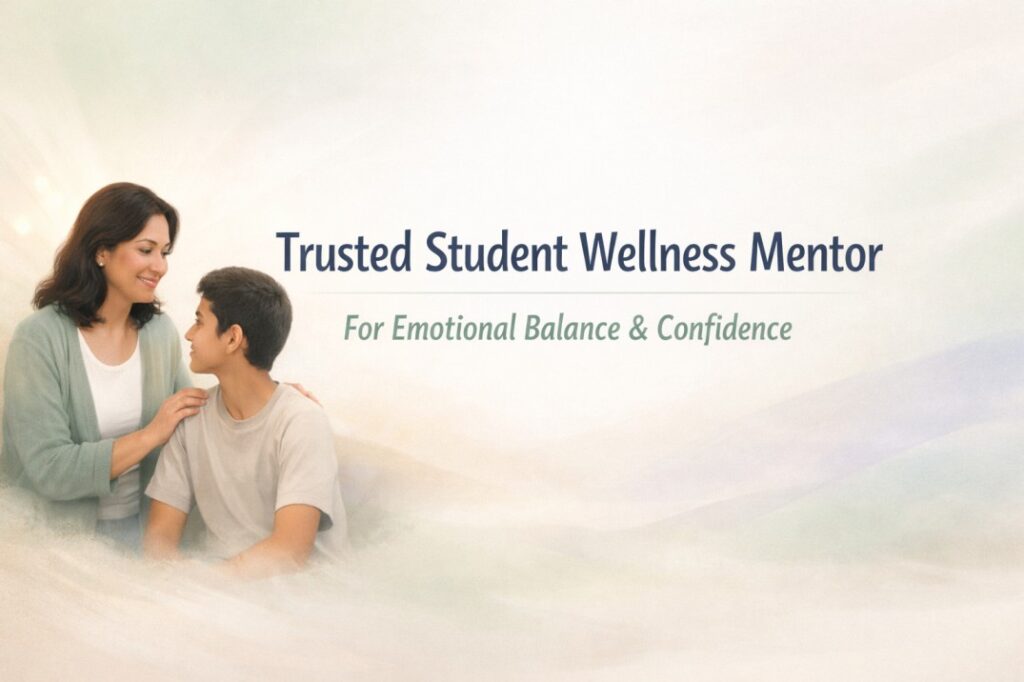
There comes a quiet moment when a student realizes that effort alone no longer brings steadiness. The search for a Trusted Student Wellness Mentor often begins there, not from failure, but from emotional imbalance that feels hard to explain.
You may attend classes, complete tasks, and meet expectations, yet something inside feels unsettled. Confidence rises briefly, then fades, leaving behind self doubt and emotional fatigue. This experience is more common than it appears. It does not mean weakness or inability. It signals a deeper need for emotional grounding that deserves attention and care.
In this Guide:
Understanding the Emotional Landscape of Students
Students learn early how to adapt. They follow schedules, manage deadlines, and appear composed even when emotions feel heavy beneath the surface.
Because routines keep moving, emotional discomfort rarely gets acknowledged. It stays hidden behind productivity, discipline, and the belief that pushing harder will restore balance. Over time, this quiet imbalance begins affecting focus, motivation, and self trust. Many students feel confused by this shift because nothing outward seems wrong.
The Quiet Pressure to Appear Fine
Students often feel pressure to appear capable, confident, and emotionally strong. Admitting inner struggle can feel risky or unnecessary. As a result, emotions get minimized or postponed. Thoughts like this phase will pass or others handle more quietly take over.
Yet suppressed emotions do not disappear. They surface as anxiety, indecision, or loss of confidence, creating internal tension that feels difficult to name. A Trusted Student Wellness Mentor helps identify these hidden stressors.
When Confidence Feels Fragile
Performance confidence depends on outcomes. Good results bring relief, while setbacks shake stability quickly. Inner confidence feels different. It comes from emotional alignment, self understanding, and trust in one’s inner responses, regardless of results.
Many students excel outwardly while feeling uncertain inside. Recognizing this gap becomes the first step toward lasting emotional balance.
How Emotional Instability Affects Focus and Decisions
When emotions feel unsettled, the mind struggles to stay clear. Small decisions feel overwhelming, and focus drifts easily. This does not reflect lack of ability. It reflects unresolved emotional signals asking for attention and care.
Once emotional balance begins restoring, clarity returns naturally. Decisions feel calmer, and effort feels lighter rather than forced.
The Role of a Trusted Student Wellness Mentor
True support begins with emotional safety. Before any tools or techniques, students need to feel heard and respected. A Trusted Student Wellness Mentor creates space where emotions can surface without judgment or urgency. Nothing needs to be fixed immediately.
This safety allows students to explore their inner experience honestly. Clarity emerges gently when pressure steps aside.
Trust, Pacing, and Non Judgmental Support
Every student processes emotions differently. Progress cannot follow a rigid timeline or expectation. Support works best when pacing respects individual readiness. Some insights unfold quickly, while others need patience and consistency.
When guidance remains non judgmental, students feel empowered rather than corrected. Confidence grows naturally through trust, not pressure.
Success Story
A postgraduate student arrived feeling confused and emotionally exhausted despite strong academic performance. Confidence fluctuated constantly, leaving her unsure of her abilities. She realized she needed the support of a Trusted Student Wellness Mentor to regain her footing.
Through consistent sessions, she learned to recognize emotional patterns shaping her self doubt. Gentle subconscious work helped release long held pressure. Over months, her emotional responses softened. Focus improved, and decisions felt clearer.
Most importantly, she began trusting herself again. Confidence no longer depended solely on results. It emerged from emotional alignment and inner steadiness.
How Dr. Kaveri Bhatt Helps as a Student Wellness Mentor
Dr. Kaveri Bhatt works at the intersection of emotional awareness and grounded understanding. Her approach balances practical insight with deeper inner awareness. As a dedicated Trusted Student Wellness Mentor, she ensures students feel supported without feeling overwhelmed by abstract concepts.
Her work remains grounded, calm, and aligned with real life experiences.
Techno Spiritual Healing Approach
Techno spiritual healing combines structured thinking with inner awareness. It respects rational understanding while allowing emotional exploration. Students feel grounded rather than overwhelmed.
This balance helps students trust the process. Healing feels practical, not abstract. Emotional clarity becomes accessible without abandoning logic.
Subconscious Release and Trauma Informed Care
Many emotional patterns form quietly over time. Dr. Kaveri Bhatt works gently with the subconscious, respecting emotional boundaries. Her trauma informed approach ensures that students never feel rushed or exposed. Emotional safety remains central throughout the process.
By releasing stored emotional responses gradually, students begin feeling lighter, calmer, and more emotionally present without reliving distress.
Practical Emotional Tools for Daily Life
Emotional balance needs support beyond conversations. Students receive practical tools that help regulate emotions during daily challenges. These tools support awareness, grounding, and emotional clarity during studies, exams, and interpersonal situations.
With practice, students gain confidence in handling emotions independently. This self reliance becomes a key source of inner stability.
What Students and Parents Say
Riya from Delhi: “I felt heard for the first time. Emotional clarity slowly replaced anxiety during exams. My confidence now feels calm rather than forced.”
Arjun from Pune: “Gained emotional balance during academic uncertainty. Learned practical tools that helped me stay grounded without suppressing emotions.”
Meena from Ahmedabad: “Positive changes in my son’s emotional responses. Improved communication, reduced anxiety, and healthier confidence over time.”
Community Forum Conversations
Question: Why does confusion persist despite hard work?
Answer: Emotional signals ask for attention, not correction. Balance begins when emotions receive acknowledgment rather than dismissal.
Question: How to rebuild confidence after setbacks?
Answer: Inner confidence rebuilds through emotional processing, not immediate achievement. Setbacks become learning spaces, not identity markers.
Frequently Asked Questions
Can emotional wellness support academic focus without distraction?
Yes, emotional balance improves focus naturally. When emotions feel settled, the mind processes information more clearly without extra effort or mental noise.
Is emotional mentoring suitable for students without severe issues?
Absolutely. Emotional wellness supports everyday clarity, confidence, and resilience. It works as preventive care, not only during emotional distress.
How long does it take to feel emotional balance?
Every student progresses differently. Some notice subtle shifts early, while others experience gradual changes that build steadily over time.
Does emotional work require reliving past experiences?
No. Trauma informed approaches prioritize safety. Emotional release happens gently without forcing students to revisit distressing memories.
Can students apply emotional tools independently?
Yes. Practical tools empower students to manage emotions in daily life. This independence strengthens long term emotional confidence.
Conclusion
Emotional balance does not arrive through pressure or perfection. It develops through understanding, patience, and safe guidance that respects individual journeys. A Trusted Student Wellness Mentor offers presence rather than solutions, clarity rather than correction.
Through this support, confidence becomes steady and authentic. Students who reconnect with emotional balance begin trusting themselves again. This self trust supports not only academic life, but personal growth that lasts well beyond it.
Need personalized guidance?