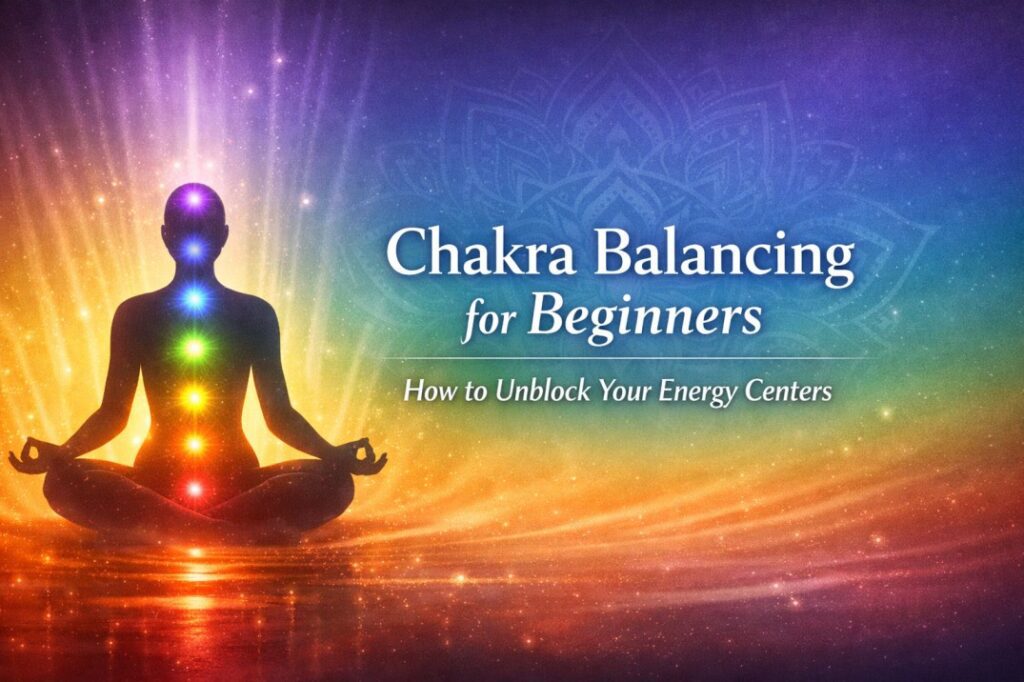
Chakra balancing for beginners often begins quietly, when stress feels heavier, emotions repeat without reason, and clarity seems harder to reach despite effort. Many people sense something deeper needs attention but feel unsure where to begin.
This confusion feels common, especially when explanations online sound extreme or overly spiritual. Beginners want grounded understanding, not fear, rituals, or pressure. This guide offers a calm starting point. It explains chakra balancing simply, connects emotions with energy, and helps you feel confident exploring inner balance safely.
In this Guide:
Understanding Chakras in Simple Terms
Chakras are not mysterious switches or supernatural points. Instead, they reflect how emotional, mental, and physical awareness flows through daily life. For beginners, chakras act like internal checkpoints. They influence how safe, expressive, confident, or calm you feel in everyday situations.
When awareness flows smoothly, life feels stable. When it feels stuck, emotions repeat and energy feels drained.
What Chakras Actually Represent
Each chakra represents a theme of human experience. Safety, creativity, confidence, expression, awareness, and clarity all connect to these centers. They respond to thoughts, emotions, habits, and stress patterns. Chakras do not punish or reward anyone. They simply reflect what needs attention. Understanding this removes fear. Chakra balancing becomes self-awareness, not performance.
Why Energy Centers Affect Daily Life
Daily reactions often come from stored emotional responses. Stressful habits, unresolved feelings, and mental overload create internal resistance. Over time, this resistance affects focus, mood, sleep, and confidence. Energy centers respond by feeling heavy or dull. Chakra awareness helps you notice these patterns gently, without judgment.
Chakra Balancing for Beginners Explained Clearly
For beginners, chakra balancing is not about fixing something broken. It is about listening, noticing, and responding differently. Balance happens gradually through awareness, emotional honesty, and consistent self-care. No forcing is required. When understanding grows, confidence follows naturally.
How Energy Gets Blocked
Energy blocks form through repeated emotional suppression, long-term stress, or unresolved experiences. The body remembers what the mind avoids. Fear, guilt, shame, or pressure create internal tension. Over time, this tension limits natural flow. Awareness releases blocks gently by allowing emotions to be felt safely.
Common Myths That Confuse Beginners
Many believe chakra work requires special abilities or extreme discipline. This belief creates unnecessary fear. Others assume balance means constant happiness. In reality, balance means emotional flexibility and clarity. Beginners benefit most from simplicity, patience, and grounded understanding.
Signs Your Energy Centers May Be Blocked
Blocked energy does not always feel dramatic. Often, it shows up through patterns rather than symptoms. Noticing repetition helps more than labeling experiences.
Emotional Patterns to Notice
Repeated anxiety, emotional numbness, self-doubt, or overthinking may signal imbalance. If the same emotional triggers resurface despite effort, awareness becomes necessary. These patterns are messages, not failures.
Physical and Mental Signals
Chronic tension, fatigue, restlessness, or difficulty focusing often accompany emotional blocks. The body communicates what words cannot express. Listening early prevents deeper imbalance.
Root to Crown Chakras Overview
Chakras flow from grounding to awareness. Each layer builds upon the previous one. Understanding this sequence helps beginners avoid confusion and overwhelm.
Lower Chakras and Emotional Safety
Lower chakras relate to stability, security, and trust. When these feel unstable, anxiety increases. Grounding restores a sense of safety within the body.
Upper Chakras and Mental Clarity
Upper chakras influence expression, insight, and awareness. Overthinking often reflects imbalance here. Clarity emerges when grounding supports awareness.
Simple Chakra Healing Basics for Beginners
Beginners benefit from gentle entry points. Small steps create lasting change. Consistency matters more than intensity.
Awareness Before Any Practice
Noticing emotions without reacting creates space. Awareness itself begins balancing energy. Breath, posture, and self-observation support this process naturally.
Gentle Daily Alignment Habits
Mindful breathing, emotional journaling, and honest self-reflection help energy flow. Short pauses during the day reset internal balance effectively.
How Chakra Balancing Supports Emotional Stability
Emotional stability does not mean emotional absence. It means flexibility and resilience. Chakra awareness supports this balance safely.
Stress, Trauma, and Energy Memory
The body stores emotional experiences through tension and habits. Trauma-informed awareness allows release without reactivation. Gentle attention restores trust with the body.
Why Emotional Release Feels Physical
Tears, warmth, or heaviness often accompany release. These sensations reflect stored tension leaving the system. They signal healing, not weakness.
How Dr. Kaveri Bhatt Helps Beginners Unblock and Balance Energy Centers Through Grounded Chakra Awareness
Many beginners seek guidance that respects logic, emotional safety, and lived experience. Dr. Kaveri Bhatt works with chakra awareness through a grounded techno-spiritual lens.
Her approach does not isolate spirituality from psychology. Instead, it integrates subconscious release, emotional regulation, and trauma-informed practices. This method supports beginners who want clarity without overwhelm. It allows energy awareness to unfold gradually while honoring emotional readiness and personal boundaries.
Techno Spiritual Perspective on Chakra Work
This approach combines modern understanding of the nervous system with ancient energy wisdom. Logical awareness supports emotional safety. Chakra work becomes a process of integration, not belief.
Subconscious Release and Trauma Informed Healing
Unresolved emotions surface gently through safe awareness. Trauma-informed methods prevent overwhelm and protect nervous system stability. Healing progresses at the body’s pace.
Practical Emotional Tools for Daily Balance
Breathwork, grounding techniques, and emotional tracking support daily stability. These tools empower beginners beyond sessions.
Read more on Healthify Happiness:
- The Superwoman Myth: Why Doing It All is Hurting Your Health
- Beat the Burnout: How to Study Smarter, Not Harder
- Raise Your Vibration: 5 Daily Habits to Attract Positivity and Abundance
- The Art of Letting Go: How to Release Past Pain and Find Inner Peace
- Productivity vs. Mental Health: Why Your Team Needs a Wellness Break Today
Success Story: From Anxiety to Calm
Ananya from Bengaluru struggled with constant anxiety and emotional exhaustion. Logical coping tools offered limited relief. Through chakra awareness, she learned to notice emotional triggers safely. Gradual grounding restored stability. Within weeks, her sleep improved, reactions softened, and confidence returned naturally.
Real Experiences from Beginners
Ritika, Pune
“Chakra balancing for beginners helped me understand emotional patterns without fear. I finally feel calmer handling daily stress.”Aman, Delhi
“I wanted logic, not rituals. This approach helped me feel grounded and emotionally aware.”Neha, Jaipur
“Small awareness practices changed how I respond emotionally. Balance now feels natural.”
Community Questions and Honest Answers
Forum Question One:
Is chakra balancing safe for beginners with anxiety?
Answer:
Yes, when approached gently and without forcing emotional release. Awareness-based methods support safety and gradual emotional regulation.
Forum Question Two:
Do beginners need daily rituals?
Answer:
No. Consistent awareness and simple habits create balance more effectively than rigid routines.
Common Mistakes Beginners Should Avoid
Rushing progress creates resistance. Healing unfolds naturally with patience. Ignoring emotions while focusing only on techniques limits effectiveness. Comparing experiences leads to unnecessary doubt. Trust your pace and process.
FAQs
How long does chakra balancing for beginners take to show results?
Results vary, but many notice emotional clarity within weeks when awareness remains consistent and pressure-free.
Can chakra imbalance affect physical health?
Emotional stress influences the body. Chakra awareness supports emotional regulation, which indirectly improves physical well-being.
Is chakra work religious?
No. Chakra balancing focuses on awareness and emotional patterns, not belief systems or rituals.
Can beginners practice chakra awareness alone?
Yes. Gentle self-observation and grounding habits support independent practice safely.
What matters most for beginners?
Patience, honesty, and emotional safety matter more than techniques.
Conclusion
Chakra balancing for beginners works best when approached with curiosity, patience, and grounded understanding. Balance grows through awareness, not force. By listening to emotions and respecting personal pace, energy begins to flow naturally. Confidence replaces confusion. When clarity leads the way, inner balance becomes sustainable and empowering.