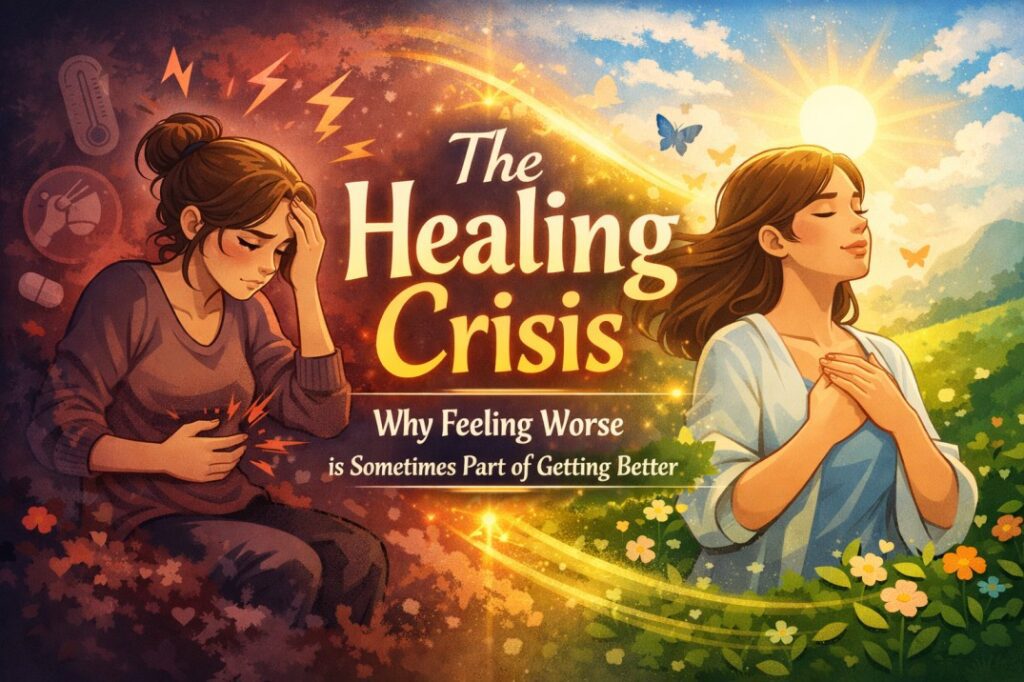
The healing crisis often begins quietly, yet it can suddenly make you feel emotionally unstable, confused, or overwhelmed, even after doing everything right for healing.
Many people expect calm, clarity, and peace, yet instead they face emotional waves, old memories, and physical fatigue that feel deeply unsettling.
This contrast creates doubt, fear, and a painful question, am I getting worse instead of better.
Understanding this phase matters because misinterpreting it often causes people to abandon healing right before meaningful change begins.
In this Guide:
What Is a Healing Crisis
A healing crisis describes a temporary phase where emotional or physical discomfort increases as suppressed patterns begin releasing.
Instead of new pain forming, old unresolved experiences rise into awareness for processing.
This phase appears during emotional healing processes, trauma healing journeys, and deep subconscious healing work.
Although intense, it signals movement rather than stagnation.
Why Healing Can Feel Worse Before It Feels Better
Healing disrupts emotional protection systems that once kept pain hidden.
As awareness expands, the mind and body adjust, often producing discomfort before stability returns.
This discomfort reflects adjustment, not failure.
The Science and Psychology Behind Emotional Discomfort
The nervous system plays a major role in inner healing symptoms.
When long held stress responses release, the body temporarily enters a heightened awareness state.
This creates emotional sensitivity, fatigue, and mood fluctuations.
How the Nervous System Responds to Healing
As safety increases, the nervous system allows suppressed emotions to surface.
The body processes what it could not earlier.
This shift feels intense but remains purposeful.
Common Symptoms of a Healing Crisis
Healing rarely follows a straight emotional path.
Symptoms vary but follow recognizable patterns.
Emotional Symptoms
People may feel sadness, irritability, fear, or emotional emptiness.
Old memories can resurface unexpectedly.
Mood swings often appear without clear external triggers.
Physical and Behavioral Shifts
Sleep patterns may change.
Energy levels fluctuate.
Some people withdraw socially while others seek solitude for integration.
Why Suppressed Emotions Surface During Healing
The subconscious stores emotional experiences that felt unsafe to process earlier.
When healing begins, safety increases.
As a result, the mind releases stored emotional material gradually.
This process feels uncomfortable but reduces long term emotional burden.
The Difference Between Healing Crisis and Emotional Breakdown
A healing crisis moves toward awareness and integration.
An emotional breakdown feels chaotic and overwhelming without insight.
In healing, discomfort comes with clarity moments.
In breakdowns, confusion dominates.
Recognizing this distinction prevents unnecessary fear.
Read more on Healthify Happiness:
- Financial Freedom & Self-Worth: Why Money Mindset Matters for Women
- The Comparison Trap: How to Stop Competing with Classmates and Focus on You
- Manifestation Mistakes: Why Your Affirmations Aren’t Working (And How to Fix It)
- Stop Overthinking: 7 Emotional Tools to Quiet Your Mind Instantly
- Leadership & Empathy: How Emotional Intelligence Transforms Toxic Workplaces
Success Story: The Week Everything Fell Apart
Ritika from Gurugram began emotional healing and soon felt emotionally raw.
She cried unexpectedly, questioned relationships, and doubted her progress.
Instead of stopping, she slowed down and focused on grounding.
Within weeks, emotional clarity replaced confusion.
Her confidence returned with deeper self trust.
How Dr. Kaveri Bhatt Helps People Navigate Emotional Healing When Feeling Worse Is Part of Getting Better
Dr. Kaveri Bhatt helps individuals move through healing crisis phases using a techno spiritual approach grounded in safety and clarity.
She combines subconscious release methods, trauma informed awareness, and practical emotional tools that respect individual nervous system capacity.
Rather than pushing emotional release, she supports regulated healing where insight develops alongside emotional stability.
Her work focuses on understanding emotional signals, reducing fear, and helping people trust their healing process without emotional overwhelm.
User Reviews
Ananya Mehta, Mumbai: “I thought healing meant feeling peaceful immediately. When emotions intensified, I panicked. Dr. Kaveri helped me understand the process calmly and regain emotional balance.”
Rohit Sharma, Noida: “During my trauma healing journey, confusion almost made me quit. Her guidance helped me stay grounded and understand emotional release without fear.”
Pooja Nair, Bengaluru: “I felt emotionally exhausted and doubted myself. The structured emotional tools helped me move through discomfort with clarity and confidence.”
Forum Style Discussions
User from Pune asked: Why does emotional pain increase after starting healing?
Community response: Explained nervous system adjustment and subconscious release as normal transitional experiences.
User from Delhi asked: Whether stopping healing helps reduce discomfort.
Members shared: Slowing down works better than stopping entirely during emotional healing phases.
FAQs
Is a healing crisis dangerous?
A healing crisis feels intense but remains temporary. With proper support, it leads to emotional clarity rather than long term instability.
How long does a healing crisis last?
Duration varies, yet most people experience gradual relief within weeks when they respect emotional pacing and grounding practices.
Should I stop therapy during a healing crisis?
Stopping abruptly can interrupt integration. Adjusting intensity while maintaining support usually helps emotional regulation.
Can healing crisis happen more than once?
Yes, deeper emotional layers may release at different stages, though later phases often feel less overwhelming.
How can I support myself during this phase?
Gentle routines, emotional expression, and regulated guidance help the nervous system integrate change safely.
Conclusion
Feeling worse during healing does not mean failure.
A healing crisis reflects emotional movement, release, and nervous system recalibration.
Understanding this phase restores trust and prevents unnecessary fear.
When guided properly, discomfort transforms into clarity, resilience, and emotional stability.
Healing rarely looks gentle at first, yet it becomes meaningful when approached with patience and understanding.
Need personalized guidance?