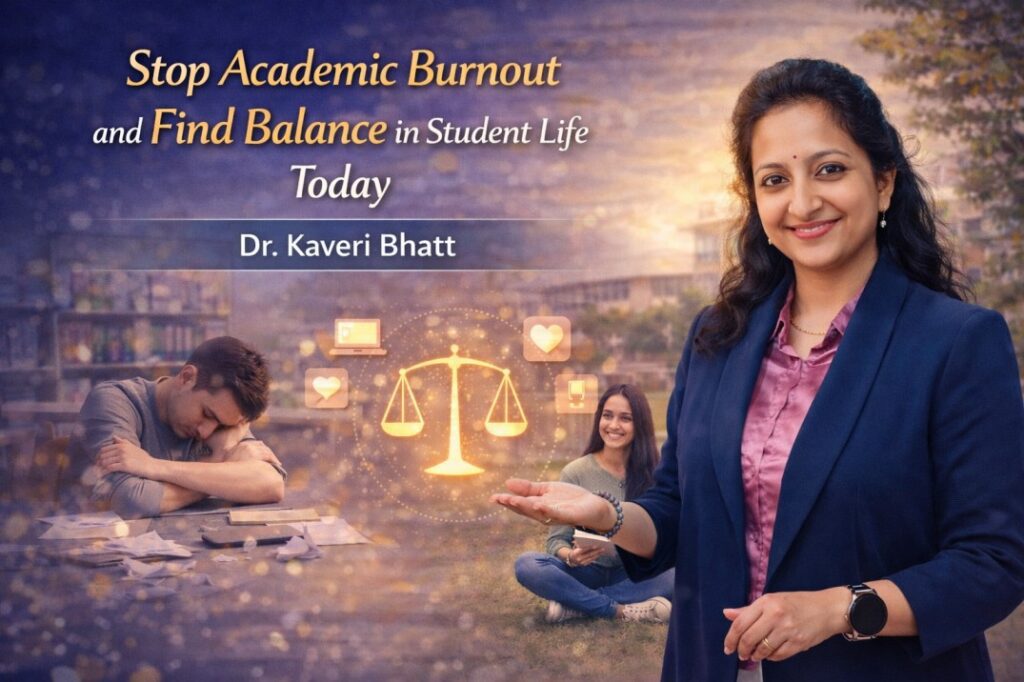
You may want to Stop Academic Burnout, yet you still push yourself to study longer because slowing down feels unsafe. Your mind keeps running even when your body feels tired. You tell yourself that once exams end, everything will feel normal again.
However, the exhaustion does not disappear. Instead, it settles deeper. You wake up already tense, and small tasks feel heavier than they should. Many students quietly carry this weight. They smile in class, submit assignments, and look disciplined. Still, inside, they feel detached and drained.
In this Guide:
Understanding Why Students Struggle to Stop Academic Burnout
Burnout does not appear overnight. It builds slowly through pressure that goes unspoken. Students often believe they must stay strong at all times. They rarely allow themselves emotional space.
When performance becomes identity, rest starts to feel like failure. You study not only to learn, but to prove your worth. Over time, that internal pressure exhausts your nervous system. Many try to Stop Academic Burnout by forcing more discipline. Yet the deeper issue remains untouched.
The Hidden Emotional Pressure Behind Achievement
High achievers often carry invisible expectations. Family pride, comparison with peers, and fear of disappointing others shape their choices. Even when no one speaks openly, the pressure feels real. Gradually, your mind links love and approval with results. You feel valuable when you score well. This emotional equation drains energy.
When Motivation Turns into Mental Fatigue
At first, motivation feels empowering. You set goals, follow schedules, and push yourself forward. Yet without emotional rest, motivation shifts into strain. Your brain needs safety to function well. If it constantly feels judged or rushed, it reacts with fatigue. Concentration drops. Memory weakens. Small mistakes feel overwhelming.
The Emotional Signs You Should Not Ignore
Burnout speaks through subtle signs. You may feel irritated over small issues. You may delay studying even when you care about your goals. Sleep becomes restless. Appetite changes. You feel numb during activities that once felt exciting.
Guilt then enters quietly. You think you should be stronger. You compare yourself with classmates who appear energetic. That comparison deepens exhaustion. To effectively Stop Academic Burnout, you must first listen to these signals.
Physical and Psychological Signals of Burnout
Headaches, muscle tension, and constant tiredness are common. At the same time, anxiety increases before exams or presentations. Emotionally, you may feel detached from your own ambition. You continue working, yet the joy feels absent. These patterns show nervous system overload.
The Guilt Cycle That Keeps You Stuck
Guilt often fuels burnout. You rest, then criticize yourself for resting. You study, then judge yourself for not studying enough. This internal dialogue creates chronic stress. Over time, the body responds by reducing motivation altogether. Breaking this cycle requires compassion.
Why Academic Stress Is Often More Than Just Workload
Academic pressure rarely exists alone. Family narratives about success influence your emotional world. Cultural comparison amplifies competition. Social media magnifies achievement highlights. You may feel that everyone else is ahead. That perception triggers fear. Fear then drives overwork.
Family Expectations and Identity Pressure
Many students love their families deeply. They want to make them proud. Yet that desire sometimes turns into silent pressure. You may study harder to avoid disappointing someone. However, when love feels conditional, anxiety increases. Understanding this dynamic reduces internal conflict.
How Dr. Kaveri Bhatt Helps Students Stop Academic Burnout
Dr. Kaveri Bhatt approaches student burnout through a techno spiritual healing framework. With over two decades in the IT field and deep training in subconscious therapies, she understands both structured thinking and emotional depth.
Her work does not focus only on productivity. Instead, she explores the root emotional imprints that drive overachievement and anxiety. Through trauma informed methods, she helps students identify subconscious beliefs linked to self worth and performance. This helps them Stop Academic Burnout at the source.
Techno Spiritual Healing for Students
Many students carry hidden memories of criticism or comparison. These memories stay active in the subconscious. Dr. Bhatt uses guided introspection, hypnotherapy techniques, NLP based reframing, and energy balancing practices to gently release those patterns.
Practical Emotional Tools
Her approach also includes practical emotional tools. She teaches grounding exercises before study sessions. She encourages reflective journaling to process exam anxiety. Importantly, she integrates healing with daily life. Students learn how to create balanced routines that honor rest and effort equally.
Success Story: Rebuilding a Relationship with Learning
Riya, a second year engineering student from Pune, felt constant fatigue despite studying ten hours daily. She feared disappointing her parents and avoided sharing her stress. She needed to Stop Academic Burnout to save her health.
After working with Dr. Bhatt, she explored her subconscious belief that love depended on achievement. Through guided sessions, she processed childhood comparison memories. Gradually, her anxiety reduced. Riya adjusted her study schedule with built in rest blocks. Within months, her grades improved, and her emotional stability strengthened.
Real Student Reviews
Aarav from Delhi: “Sessions helped me understand panic triggers before tests. Felt heard without judgment.”
Megha from Bangalore: “Stopped blaming myself for fatigue. Now studies with calm intention and feels supported.”
Kabir from Mumbai: “Subconscious work changed my perspective on failure. I feel confident and study without fear.”
Forum Style Questions and Answers
Question: Does burnout mean I chose the wrong path?
Answer: No. Burnout often reflects emotional overload rather than misalignment.
Question: Will taking breaks reduce my performance?
Answer: No. Intentional rest strengthens cognitive function and improves retention.
Frequently Asked Questions
How long does recovery take?
Healing timelines differ, yet most notice emotional shifts within a few guided sessions.
Does therapy mean something is wrong?
No. Seeking support shows you value mental clarity and long term stability.
Do holistic methods work for students?
Yes. Subconscious techniques address root causes that productivity tools miss.
Will healing distract from studies?
No. Balanced emotional health improves memory, focus, and confidence during exams.
Is confidentiality maintained?
Yes. All sessions maintain professional discretion, ensuring students feel safe.
Conclusion
Burnout is not a sign of weakness. It is a message from your inner system asking for alignment. You do not need to fight yourself to succeed. With the right emotional tools and compassionate guidance, you can Stop Academic Burnout and rediscover steady confidence.
Dr. Kaveri Bhatt’s holistic approach reminds students that achievement feels meaningful only when emotional wellbeing supports it. Clarity begins when you listen inward.
Need personalized guidance?