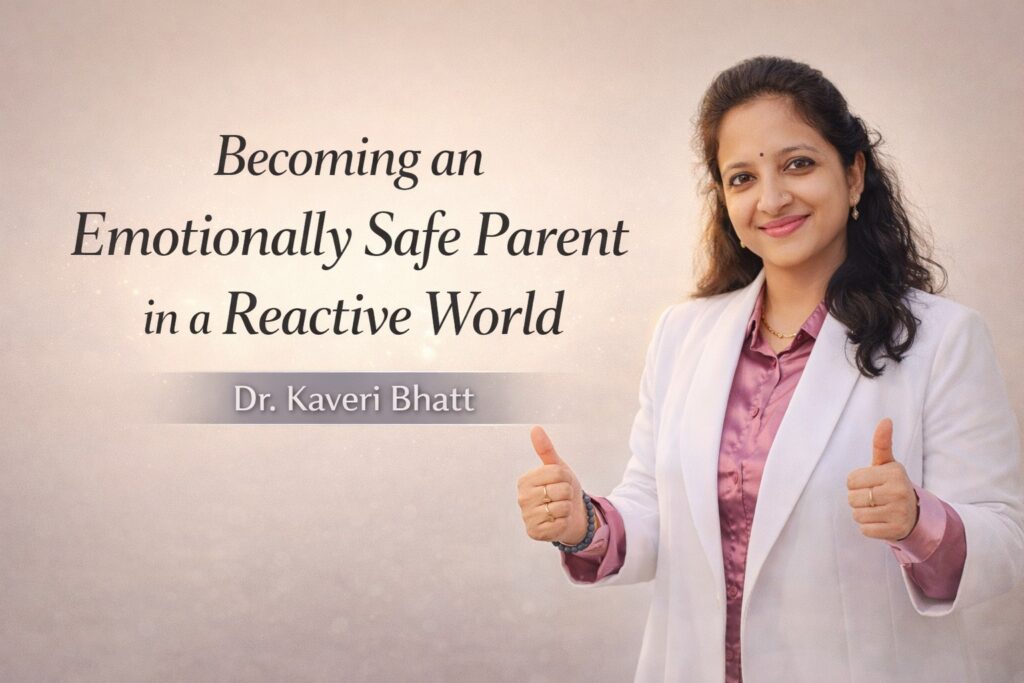

How Parenting Builds Confident Children often begins with a question parents hesitate to ask aloud: Am I unknowingly shaping my child’s fears through my own unresolved emotions? Most parents love deeply. Yet love alone does not always create emotional safety. Children sense tension in subtle ways.
Confidence in a child does not grow from praise alone. It grows when a child feels safe enough to express, fail, and return without shame. Understanding How Parenting Builds Confident Children requires looking beyond behavior and into the emotional climate of the home.
In this Guide:
Why Children Borrow Confidence From Their Parents
Children do not build confidence in isolation. They borrow it first. They study your reactions when things go wrong. If you collapse into self-criticism, they quietly learn to do the same. On the other hand, when you respond with calm accountability, they internalize resilience.
They begin to believe mistakes are manageable, not catastrophic. The secret to How Parenting Builds Confident Children lies in this modeling. Confidence grows when children experience consistency and feel secure that emotional responses remain predictable.
The Invisible Emotional Climate at Home
Every home carries an emotional climate. If tension lingers after disagreements, children absorb it. However, when disagreements resolve with conversation and repair, children learn that conflict does not equal rejection. This emotional climate is foundational to How Parenting Builds Confident Children effectively.
When Correction Replaces Connection
Many parents correct with good intentions. Still, when correction outweighs connection, children may equate love with performance. Connection must come first. When a child feels understood, they accept guidance more openly. Emotional safety makes discipline constructive instead of threatening.
The Shift From Control to Conscious Parenting
Traditional parenting often focuses on control. Conscious parenting focuses on awareness. Instead of asking how to fix behavior quickly, conscious parents ask what emotion lies underneath. This shift changes the tone of interaction.
Emotional Regulation as a Parenting Tool
Parents who regulate their emotions teach without speaking. When frustration rises, a conscious pause prevents escalation. Emotional regulation is a critical tool in How Parenting Builds Confident Children because it models strength. Children learn that emotions are intense yet manageable.
How Parenting Builds Confident Children Through Emotional Safety
The process of How Parenting Builds Confident Children becomes clear when safety becomes consistent. Secure attachment develops when a child knows they can return after conflict. Moreover, children who feel emotionally safe explore more freely. Exploration builds competence. Competence strengthens self-belief.
The Role of Subconscious Patterns
Parents often react from old wounds. A sharp response may echo childhood criticism. Without awareness, these patterns repeat silently. Healing the inner child within the parent changes the child’s future. Conscious reflection interrupts generational emotional patterns.
How Dr. Kaveri Bhatt Helps Parents Build Confidence
Dr. Kaveri Bhatt approaches parenting through a techno-spiritual healing lens. She is an expert on How Parenting Builds Confident Children through subconscious healing. She understands that subconscious patterns shape daily reactions.
Her work integrates trauma-informed care with emotional regulation tools. Through subconscious release methods, including inner child healing and energy alignment, parents learn to respond rather than react. Parents often describe feeling lighter after sessions, noticing their children becoming calmer naturally.
Success Story: From Fear to Freedom
A mother once approached Dr. Bhatt feeling overwhelmed. Her eight-year-old son avoided challenges and cried easily. She wanted to learn How Parenting Builds Confident Children to support him.
During sessions, she recognized her own fear of failure rooted in childhood comparison. She practiced emotional regulation exercises daily. Within months, her tone softened. Her son gradually began attempting new tasks without panic. Confidence returned not through pressure, but through safety.
Real Experiences From Parents
Neha from Mumbai: “I stopped reacting instantly after working with Dr. Bhatt. My daughter became more expressive within weeks.”
Rohan from Delhi: “Family arguments reduced. My teenage son now discusses problems openly instead of shutting down.”
Anita from Pune: “Understanding subconscious triggers changed everything. My home feels calmer, and my child appears more secure.”
Forum Style Questions and Answers
Question: Does strict discipline create stronger children?
Answer: Consistency matters more than harshness. Emotional safety strengthens resilience more effectively than fear.
Question: Is it too late to change patterns with a twelve-year-old?
Answer: Repair at any stage rebuilds trust. Awareness always creates new outcomes.
Frequently Asked Questions
How long does it take to see change?
Emotional shifts often begin within weeks when parents practice regulation consistently. This helps explain How Parenting Builds Confident Children effectively over time.
Does conscious parenting mean avoiding boundaries?
No. Boundaries remain essential, yet they are delivered with calm clarity instead of anger.
Does healing my trauma affect my child?
Yes. Research confirms that regulated parents raise emotionally stable children. This is the core of How Parenting Builds Confident Children.
How do I balance work stress with parenting?
Small daily pauses and reflective practices create meaningful shifts even in busy schedules.
Is therapy necessary for everyone?
Support helps significantly when patterns feel repetitive. Guidance accelerates awareness and healing.
Conclusion
Ultimately, How Parenting Builds Confident Children returns to one truth: Children feel confident when they feel safe. Safety does not mean perfection. It means presence, repair, and emotional steadiness.
When parents choose awareness over reaction, homes transform quietly. Over time, children carry that calm into the world. Confidence built this way does not collapse under pressure. It stands firm because it was nurtured with consciousness and care.
Need personalized guidance?