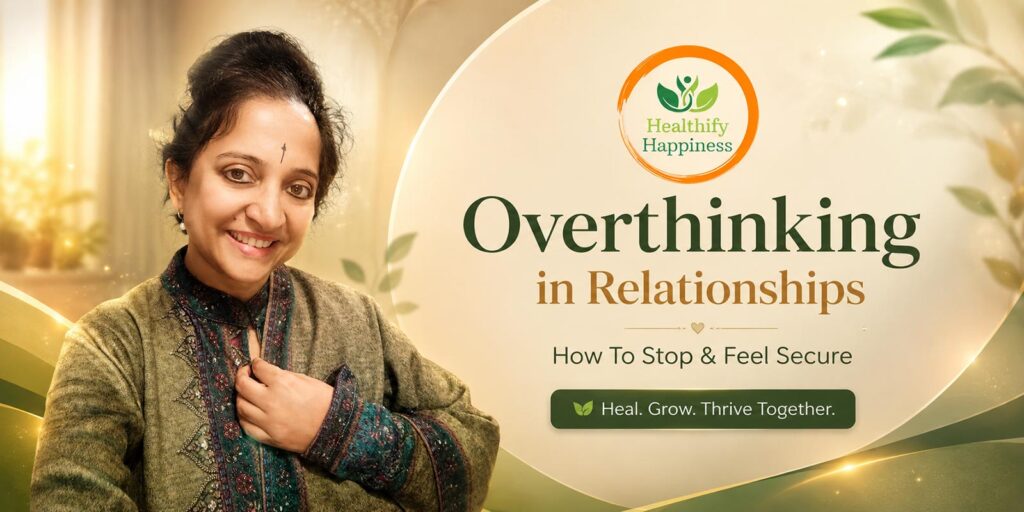
Overthinking in relationships can quietly drain emotional energy even when love is present. One delayed reply or small change in behavior suddenly feels personal. The mind starts creating painful stories before any real conversation happens.
Many people struggling with overthinking in relationships are not trying to create conflict. They are usually searching for emotional safety. Deep inside, they fear rejection, abandonment, or emotional disconnection.
Sometimes these reactions develop after heartbreak. In other cases, they begin much earlier through childhood experiences, inconsistent affection, or emotionally unpredictable environments. The nervous system slowly learns to stay alert all the time.
A healthy relationship should not feel like a constant emotional investigation. Real emotional security grows when people stop treating every uncertain moment like a threat and begin understanding their inner emotional patterns calmly.
In this Guide:
- 🔹 Why Overthinking in Relationships Feels So Exhausting
- 🔹 Signs You May Be Stuck in Relationship Overthinking
- 🔹 What Usually Triggers Overthinking in Relationships
- 🔹 Healthy Concern vs Emotional Spiral
- 🔹 Daily Habits That Build Emotional Security
- 🔹 Success Story
- 🔹 How Dr Kaveri Bhatt Helps
- 🔹 Real User Reviews
- 🔹 Forum Style Questions
- 🔹 Frequently Asked Questions
Why Overthinking in Relationships Feels So Exhausting
The hidden emotional patterns behind constant worry
Overthinking in relationships often begins as emotional self protection. The mind keeps scanning for signs of danger because it believes staying alert will prevent emotional pain. Unfortunately, this habit creates more anxiety instead of peace.
A person may replay conversations repeatedly, analyze text messages, or assume something is wrong without evidence. Even neutral situations start feeling emotionally heavy. Over time, the body stays tense because the nervous system rarely feels safe.
Many people do not realize they are reacting to old emotional memories instead of the present moment. Past betrayals, emotional neglect, or unstable relationships can train the mind to expect disappointment automatically.
How fear quietly changes relationship behavior
Fear changes relationship behavior slowly. Someone may ask for reassurance repeatedly, become emotionally reactive, or withdraw emotionally before getting hurt. These reactions usually come from fear, not manipulation.
Overthinking in relationships also affects communication. Instead of asking calm questions, people may test their partner emotionally or make assumptions silently. That emotional pressure can create distance even inside loving relationships.
Signs You May Be Stuck in Relationship Overthinking
Reading too deeply into small situations
A short message suddenly feels cold. A busy evening feels like rejection. Small changes begin carrying huge emotional meaning. This pattern can make ordinary situations feel emotionally overwhelming.
People trapped in overthinking in relationships often spend more time analyzing behavior than experiencing connection naturally. Their mind keeps searching for hidden meanings that may not even exist.
Seeking reassurance again and again
Reassurance can feel comforting for a short time. However, the calm usually disappears quickly because the deeper insecurity remains unresolved internally.
Many people feel guilty asking for reassurance repeatedly. Yet emotional reassurance is not wrong. The real issue begins when emotional safety depends completely on another person’s constant validation.
Emotional burnout from constant mental checking
Constant emotional monitoring becomes exhausting. The mind rarely rests because it keeps predicting problems before they happen.
This emotional exhaustion can affect sleep, concentration, mood, and even physical energy. Some people stop enjoying their relationship because anxiety consumes most of their emotional attention.
What Usually Triggers Overthinking in Relationships
Past heartbreak and emotional betrayal
Past emotional pain often shapes present reactions more than people realize. Someone who experienced betrayal may become hyperaware of emotional changes because their brain wants to avoid getting hurt again.
Even when the current relationship feels healthy, unresolved emotional pain can quietly create fear. The body remembers emotional danger long after the situation ends.
Childhood emotional insecurity and attachment wounds
Childhood emotional experiences deeply influence adult relationships. People who received inconsistent emotional support may struggle to trust stability later in life.
If affection felt unpredictable growing up, emotional closeness may feel both comforting and frightening at the same time. This inner conflict often fuels overthinking in relationships without the person fully understanding why.
Communication gaps and mixed signals
Unclear communication easily increases anxiety. When expectations, emotions, or intentions stay unspoken, the mind naturally fills empty spaces with assumptions.
Healthy communication does not remove every fear completely. Still, emotional clarity reduces confusion and prevents unnecessary emotional spirals.
The Difference Between Healthy Concern and Emotional Spiral
When awareness becomes emotional obsession
Healthy concern allows people to notice problems calmly and communicate honestly. Emotional spiraling feels very different. The mind becomes trapped in endless analysis without emotional resolution.
Overthinking in relationships usually creates repetitive thought loops. A person may search for certainty constantly but never feel emotionally satisfied for long.
Recognizing this difference helps people respond more calmly instead of reacting impulsively during emotionally intense moments.
Why certainty can never fully remove anxiety
Many people believe complete certainty will finally make them feel safe. Unfortunately, emotional security cannot come from controlling every situation perfectly.
Relationships naturally contain uncertainty because human emotions change, life becomes stressful, and communication sometimes feels imperfect. Emotional healing begins when people learn to tolerate uncertainty without assuming disaster immediately.
Small Daily Habits That Help You Feel Emotionally Secure
Learning emotional grounding techniques
Grounding techniques help calm emotional intensity before thoughts spiral further. Slow breathing, journaling, mindful pauses, and body awareness can reduce emotional overwhelm significantly.
Even simple habits create emotional stability over time. A person who pauses before reacting emotionally often communicates more clearly and feels less mentally exhausted afterward.
Overthinking in relationships becomes easier to manage when the nervous system feels calmer consistently rather than remaining stuck in survival mode.
Building trust through honest communication
Healthy communication creates emotional safety slowly. Calm honesty usually works better than emotional accusations or silent resentment.
Instead of saying, “You do not care about me,” a person can express feelings more clearly by saying, “I felt emotionally disconnected today and wanted reassurance.” This approach encourages connection instead of defensiveness.
Trust grows when people communicate directly instead of expecting their partner to read emotional signals perfectly.
Creating emotional balance outside the relationship
Emotional balance becomes stronger when life contains meaning outside the relationship too. Friendships, hobbies, routines, and personal goals help reduce emotional dependency.
People who build emotional stability internally usually experience less panic during temporary relationship stress. Their identity no longer depends completely on relationship reassurance.
Success Story, From Fearful Attachment to Emotional Calm
A real emotional healing journey
Niharika from Pune constantly feared emotional abandonment inside her relationship. If her partner became quiet for a few hours, she immediately assumed something was wrong. She checked messages repeatedly and spent entire nights mentally replaying conversations.
Her relationship itself was not unhealthy, yet her emotional anxiety kept creating tension. Eventually, she realized the fear felt much older than the relationship. During emotional healing work, she connected many of her reactions to childhood experiences where affection often felt inconsistent and emotionally unpredictable.
Instead of forcing herself to stop feeling emotional, she slowly learned emotional grounding techniques. She started journaling before reacting impulsively. She practiced expressing fears calmly instead of accusing her partner emotionally. Over time, her nervous system became less reactive.
Months later, Niharika noticed something surprising. Silence no longer felt automatically dangerous. She still experienced emotional insecurity occasionally, but overthinking in relationships no longer controlled her daily life. Her relationship became calmer because she finally felt safer within herself too.
How Dr Kaveri Bhatt Helps
Trauma informed emotional healing methods
Dr. Kaveri Bhatt approaches emotional healing through compassionate and trauma informed principles. Instead of suppressing emotions, she helps people understand the deeper emotional roots behind relationship anxiety and insecurity.
Her healing approach focuses on emotional safety, nervous system awareness, and practical emotional regulation methods that gently support long term healing.
Practical subconscious release and emotional regulation
Through subconscious healing techniques, emotional release practices, and guided self awareness tools, Dr Kaveri Bhatt helps individuals reduce emotional overwhelm gradually.
Many people struggling with overthinking in relationships also experience stress patterns connected to academic pressure and emotional burnout. Helpful emotional awareness tools shared through study stress and emotional overwhelm can support emotional balance gently. Similar guidance around anxiety related emotional patterns also helps people understand their inner triggers more clearly.
Integrating healing into everyday relationship life
Healing becomes meaningful when it fits naturally into daily life. Dr Kaveri Bhatt encourages simple emotional practices that people can realistically apply during conversations, emotional triggers, and stressful moments.
Her techno spiritual healing approach combines emotional awareness, subconscious release methods, trauma informed support, and practical emotional tools that support healthier relationships gradually.
Real User Reviews
Review One
Sakshi Mehra, Chandigarh
I used to panic whenever my partner became emotionally distant for even a short time. The emotional grounding techniques helped me calm my reactions slowly. I finally feel emotionally lighter and more secure now.
Review Two
Arjun Nair, Kochi
I never realized how much fear controlled my communication habits. Learning healthier emotional expression changed my relationship completely. We argue less now because I communicate honestly instead of assuming the worst.
Review Three
Farheen Ali, Lucknow
My emotional insecurity came from childhood experiences I never understood properly before. The healing process helped me stop blaming myself constantly. I feel emotionally stronger and less anxious inside relationships now.
Forum Style Questions People Commonly Ask
Can overthinking ruin a healthy relationship
Overthinking in relationships can create emotional pressure when fear replaces trust consistently. Constant assumptions, emotional checking, and repeated reassurance seeking may exhaust both partners emotionally. Still, healing is possible. When people develop emotional awareness, healthier communication, and nervous system regulation, relationships often become calmer and emotionally safer again.
Why do I panic when my partner needs space
Emotional space sometimes triggers abandonment fears, especially for people with anxious attachment patterns or unresolved emotional wounds. The mind may interpret temporary distance as rejection automatically. Learning emotional grounding and building inner emotional stability can help reduce this panic gradually without suppressing emotional needs completely.
Frequently Asked Questions
How do I stop assuming the worst in relationships
Pause before reacting emotionally. Try grounding techniques, honest communication, and emotional self awareness first. Many fears become less intense once the nervous system feels calmer and emotionally safer internally.
Can childhood experiences create relationship anxiety
Yes, childhood emotional inconsistency can shape adult relationship patterns deeply. People who experienced unpredictable emotional support often become more sensitive to emotional distance and uncertainty later in life.
Is reassurance unhealthy in relationships
Healthy reassurance supports emotional connection naturally. Problems usually begin when emotional safety depends entirely on repeated reassurance instead of internal emotional stability and self regulation.
How long does emotional healing usually take
Emotional healing moves differently for everyone. Some people notice changes within months, while deeper emotional patterns may require longer consistent self awareness and healing work.
Can secure relationships reduce overthinking naturally
Emotionally safe relationships can reduce anxiety gradually because consistency builds trust. However, inner healing and emotional regulation still remain important for long term emotional security.
Conclusion
Overthinking in relationships does not mean someone is weak, dramatic, or incapable of love. Most people who overthink are simply trying to protect themselves from emotional pain they do not fully understand yet.
Healing begins when fear stops controlling every emotional reaction. Small daily habits, honest communication, emotional grounding, and self awareness slowly create emotional safety from within.
No relationship becomes perfect overnight. Even emotionally secure people experience moments of doubt sometimes. What changes is their ability to respond calmly instead of spiraling into fear immediately.
With patience, emotional support, and deeper self understanding, overthinking in relationships can slowly lose its power. Emotional peace becomes possible when safety no longer depends completely on constant reassurance.
Ready to feel emotionally calmer and more secure in your relationships? Connect with Dr. Kaveri Bhatt today.